
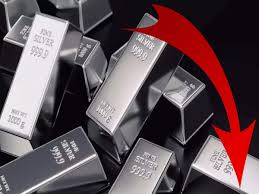
Silver Price Crash: Why Silver Fell 30% in a Single Day
The “Silver Dream Run” of 2026 met a brutal reality check this week. On January 30, global spot silver crashed from its peak of $121 to nearly $80 per ounce. In India, the MCX March futures witnessed a terrifying drop of over ₹1,00,000 per kg, closing near the ₹2.92 lakh mark.
This “liquidity wipeout” wasn’t a coincidence; it was a perfect storm of political, technical, and regulatory shocks.
1. The “Warsh Effect”: A New Fed Direction
The primary trigger was President Donald Trump’s nomination of Kevin Warsh as the next Federal Reserve Chair to succeed Jerome Powell.
- The Impact: Warsh is viewed by markets as a “Hawkish” policymaker focused on strict inflation control.
- The Result: His nomination immediately boosted the US Dollar Index (DXY) and Treasury yields. Since silver is priced in dollars and provides no interest, a surging dollar makes silver more expensive for global buyers, leading to mass liquidation.
2. CME Margin Hikes: The Death Blow to Leverage
As silver prices turned volatile, the Chicago Mercantile Exchange (CME) and India’s MCX hiked margin requirements significantly (up to 36% for silver).
- The Chain Reaction: Traders who were “long” on silver with borrowed money suddenly had to deposit more cash to maintain their positions. Those who couldn’t were forced to sell, creating a “domino effect” of panic selling.
3. Technical Exhaustion & “Bubble” Dynamics
Before the crash, silver was up over 70% in January alone.
- Overbought: The Relative Strength Index (RSI) had crossed 80, a level that historically signals a bubble.
- Profit Booking: Institutional investors were waiting for a reason to “exit the building.” The Warsh news provided that excuse, leading to “every man and his dog rushing for the exit,” as analysts noted.
What Should Investors Do Now?
The crash has fundamentally altered the risk-reward ratio for silver. Here is the strategy for three types of investors:
- For Long-Term Investors: Do not panic. The structural demand for silver in AI infrastructure, solar panels, and EVs remains at a record high. Treat this crash as a “healthy reset” that removes speculative froth.
- For Short-Term Traders: Stay away from the “falling knife.” With volatility at extreme levels, the market could see further 10–15% swings on Monday. Wait for the market to form a stable base around the $70-$75 (₹2.60 lakh – ₹2.75 lakh) zone.
- Watch the Union Budget (Feb 1): In India, there is speculation about an import duty cut on precious metals in tomorrow’s Budget. If this happens, domestic prices could see another sharp drop of 6-10%.
Quick Data: The Silver Correction (Jan 2026)
| Metric | Record High (Jan 29) | Current Price (Jan 31) | Total Correction |
| Global Spot (USD) | $121.75 | ~$80.50 | ~34% |
| MCX India (INR) | ₹4,20,048/kg | ~₹2,92,000/kg | ~30% |
| Gold-Silver Ratio | 45:1 (14-yr low) | 62:1 | Moving to Average |
Conclusion
Silver is notoriously volatile—it “takes the stairs up and the elevator down.” While the silver price crash of January 2026 has wiped out billions in paper wealth, the metal’s industrial story is far from over. This is a time for patience and cautious accumulation, not for emotional selling.
Did you book profits before the crash, or are you holding for the long term? Let us know your strategy in the comments!


