
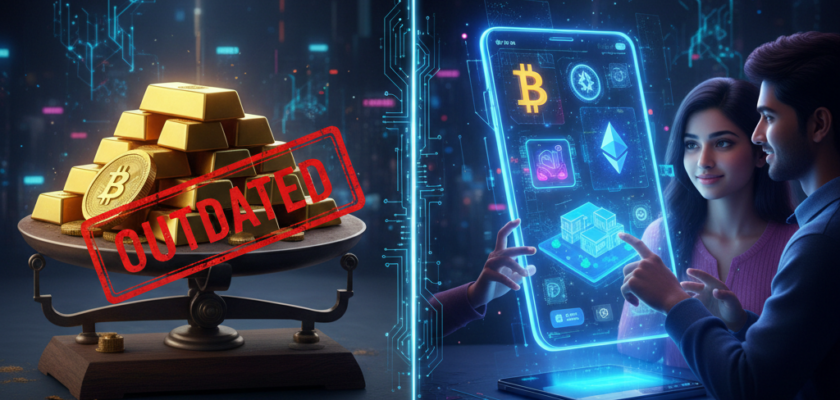
Beyond Bitcoin: Why Digital Assets are the New Gold for the Next Generation
For centuries, gold has been the ultimate safe haven, a reliable store of value across generations. But as we move deeper into 2026, a new paradigm is emerging. For the next generation of investors—Gen Z and young Millennials—digital assets are rapidly becoming what gold once was. Bitcoin may have started the revolution, but the ecosystem has evolved far beyond just BTC, offering a diverse array of digital “gold.”
This isn’t just about speculation; it’s a fundamental shift in how value is perceived, stored, and transacted in a digital-first world.
1. The Digital Native Mindset: Speed & Accessibility
The younger generation has grown up with the internet, instant transactions, and global connectivity.
- Instant Liquidity: Unlike physical gold, which requires storage, insurance, and often cumbersome transaction processes, digital assets can be bought, sold, or transferred globally within minutes, 24/7.
- Fractional Ownership: You don’t need to buy a whole gold bar. Digital assets allow for fractional ownership, making them accessible to investors with smaller capital, democratizing investment.
2. Diversification Beyond Bitcoin: The Rise of Altcoins & Tokenized Assets
While Bitcoin remains a significant player, the “digital gold” narrative has expanded to a vast ecosystem.
- Ethereum (ETH): Often called “digital silver,” Ethereum’s blockchain powers a massive ecosystem of decentralized applications (dApps), DeFi (Decentralized Finance), and NFTs. Its utility gives it inherent value beyond just a store of wealth.
- Stablecoins: For those seeking stability, stablecoins (like USDT, USDC) pegged to fiat currencies offer a digital alternative to cash, providing liquidity without market volatility.
- Tokenized Real-World Assets (RWAs): Increasingly, real-world assets like real estate, art, and even commodities are being “tokenized” on the blockchain. This allows for fractional ownership and easier global trading, giving them a digital gold-like appeal.
3. Transparency, Security & Deflationary Nature
Blockchain technology, the backbone of digital assets, offers features that traditional gold cannot.
- Transparency: Every transaction is recorded on an immutable public ledger, providing unprecedented transparency (though anonymity can also be maintained).
- Security: Cryptographic security and decentralization make digital assets highly resistant to censorship, fraud, and government seizure (if stored correctly).
- Deflationary Supply: Many digital assets, like Bitcoin, have a capped supply, mimicking gold’s scarcity and protecting against inflationary pressures.
4. Global Adoption and Regulatory Clarity in 2026
The regulatory landscape, once a major deterrent, is rapidly maturing in 2026.
- Institutional Embrace: Major financial institutions, sovereign wealth funds, and even countries are integrating digital assets into their portfolios and national strategies.
- Clearer Regulations: Governments worldwide are working towards clear regulatory frameworks, reducing uncertainty and increasing investor confidence. India’s recent stance on digital asset taxation and impending regulations points towards mainstream acceptance.
5. The “Programmable” Future of Value
Perhaps the most compelling aspect for the next generation is the “programmability” of digital assets.
- Smart Contracts: Digital assets can be embedded with “smart contracts” that automatically execute terms and conditions, enabling complex financial instruments and automated transactions unthinkable with physical gold.
- Integration with Web3: These assets are integral to the emerging Web3 economy, powering metaverses, decentralized social media, and new forms of digital ownership and interaction.
Digital Gold vs. Traditional Gold: A 2026 Snapshot
| Feature | Traditional Gold | Digital Assets (e.g., BTC, ETH, RWAs) |
| Accessibility | Limited by physical form, high entry cost | Fractional ownership, 24/7 global access |
| Liquidity | Can be slow to sell, physical handling | Instant buy/sell, high liquidity |
| Storage | Physical vault, insurance cost | Digital wallet (hot/cold), self-custody |
| Inflation Hedge | Good, but limited by physical supply | Good, especially for deflationary assets |
| Utility | Jewelry, industrial, store of value | Store of value, programmable, Web3 utility, DeFi |
| Transparency | Limited | High (on blockchain) |
| Security | Susceptible to theft, seizure | Cryptographically secure, decentralized |
Conclusion
While physical gold will always hold its historical significance, the reasons for its traditional appeal—scarcity, store of value, and independence from central authorities—are now being met, and in many ways surpassed, by digital assets. For the next generation, this isn’t just “virtual money”; it’s the new, highly efficient, and programmable digital gold that fits seamlessly into their connected world.
Are you part of the next generation embracing digital assets? Or do you still prefer the shine of traditional gold? Share your investment philosophy in the comments below!


