


AI Kitchen Integration: Why Cloud Kitchens Need It Now
AI kitchen integration is becoming important for cloud kitchens that want the same taste, same portion size, and same food quality in every order. In 2026, customers expect fast delivery, clean packaging, and consistent recipes. Therefore, cloud kitchens can no longer depend only on manual memory and guesswork.
A cloud kitchen may prepare hundreds of orders daily across different brands. One kitchen may make biryani, burgers, rolls, momos, pasta, and desserts from the same location. As a result, recipe control becomes difficult.
This is where AI kitchen integration helps. It gives kitchen teams smart support for recipes, stock, prep time, order flow, and quality checks.
What Is AI Kitchen Integration?
AI kitchen integration means using artificial intelligence, smart software, connected devices, and kitchen data to improve food operations. It does not mean robots replace chefs completely. Instead, AI supports chefs, managers, and kitchen staff.
For example, AI can suggest how much sauce to prepare for evening orders. It can also alert the team if one ingredient is running low. In addition, it can help maintain the same recipe steps across different outlets.
So, AI kitchen integration works like a smart kitchen assistant. It helps the team reduce mistakes and serve more consistent food.
Why Recipe Uniformity Matters in Cloud Kitchens
Recipe uniformity means customers get the same taste every time they order. This is very important for cloud kitchens because customers cannot see the kitchen. They judge the brand only by food taste, delivery time, packaging, and reviews.
If a customer orders paneer tikka wrap today and likes it, they expect the same taste next week. However, if the spice level, sauce quantity, or portion size changes too much, the customer may lose trust.
Therefore, cloud kitchens need strong recipe systems. AI kitchen integration helps by keeping recipe steps, ingredient quantity, cooking time, and portion control more standard.
How AI Kitchen Integration Improves Recipe Control
AI kitchen integration improves recipe control in many practical ways. It can store exact recipes, guide kitchen staff, and track small changes.
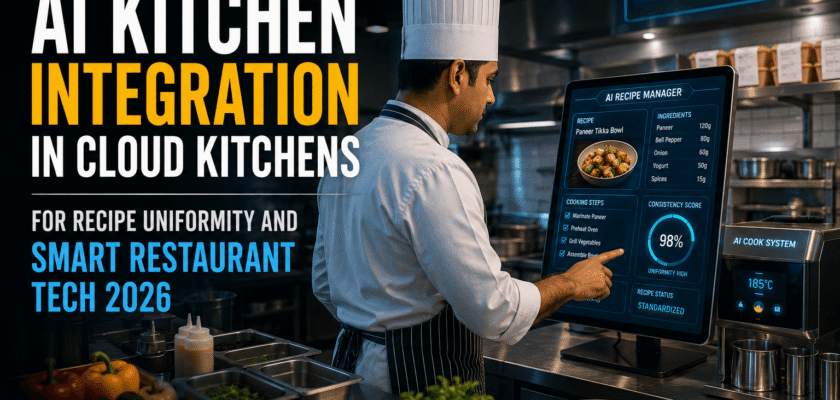
For example, a kitchen dashboard can show:
- Ingredient quantity
- Cooking time
- Prep steps
- Portion size
- Plating or packing instructions
- Allergen notes
- Stock availability
- Batch preparation guide
Moreover, AI can study order history and suggest how much food to prepare before rush hours. This reduces last-minute mistakes and improves speed.
Automated Culinary Management: The New Kitchen Backbone
Automated culinary management means using smart systems to manage daily kitchen work. It connects recipes, stock, orders, staff tasks, and delivery timing in one flow.
This system helps a kitchen manager answer simple but important questions:
- Which items are selling today?
- Which ingredients will finish soon?
- Which recipe has more customer complaints?
- Which dish takes too much preparation time?
- Which outlet is wasting more food?
- Which menu item gives better profit?
Because of this, automated culinary management is becoming a strong tool for cloud kitchen networks.
Smart Restaurant Tech 2026 and Cloud Kitchen Growth
Smart restaurant tech 2026 is not only about fancy machines. It is about better control, better speed, and better customer experience.
Cloud kitchens use smart restaurant tech for:
- Online order management
- Inventory tracking
- Recipe standardization
- Kitchen display systems
- Delivery timing
- Staff task planning
- Waste reduction
- Demand forecasting
- Customer feedback tracking
Also, many food brands now use data to decide which items to promote. If one dish sells more on weekends, the kitchen can prepare ingredients in advance.
How AI Helps During Peak Order Hours
Peak hours are the most difficult time for cloud kitchens. During lunch and dinner, orders come quickly from food delivery apps. If the kitchen is not ready, delays, wrong orders, and bad reviews can happen.
AI kitchen integration can help by predicting demand. It can study past orders, weather, weekends, festivals, offers, and local food trends.
For example, if biryani orders usually rise on Friday night, AI can alert the kitchen early. As a result, the team can prepare rice, gravy, meat, paneer, and packaging material before the rush starts.
This saves time and improves order accuracy.
How AI Reduces Food Waste
Food waste is a major problem in cloud kitchens. If the team prepares too much food, money gets wasted. If they prepare too little, orders get delayed or cancelled.
AI can reduce this problem by predicting demand more accurately. It can suggest how much raw material and semi-prepared food the kitchen should keep ready.
In addition, AI can track slow-moving ingredients. If a sauce, vegetable, or meat item is not selling fast, the system can warn the manager before it expires.
Therefore, AI kitchen integration can support both profit and sustainability.
Role of IoT Devices in Smart Kitchens
IoT devices are connected kitchen tools that collect and share data. These may include smart ovens, temperature sensors, storage monitors, weighing scales, and connected refrigerators.
In a cloud kitchen, IoT devices can help with:
- Temperature control
- Food safety monitoring
- Equipment health checks
- Storage alerts
- Cooking consistency
- Energy tracking
- Hygiene support
For example, if a refrigerator temperature rises above a safe level, the system can alert the manager. This helps protect food quality and customer safety.
Why Local Cloud Kitchen Networks Benefit More
Local cloud kitchen networks often run multiple brands from one or more small kitchens. They may not have the same budget as large restaurant chains. However, they still need professional-level consistency.
AI kitchen integration helps local kitchens scale without losing control.
A small brand can use recipe dashboards, order analytics, inventory alerts, and customer review tracking. This makes the business more organized. Moreover, it helps owners train new staff faster.
As a result, local food brands can compete better with larger chains.
AI Kitchen Integration and Staff Training
Staff training is one of the biggest challenges in food businesses. If a trained cook leaves, taste and speed may drop.
AI kitchen integration can reduce this risk. Recipe dashboards, video instructions, step-by-step prep guides, and portion reminders help new staff follow the same process.
This does not remove the value of human skill. Instead, it supports kitchen workers and reduces confusion.
Also, managers can track which recipes need more training based on mistakes, delays, or customer complaints.
Can AI Replace Chefs?
No, AI cannot fully replace good chefs. Food needs human judgment, taste sense, creativity, and care. However, AI can reduce repetitive work and improve consistency.
A chef may create the recipe. After that, AI can help the team follow it properly every day.
So, the best kitchen model is not humans vs AI. The best model is humans plus AI.
Chefs bring creativity. AI brings control, data, and speed. Together, they can create better food operations.
Challenges of AI Kitchen Integration
AI kitchen integration also has some challenges. Small cloud kitchens may worry about cost, training, and software complexity.
Common challenges include:
- High setup cost
- Staff resistance
- Internet dependency
- Data entry mistakes
- Software learning time
- Equipment compatibility
- Privacy and security concerns
However, many tools are becoming simpler and more affordable. Therefore, even small food businesses can start with basic systems like inventory tracking, recipe sheets, and order dashboards.
How Cloud Kitchens Can Start Small
Cloud kitchens do not need to buy expensive robots on day one. They can start with simple digital systems.
A practical starting plan can include:
- Digital recipe cards
- Standard portion charts
- Inventory management software
- Kitchen display system
- Daily waste tracking
- Customer review analysis
- Basic sales forecasting
- Staff training videos
After that, the business can add advanced AI tools when order volume grows.
Future of Smart Restaurant Tech 2026
Smart restaurant tech 2026 will keep moving toward automation, personalization, and better kitchen control. More restaurants may use AI to plan menus, manage stock, and improve delivery speed.
Cloud kitchens may also use AI to test new dishes. If customers in one area like spicy food, the system can suggest local menu changes. If another area prefers healthy meals, the kitchen can promote low-calorie options.
This local personalization can become a big advantage for food brands.
Final Verdict
AI kitchen integration is becoming a smart growth tool for cloud kitchens in 2026. It helps brands keep recipes uniform, reduce food waste, manage orders faster, and improve customer trust.
For local cloud kitchen networks, this technology can make operations more professional without needing a huge restaurant setup. It supports chefs, managers, and staff with better data and clear process control.
In simple words, the future of food delivery is not only about quick delivery. It is also about consistent taste, smart planning, and better kitchen management.
Cloud kitchens that use AI kitchen integration wisely can serve better food, reduce mistakes, and build stronger customer loyalty.


