


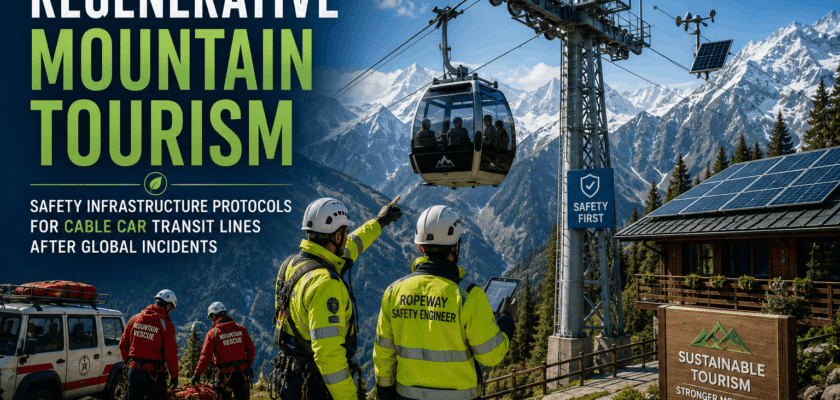
Regenerative Mountain Tourism: Why Safety Must Come First
Regenerative mountain tourism is becoming more important as hill stations, ski resorts, cable cars, ropeways, and high-altitude transit lines attract more travellers. Tourists want beautiful views, clean air, adventure, and easier mountain access. However, the recent Gulmarg Gondola technical snag showed that safety infrastructure must grow along with tourism demand.
On May 25, 2026, more than 300 tourists were stranded mid-air after a technical fault halted the Gulmarg Gondola service. Rescue teams from police, Army, SDRF, and local administration worked for hours and safely evacuated the passengers.
Therefore, regenerative mountain tourism cannot only mean more tourists and better photos. It must also mean stronger safety systems, better rescue planning, and responsible infrastructure.
Why Regenerative Mountain Tourism Matters in 2026
Regenerative mountain tourism matters because mountain destinations are fragile. They face crowd pressure, weather risk, road congestion, waste problems, landslide risk, and infrastructure stress.
Traditional tourism often focuses on visitor numbers. Regenerative tourism goes deeper. It asks whether tourism is improving the destination, protecting local communities, reducing environmental damage, and making travel safer.
In high-altitude places, safety becomes part of sustainability. If cable cars, ropeways, and transit lines fail under pressure, tourist confidence drops quickly.
As a result, mountain tourism planning must include safety as a core feature.
What Happened at Gulmarg Gondola?
The Gulmarg Gondola incident happened after a technical snag stopped the cable car system. Reports said more than 300 tourists were stranded and around 65 cabins were left suspended mid-air. Emergency teams then started a major rescue operation.
According to reports, police, Army, SDRF, and local authorities helped evacuate all stranded tourists safely. Some reports described the operation as a seven to eight-hour effort.
This was a relief because no major injury was reported. However, the incident raised serious questions about safety audits, backup systems, and emergency preparedness.
Regenerative Mountain Tourism and Cable Car Safety
Regenerative mountain tourism must include strong cable car safety because ropeways are becoming popular in hill destinations. Cable cars reduce road traffic and give tourists easier access to high points. They can also support local economies.
However, cable cars operate in difficult conditions. They face wind, snow, ice, high altitude, mechanical load, electrical issues, and tourist crowd pressure.
So, a safe cable car system needs more than daily operation. It needs:
- Regular safety audits
- Mechanical inspection
- Electrical backup
- Emergency evacuation drills
- Trained rescue teams
- Weather monitoring
- Real-time communication
- Crowd management
- Clear tourist instructions
- Independent technical review
Without these layers, one technical snag can become a major crisis.
Why Cable Car Transit Lines Need Stronger Protocols
Cable car transit lines need stronger protocols because they carry people in places where rescue is difficult. If a metro train stops, passengers may be evacuated through platforms or tracks. But if a cable car stops mid-air over mountains, rescue becomes much harder.
This is why cable car safety must be stricter than normal tourist operations.
A good protocol should answer simple questions:
- What happens if the system stops?
- How long can cabins remain safe?
- Who starts the rescue?
- How are passengers informed?
- Is there backup power?
- How fast can rescue teams reach?
- Are emergency kits inside cabins?
- How are children and elderly rescued?
- What happens during bad weather?
- Who decides when service resumes?
If these answers are clear, panic reduces.
Safety Audit After Every Major Technical Snag
A major technical snag should always trigger a detailed safety audit. The goal should not be only to restart service quickly. The goal should be to understand why the fault happened and how to prevent it again.
A proper safety audit should check:
- Mechanical systems
- Cable tension
- Cabin locking systems
- Brake systems
- Backup motors
- Power supply
- Communication systems
- Control room logs
- Maintenance records
- Staff response time
An independent technical review can improve public trust.
After the Gulmarg incident, local commentary also called for stricter safety audits and stronger prevention systems.
Why Emergency Rescue Drills Are Essential
Emergency rescue drills are essential because real emergencies create pressure. Staff may know the theory, but drills test whether the system works in practice.
A good drill should include:
- Stopped cabin simulation
- Passenger communication test
- Rescue rope practice
- Medical response
- Night rescue planning
- Bad weather scenario
- Crowd control
- Coordination with police and SDRF
- Evacuation of children and elderly
- Media and family communication
Drills should happen regularly, not only after an incident.
Moreover, tourists should see basic safety instructions before boarding.
Passenger Communication Can Reduce Panic
When a cable car stops mid-air, passengers may panic. Many may not know what happened or how long the wait will be.
Clear communication can reduce fear.
Every cable car system should have:
- Working cabin communication
- Emergency announcement system
- Helpline display
- Multilingual safety messages
- Real-time updates from control room
- Clear rescue instructions
- Staff support at both stations
- Information for families waiting outside
Even if rescue takes time, honest communication helps passengers stay calm.
Weather Monitoring Is Critical in Mountain Tourism
Mountain weather changes quickly. Wind, snow, rain, fog, lightning, and low visibility can affect cable car safety.
Therefore, weather monitoring should be part of every high-altitude transit system.
Operators should track:
- Wind speed
- Visibility
- Temperature
- Snow load
- Lightning risk
- Rain intensity
- Avalanche or landslide warning
- Ice formation risk
- Local forecast
- Emergency closure triggers
If weather crosses safe limits, operations should stop before tourists board.
Safety should always come before ticket revenue.
Regenerative Mountain Tourism and Crowd Management
Regenerative mountain tourism also needs better crowd management. Too many visitors at one time can overload roads, ticket counters, waiting areas, restaurants, toilets, and emergency systems.
Cable car operators should manage crowd flow through:
- Online slot booking
- Daily passenger limits
- Queue management
- Separate emergency lanes
- Weather-based capacity control
- Senior citizen support
- Child safety process
- Real-time crowd updates
- Refund rules during shutdown
- Clear closure announcements
This improves tourist experience and safety together.
Why Backup Power and Redundant Systems Matter
Backup systems can prevent a small technical fault from becoming a long emergency. Cable car infrastructure should have redundancy, which means an alternate system works if the main system fails.
Important backup systems may include:
- Backup power supply
- Emergency drive motor
- Secondary braking system
- Manual rescue equipment
- Communication backup
- Control room backup
- Generator support
- Battery systems
- Remote monitoring tools
- Spare critical parts
If one system fails, another should keep passengers safe.
Training Local Teams Creates Faster Response
Local teams are often the first to respond during mountain emergencies. They know terrain, weather, routes, and tourist behaviour.
Therefore, regenerative mountain tourism should train local stakeholders too.
This can include:
- Ropeway staff
- Local guides
- Pony operators
- Hotel teams
- Taxi unions
- Tourism volunteers
- Local police
- Medical responders
- Shopkeepers near stations
- Community rescue groups
During the Gulmarg rescue, local tourism stakeholders also supported the operation, according to reports.
This shows why community-based preparedness matters.
How Technology Can Improve Cable Car Safety
Technology can help cable car operators detect problems early.
Useful tools include:
- Sensor-based cable monitoring
- AI fault prediction
- Real-time vibration tracking
- Remote control room dashboards
- Weather alert systems
- Cabin GPS tracking
- CCTV monitoring
- Emergency communication devices
- Digital maintenance logs
- Automated shutdown alerts
If sensors show abnormal vibration, overheating, or cable stress, the system can stop safely before passengers face danger.
This makes mountain transit smarter and safer.
Why Tourist Education Matters
Tourists also need basic safety awareness. Many travellers treat cable cars like simple amusement rides. However, high-altitude ropeways need discipline.
Before boarding, tourists should know:
- Do not shake cabins
- Follow boarding instructions
- Keep children seated
- Avoid leaning out
- Do not panic during stoppage
- Listen to announcements
- Keep emergency numbers visible
- Carry water in high-altitude areas
- Avoid overcrowding
- Respect staff instructions
Small behaviour changes can reduce risk.
Insurance and Liability Must Be Clear
Cable car operators and tourism departments should have clear insurance and liability systems. Tourists should know what protection exists in case of emergency, injury, or service failure.
A responsible system should include:
- Passenger insurance
- Operator liability rules
- Emergency medical support
- Refund policy
- Incident reporting process
- Compensation rules
- Transparent investigation
- Vendor accountability
- Maintenance accountability
- Public safety report
Clear accountability builds trust.
Why Regenerative Tourism Is Better Than Mass Tourism
Mass tourism often focuses on more visitors and more revenue. Regenerative tourism focuses on long-term health of the destination.
In mountain areas, regenerative tourism means:
- Protecting local ecology
- Reducing waste
- Supporting local jobs
- Managing visitor capacity
- Improving safety
- Respecting culture
- Using clean energy where possible
- Building resilient infrastructure
- Preparing for emergencies
- Leaving the place better than before
This approach creates better tourism for visitors and locals.
Cable Cars Can Still Support Sustainable Travel
Cable cars are not the problem by themselves. In fact, well-designed cable cars can reduce road traffic, pollution, and pressure on mountain roads.
They can help tourists reach high-altitude spots without thousands of cars moving uphill.
However, safety and sustainability must go together.
A ropeway that reduces traffic but lacks rescue planning is incomplete. A cable car that brings tourists but harms local ecology is also incomplete.
So, the goal should be safe, low-impact, well-managed mountain transit.
What Mountain Destinations Should Do After Gulmarg
After the Gulmarg incident, every mountain destination with ropeways should review its safety plan.
Important steps include:
- Conduct independent audit
- Update rescue protocol
- Test backup systems
- Train staff again
- Run mock drills
- Improve passenger communication
- Review crowd limits
- Check weather closure rules
- Publish safety guidelines
- Build public trust through transparency
This should apply not only to Gulmarg but also to other mountain cable car routes.
What Travellers Should Check Before Taking a Cable Car
Travellers can also make safer choices.
Before taking a cable car, check:
- Weather condition
- Official operating status
- Crowd level
- Safety instructions
- Last ride timing
- Emergency helpline
- Child and elderly safety
- Health condition at altitude
- Ticket refund policy
- Official updates only
Also, avoid travelling during unsafe weather or when staff advise against boarding.
How Safety Can Improve Tourism Branding
Safety can become a strong tourism brand advantage. Tourists prefer destinations where systems feel professional, clean, and reliable.
A destination that shares safety records, audit updates, trained staff details, and emergency preparedness can gain more trust.
This is especially important for international tourists.
In 2026, travellers do not only search for scenic places. They also check reviews, safety news, infrastructure quality, and crisis response.
Therefore, safety can directly affect tourism growth.
Future of High-Altitude Cable Car Transit
The future of high-altitude cable car transit will depend on smart design, climate resilience, and safety-first operation.
Future systems may include:
- AI-based predictive maintenance
- Smart cabins
- Backup battery systems
- Wind-adaptive operations
- Real-time tourist alerts
- Digital crowd control
- Emergency drone support
- Better rescue equipment
- Green energy integration
- Stronger public reporting
This can make mountain transit safer and more sustainable.
Final Verdict
Regenerative mountain tourism must place safety at the centre of growth. The Gulmarg Gondola technical snag and rescue showed that emergency teams can respond bravely, but prevention is always better than rescue.
Cable car transit lines need strict audits, backup systems, trained rescue teams, weather monitoring, passenger communication, and transparent protocols.
In simple words, mountain tourism should not only take people higher. It should also bring them back safely.
If destinations want long-term tourism growth, they must build systems that protect visitors, support locals, and respect fragile mountain environments. That is the real meaning of regenerative mountain tourism.


