


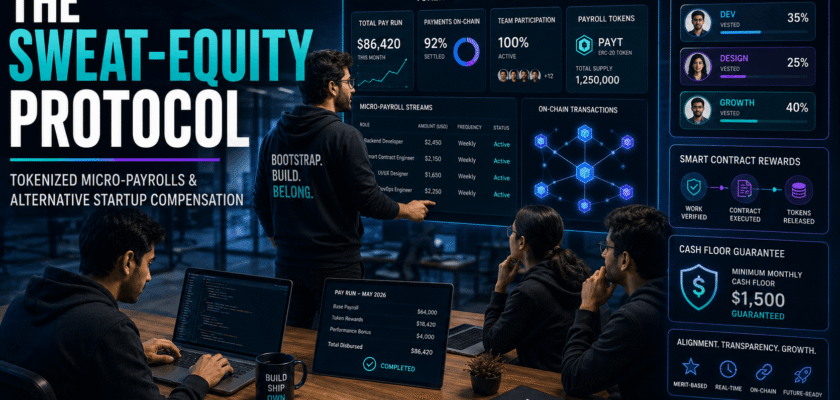
The Sweat-Equity Protocol: How Tokenized Micro-Payrolls Are Allowing Bootstrapped Startups to Steal Elite Tech Talent
Decentralized equity payroll models 2026 are changing startup hiring
Decentralized equity payroll models 2026 are becoming a serious hiring tool.
They help lean startups offer upside without burning too much cash.
Still, this is not magic money.
It needs clear rules, fair value, and honest risk notes.
Why the sweat-equity protocol is rising now
First, elite developers want more than a fixed salary.
They want ownership, speed, and proof that work matters.
So, some founders now mix cash with tokenized rewards.
This model can feel faster than old option plans.
Also, it can reward small weekly wins.
That matters for AI, Web3, and product teams.
What tokenized micro-payroll really means
A micro-payroll breaks pay into small reward events.
For example, a developer may earn cash each month.
Then, they may earn tokens for shipped tasks.
They may also earn extra upside after milestones.
However, the base salary should stay clear.
That keeps trust high and stress low.
How startups can attract top tier developers without VC funding
Bootstrapped teams cannot always match Big Tech salaries.
However, they can offer a stronger story.
They can show a clear product mission.
They can add visible upside for early builders.
They can also give fast ownership signals.
Together, this can attract talent that wants impact.
A simple sweat-equity stack
A safe stack starts with a cash floor.
Next, it adds a vesting schedule.
Then, it links bonus tokens to real work.
After that, it defines exit and lock-up rules.
Finally, it explains tax and legal risk in plain words.
Alternative startup compensation structures need guardrails
The biggest risk is overpromising future value.
So, founders must avoid hype language.
They should never call tokens guaranteed wealth.
Also, they should explain volatility clearly.
A token can rise, fall, or lose all value.
That line protects both sides.
Compliance is the real talent filter
Good builders do not only ask about upside.
They also ask about legal clarity.
They want clean documents and clear payroll records.
They want tax treatment explained before signing.
Therefore, compliance becomes a recruiting feature.
It shows the startup is serious.
Where token pay can go wrong
Token pay can fail when the model is vague.
It can also fail when vesting is unclear.
Another issue is unfair valuation.
Also, global teams face different tax rules.
Because of that, founders need local advice.
They should not copy random internet templates.
A better founder playbook
Start with normal payroll first.
Then, add a small token reward layer.
Use simple dashboards for earned rewards.
Use monthly statements for each worker.
Also, keep every promise in writing.
This makes the offer easier to trust.
What this means for 2026 startup hiring
In 2026, talent markets are still tight.
So, smart compensation design matters more.
Tokenized micro-payrolls can help small teams compete.
Yet, they must support real work and real rules.
The winners will not sell dreams.
They will sell clear upside with clear limits.
Final take
The sweat-equity protocol is not a shortcut.
It is a smarter way to share risk.
It can help startups hire elite builders.
However, it only works with trust.
So, keep cash fair, rewards clear, and compliance strong.
Quick checklist for founders
- Keep a fair cash floor.
- Use simple vesting rules.
- Explain token risk early.
- Give monthly reward statements.
- Use legal and tax review.
- Never promise guaranteed gains.


