
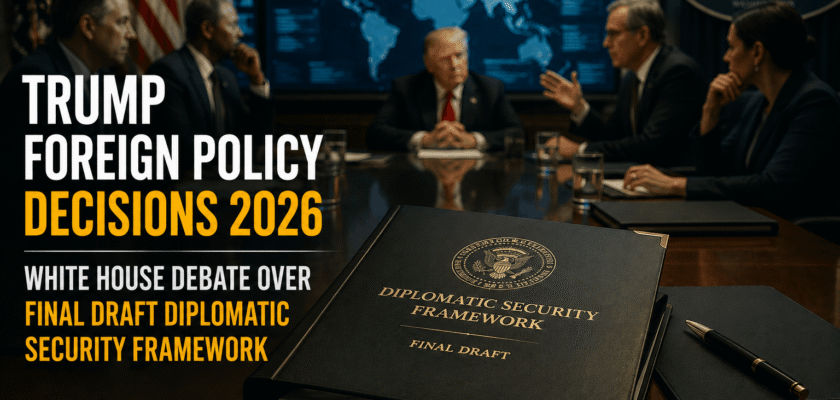
Trump Foreign Policy Decisions 2026: Why the Final Draft Framework Matters
Trump foreign policy decisions 2026 are facing a major test as the White House debates a final draft framework linked with security, diplomacy, and regional stability. The issue has become important because the proposal may affect America’s role in global negotiations, border security thinking, and crisis management.
The debate is not only about one agreement. It also shows how the Trump administration wants to use pressure, direct talks, and security demands in foreign policy.
In simple words, this framework is a test of power and diplomacy together.
Why Trump Foreign Policy Decisions 2026 Are Under Global Attention
Trump foreign policy decisions 2026 are under global attention because many countries now watch every White House move closely. A single statement from Washington can affect oil markets, military planning, shipping routes, border talks, and diplomatic trust.
The current debate around a final draft framework shows a clear pattern. The White House wants strong security guarantees. At the same time, foreign governments want clear terms, respect, and practical timelines.
Therefore, the final decision may shape how allies and rivals read America’s foreign policy direction in 2026.
What Is the Final Draft Framework Debate?
The final draft framework debate is about whether the United States should approve a high-stakes diplomatic plan after tough negotiations. Reports suggest that the framework includes security conditions, conflict control, and possible steps to reduce regional tension.
However, the key issue is trust. One side may say the deal is close, while the other side may say talks are still open.
This gap creates confusion. It also makes the White House decision more sensitive because any premature claim can weaken negotiation space.
Trump Foreign Policy Decisions 2026 and the Iran Question
Trump foreign policy decisions 2026 are strongly connected with the Iran issue. Recent reports say Trump claimed a peace deal was close, but Iranian officials pushed back and said no final agreement had been reached.
This shows the biggest challenge in diplomacy: both sides must agree on the same facts before calling anything final.
If the framework moves forward, it may include security promises, nuclear limits, shipping route concerns, and ceasefire terms. However, if talks fail, tension may rise again.
So, the Iran question is not only a regional issue. It is also a test of Trump’s deal-making style.
Why International Border Security Accords Matter
International border security accords are important because modern conflicts do not stay inside one border. A crisis can affect nearby countries, shipping lanes, energy markets, migration routes, and military alliances.
Border security today includes more than fences and checkpoints. It can include:
- Maritime route safety
- Anti-smuggling control
- Counterterror coordination
- Refugee movement management
- Military de-escalation zones
- Customs and trade checks
- Intelligence sharing
- Drone and missile threat monitoring
Because of this, any diplomatic framework must look beyond one country’s border.
Latest Diplomatic Updates Show a Trust Gap
Latest diplomatic updates show that the White House and the other negotiating side may not describe the same situation in the same way. This is common in high-pressure diplomacy.
One side may use strong public language to show confidence. The other side may deny final approval to protect its internal political position.
As a result, the public hears mixed signals.
For voters, this can look confusing. For diplomats, it is part of negotiation pressure. However, for markets and allies, unclear messaging can create uncertainty.
Why the White House Is Facing a Conundrum
The White House faces a conundrum because every option carries risk.
If Trump approves the framework quickly, critics may say the deal is weak or unclear. If he rejects it, supporters of diplomacy may say the administration missed a chance to reduce conflict. If he waits too long, tension may rise again.
Therefore, the decision is not simple.
The administration must balance:
- National security
- Military pressure
- Diplomatic credibility
- Energy market stability
- Domestic political reaction
- Allied expectations
- Regional partner concerns
- Long-term enforcement
This is why the final draft framework has become a serious policy test.
Pressure Diplomacy: Trump’s Main Foreign Policy Style
Trump foreign policy decisions 2026 often follow a pressure-first style. The administration uses public warnings, sanctions, military signals, trade pressure, and direct negotiation to push the other side toward concessions.
Supporters say this style creates leverage. They believe strong pressure can force rivals to negotiate seriously.
However, critics say pressure diplomacy can also create instability. If public claims move faster than private agreement, trust can break down.
So, the success of this approach depends on timing, discipline, and clear enforcement.
Why Allies Are Watching Carefully
Allies are watching carefully because they need to understand America’s next move. If the United States changes position quickly, allies must adjust their own security and diplomatic plans.
For example, European partners, Gulf countries, Israel, and Asian allies may all read this framework differently. Some may want a quick deal. Others may worry that a rushed deal could ignore their security concerns.
Therefore, the White House must communicate clearly with partners before making a final move.
Strong diplomacy does not only involve rivals. It also requires trust with allies.
How This Debate Affects Energy Security
The final draft framework may also affect energy security. Any tension near major shipping routes can influence oil and gas markets. If a deal reduces risk, markets may feel more stable. However, if talks collapse, uncertainty may rise.
This matters for countries that import energy, including India.
Fuel prices, shipping costs, and supply chain planning can all react to geopolitical news. Therefore, foreign policy decisions in Washington can indirectly affect daily costs in many countries.
Domestic Politics Also Shapes the Decision
Foreign policy is never fully separate from domestic politics. Trump must consider how voters, party leaders, senators, defense officials, and media groups respond to the framework.
Some voters may want strong action. Others may prefer peace and lower military risk.
At the same time, lawmakers may question whether the agreement has enough verification, enforcement, and security guarantees.
Because of this, the final decision must survive both international pressure and domestic criticism.
What Could Happen If the Framework Is Approved?
If the framework gets approved, it may create a short-term diplomatic opening. It could reduce conflict risk, open further talks, and give both sides time to negotiate deeper terms.
Possible outcomes may include:
- Temporary ceasefire
- Reduced military tension
- More formal talks
- Shipping route stability
- Lower risk of sudden escalation
- Better communication channels
- International monitoring discussion
However, approval does not guarantee permanent peace. The real test will be enforcement.
What Could Happen If the Framework Fails?
If the framework fails, tension may increase again. Both sides may blame each other, and military risk may rise.
Possible risks include:
- More sanctions
- Stronger military alerts
- Higher oil market pressure
- Diplomatic breakdown
- Regional partner anxiety
- Public blame game
- Harder future negotiations
Therefore, even a failed framework can shape the next phase of foreign policy.
Why Clear Language Matters in Diplomacy
Clear language matters because diplomatic words carry weight. If a leader says a deal is final before both sides agree, the other side may feel pressured or embarrassed.
On the other hand, strong public language can also create momentum.
This is why diplomats often use careful phrases like “draft agreement,” “working framework,” “near final,” or “pending approval.”
In this case, the safest reading is simple: the framework may be under serious discussion, but final agreement needs confirmed approval from both sides.
What This Means for Global Politics in 2026
This debate shows that 2026 global politics is becoming more deal-based, fast-moving, and leader-driven. Traditional diplomacy still matters, but personal leadership style now plays a bigger role.
The White House wants strong outcomes. Rivals want room to negotiate. Allies want stability. Markets want clarity.
As a result, every major framework becomes more than a document. It becomes a signal of power, trust, and strategy.
Final Verdict
Trump foreign policy decisions 2026 are now facing a serious test through the final draft framework debate. The White House must decide whether the proposal gives enough security benefit without creating new diplomatic risk.
The issue shows the strength and weakness of pressure diplomacy. It can create fast movement, but it can also create confusion when both sides do not agree publicly.
For now, the most important point is clear: no framework becomes real until all key sides confirm it. Until then, the world will keep watching the White House, the negotiators, and the next official statement.
In simple words, this is not just a policy document. It is a test of how America wants to lead in a tense and uncertain world.


