Digital Distribution Shift 2026: Why Entertainment Power Is Moving
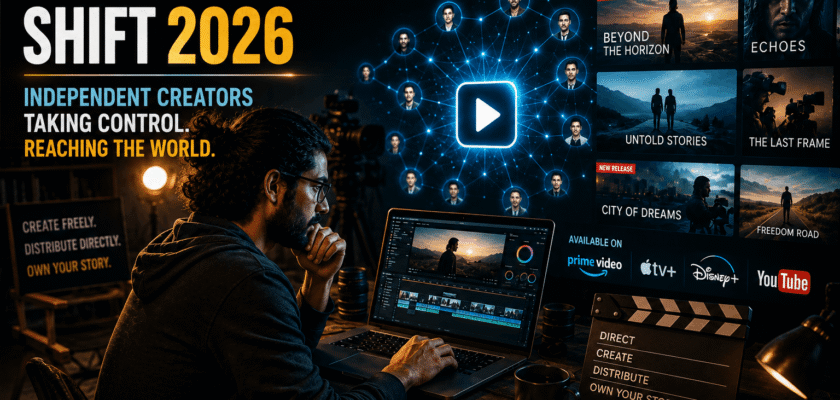
Digital distribution shift 2026 is changing how films, shows, web series, documentaries, and creator-led videos reach audiences. Earlier, creators needed studios, TV channels, distributors, and big marketing teams to release content widely. Now, digital platforms are giving independent creators more power over release timing, audience connection, and creative control.
This does not mean major studios are finished. However, it does mean the old gatekeeper model is weaker than before. A creator can now build an audience on YouTube, release content on OTT, sell access directly, use newsletters, stream live, or partner with platforms only when scale is needed.
Therefore, the future of entertainment is no longer only studio-first. It is becoming audience-first.
Why Digital Distribution Shift 2026 Matters
Digital distribution shift 2026 matters because audience habits have changed. Viewers no longer wait only for cinema releases or TV schedules. They watch videos on OTT apps, YouTube, social platforms, creator subscriptions, short video apps, and community platforms.
Deloitte’s 2026 media outlook notes that many consumers now treat videos on social media and streaming services as part of “watching TV.” This shows how entertainment boundaries are breaking down.
As a result, creators and studios must think differently. The question is not only “Which platform will release this?” The bigger question is “Where does the audience already live?”
What Is the Digital Distribution Shift?
The digital distribution shift means content can move directly from creator to viewer through online platforms. This may include OTT apps, YouTube, social media, paid communities, streaming FAST channels, direct websites, and creator subscription platforms.
Earlier, distribution often controlled creativity. If a studio or network did not approve a project, it might never reach viewers.
Now, creators can test ideas online, build fan communities, prove demand, and then negotiate better deals.
This shift gives creators more leverage. It also gives audiences more variety.
Digital Distribution Shift 2026 and Independent Creative Control
Digital distribution shift 2026 is giving independent creators more creative control because they can own more of the process. They can decide the story style, release plan, audience communication, and monetization model.
For example, a filmmaker may release short episodes online before building a feature film. A comedian may build a paid fan community. A documentary maker may use direct streaming. A writer may launch video content through a newsletter platform.
Substack’s 2026 video push shows this direction clearly. The company wants creators to build TV-style content with community features, sponsorship support, and strong creator revenue share while avoiding traditional editorial control.
This model gives creators more ownership, but it also gives them more responsibility.
Why the Studio System Is Losing Full Control
The studio system once controlled production, distribution, marketing, and audience access. That power still exists, especially for big-budget films. However, creators now have alternate routes.
A filmmaker does not always need to wait for studio approval. A musician does not always need a major label. A comedian does not always need a TV network. A storyteller does not always need a traditional gatekeeper.
Moreover, online success can now become proof of audience demand. The Backrooms example shows how a YouTube horror creator moved from viral online shorts to a major A24 feature project.
So, studios are becoming partners in some cases, not the only starting point.
Streaming’s Final Takeover: What It Really Means
Streaming’s final takeover does not mean cinemas will disappear. It means streaming and digital-first releases now shape more decisions in entertainment.
Streaming affects:
- What stories get funded
- Which actors become visible
- How trailers are marketed
- Which genres grow faster
- How global audiences discover content
- How data guides release plans
- How creators build communities
- How long a title stays relevant
In 2026, entertainment success is not only about opening weekend box office. It is also about watch time, retention, social buzz, subscriber value, global reach, and fan community strength.
Why Independent Content Is Becoming Stronger
Independent content is becoming stronger because audiences want fresh voices. Many viewers feel tired of repetitive franchise formulas, safe remakes, and over-polished corporate storytelling.
Independent creators can move faster. They can take risks. They can speak directly to niche audiences.
Also, digital platforms allow creators to target specific communities. A small horror film, regional drama, food show, travel documentary, or creator-led talk show can find loyal viewers even without a massive studio campaign.
Therefore, independent content does not need to please everyone. It needs to deeply connect with the right audience.
Digital Distribution Shift 2026 and OTT Platforms
Digital distribution shift 2026 is also changing OTT platforms. Streaming services are under pressure to reduce churn, control content cost, and satisfy global audiences.
Wordbank’s 2026 streaming trends report says consolidation, technology disruption, and changing audience expectations are pushing streaming toward a tipping point. It also highlights the need for strong localization and market-aware content.
This helps independent creators because local and niche stories can travel better when platforms support subtitles, dubbing, regional marketing, and targeted discovery.
However, OTT competition is intense. Creators still need strong packaging, marketing, and audience engagement.
Direct-to-Audience Media Is the New Power Move
Direct-to-audience media means creators build a direct relationship with viewers. This can happen through email lists, community apps, social media, paid memberships, live streams, podcasts, and creator-owned websites.
This matters because platform algorithms can change suddenly. If a creator depends only on one platform, reach can fall overnight.
A direct audience gives more stability.
For example, a filmmaker with a strong email list can announce releases directly. A comedian with a paid community can test new material. A documentary team can raise support from fans before release.
In simple words, direct audience ownership is becoming the new studio power.
Why Data Is Changing Release Strategy
Digital distribution gives creators more data than traditional release models. They can see which trailer performs better, which scene gets shared, which region watches more, and which audience group responds strongly.
This data can improve release planning.
Creators can decide:
- Best release date
- Best platform
- Best trailer style
- Best language version
- Best thumbnail
- Best audience segment
- Best sponsorship fit
- Best follow-up content
However, data should not kill creativity. It should guide decisions without making every story look the same.
Content Provenance and Trust Are Becoming Important
Digital distribution also creates a trust problem. With AI-generated videos, deepfakes, fake trailers, and copied content, viewers need proof that a video is authentic.
Unified Streaming’s 2026 trend outlook says content provenance and trust are becoming first-order requirements in streaming workflows, from capture to packaging and distribution.
This matters for creators and studios. If audiences cannot trust what they see, platforms need stronger verification, watermarking, rights tracking, and source transparency.
So, the future of digital distribution is not only fast. It must also be trustworthy.
The Challenges Independent Creators Still Face
Independent content has more opportunity, but the path is not easy. Creators must now handle many jobs that studios once managed.
Common challenges include:
- Finding funding
- Marketing content
- Managing rights
- Building audience trust
- Standing out online
- Handling platform rules
- Creating subtitles and dubbing
- Managing legal contracts
- Tracking revenue
- Avoiding burnout
Independent distribution gives freedom, but it also demands business skill.
Therefore, creators need both artistic vision and smart operations.
Why Some Independent Platforms Still Struggle
Not every independent platform succeeds. Nina Protocol, an independent music streaming and distribution platform, announced in May 2026 that it would shut down despite its artist-first model. The platform supported ownership and direct-to-fan sales, but it struggled to build a sustainable financial model.
This shows an important lesson. Creative control matters, but business sustainability matters too.
A platform must support creators, attract audiences, manage payments, and survive financially. Otherwise, even a good idea can fail.
What Studios Can Learn From Independent Creators
Studios can learn a lot from independent creators. The best creators understand community, fast feedback, authentic storytelling, and platform-native marketing.
Studios should focus on:
- More flexible release models
- Better creator partnerships
- Stronger fan communities
- Regional storytelling
- Short-form discovery
- Direct audience communication
- Fairer IP deals
- Faster production cycles
- Better platform data use
- More creative risk
If studios ignore these changes, they may lose young audiences to creator-led entertainment.
What Independent Creators Can Learn From Studios
Independent creators can also learn from studios. Studios understand scale, legal protection, global marketing, distribution contracts, production quality, and long-term franchise building.
Creators should not reject studio partnerships completely. Instead, they should enter partnerships with more leverage.
A strong independent creator can use studio support for:
- Bigger budgets
- Global distribution
- Theatrical release
- Legal protection
- International dubbing
- Brand partnerships
- Professional post-production
- Large-scale marketing
The best model may not be creator vs studio. It may be creator plus studio, but with better ownership terms.
Why India’s Indie Filmmakers Are Watching This Shift
India’s independent filmmakers are also pushing for better distribution access. Variety reported in May 2026 that more than 120 Indian filmmakers formed a collective to fight theatrical access and streaming visibility barriers.
This shows that the problem is not only global. Indian indie creators also need fairer access to screens, platforms, promotion, and audience discovery.
If digital distribution improves, Indian independent films can reach more viewers without depending fully on traditional release systems.
The Future of Entertainment Distribution
The future of entertainment distribution will likely be hybrid. Big films may still use theatres, global streaming deals, and studio campaigns. However, many creators will build audiences directly before signing any major deal.
Future models may include:
- Creator-owned IP
- Direct-to-fan releases
- Paid digital premieres
- OTT plus community screenings
- YouTube-to-feature pipelines
- Newsletter-based video channels
- AI-assisted localization
- Verified content provenance
- Niche streaming platforms
- Hybrid studio partnerships
This gives creators more routes to success.
Final Verdict
Digital distribution shift 2026 is changing entertainment power. Major studios still matter, but they no longer control every path to the audience. Independent creators can now build communities, test stories, own IP, and release content through digital-first models.
This shift gives creators more freedom. However, it also demands more responsibility. They must understand marketing, data, rights, audience building, and platform rules.
For viewers, the change is exciting because it brings more voices, more formats, and more niche stories. For studios, it is a warning to adapt.
In simple words, streaming’s final takeover is not only about apps replacing theatres. It is about creators gaining more control over how stories are made, released, and remembered.


