
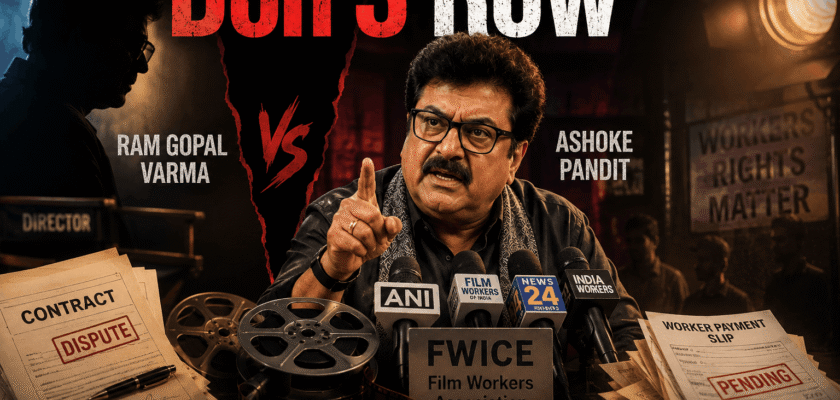
Don 3 Row: Why This Bollywood Dispute Became Bigger Than One Film
Don 3 row has moved beyond a casting or scheduling issue. It has now become a wider Bollywood debate about contracts, worker dues, union power, star accountability, producer losses, and how film industry disputes should be resolved.
The controversy started around Ranveer Singh’s alleged exit from Farhan Akhtar’s Don 3. Reports said Farhan Akhtar had demanded ₹45 crore in compensation after pre-production expenses and disruption linked to the actor’s exit. FWICE then issued a non-cooperation directive against Ranveer Singh, though it later withdrew the directive after the actor sent a legal notice.
The matter escalated further when Ram Gopal Varma criticised FWICE, and Ashoke Pandit hit back by raising alleged unpaid dues to film workers.
Why Don 3 Row Matters in 2026
Don 3 row matters because Bollywood’s working model depends on trust. Stars, directors, producers, technicians, writers, junior artists, spot teams, and production workers all depend on each other’s commitments.
If a big film faces sudden disruption, many people can be affected.
A high-profile project like Don 3 does not involve only actors and producers. It also involves:
- Set designers
- Assistant directors
- Costume teams
- Action teams
- Light workers
- Camera teams
- Sound teams
- Art department
- Location teams
- Daily wage workers
So, when a film dispute becomes public, the industry starts asking one question: who protects the workers when big names fight?
What Is the Don 3 Row?
The Don 3 row refers to the controversy around Ranveer Singh’s reported exit from Farhan Akhtar’s Don 3 and the industry reaction that followed.
Reports say FWICE issued a non-cooperation directive after a complaint linked to the alleged exit and financial loss. Moneycontrol reported that Ashoke Pandit said Farhan Akhtar had asked for ₹45 crore from Ranveer Singh after the alleged withdrawal from the film.
FWICE later clarified that its directive was not a legal ban but a professional non-cooperation step. The body eventually withdrew the directive after Ranveer Singh sent a legal notice.
This made the issue both legal and reputational.
Don 3 Row and the ₹45 Crore Fallout
Don 3 row became more serious because of the reported ₹45 crore fallout. In film production, pre-production spending can become very high before shooting begins.
Money may be spent on:
- Script development
- Actor dates
- Set planning
- Location scouting
- Action design
- Costume trials
- Technical crew booking
- Marketing planning
- Production schedules
- Advance payments
If a leading actor exits late, producers may face major losses.
That is why FWICE entered the dispute.
Why FWICE Got Involved
FWICE, or the Federation of Western India Cine Employees, represents many film workers and affiliated crafts. When major disputes affect production workers, FWICE often steps in to protect industry labour interests.
In the Don 3 row, FWICE’s position was that such disputes affect more than the star and producer.
If a project stops or delays, workers may lose days, payments, schedules, and future planning.
However, critics questioned whether FWICE had the right to act against an actor in such a dispute. This is where Ram Gopal Varma entered the discussion.
Ram Gopal Varma’s Criticism of FWICE
Ram Gopal Varma criticised FWICE over its action in the Ranveer Singh and Don 3 dispute. Times of India reported that Varma questioned the film body’s action and called it a “kangaroo court.”
His argument was that such bodies should not act like an informal court over star decisions.
Varma also suggested that the industry should value stars because they bring commercial power to films.
This position received attention because it challenged FWICE’s authority and brought the debate into public view.
Ashoke Pandit’s Push Back Against Ram Gopal Varma
Ashoke Pandit pushed back strongly against Ram Gopal Varma after Varma’s remarks against FWICE. Pandit accused Varma of disrespecting the federation and then raised a separate but serious point: alleged unpaid dues to workers.
Bollywood Hungama reported that Pandit claimed Varma owed over ₹1.25 crore to technicians and workers since 2019 and asked him to apologise to them.
Indian Express also reported FWICE’s claim that Varma had unpaid dues of over ₹1 crore linked to his 2018 project Officer.
This turned the Don 3 row into a bigger labour accountability debate.
Worker Dues: Why This Issue Is Sensitive
Worker dues are sensitive because film crews often depend on timely payments. Big names may debate contracts publicly, but many technicians and workers operate on tight financial cycles.
Delayed payments can affect:
- Household expenses
- Rent
- Loan payments
- Children’s education
- Medical costs
- Future work planning
- Professional trust
- Union complaints
- Worker morale
- Industry discipline
This is why FWICE reacted strongly when worker dues were raised.
In Bollywood, glamour is visible. Worker insecurity is often hidden.
Why Ashoke Pandit Used the Dues Argument
Ashoke Pandit used the dues argument to question Ram Gopal Varma’s moral position in the debate. His point was simple: if someone criticises a workers’ body, that person should also answer questions about alleged unpaid worker dues.
Deccan Herald reported that FWICE accused Varma of owing more than ₹1 crore to technicians and workers, while saying the organisation was not making the claim casually.
This shifted the focus from only Ranveer Singh to a broader industry question: who has the credibility to speak for fairness?
Why the Dispute Is Not Only About Ranveer Singh
The Don 3 row is not only about Ranveer Singh because it now includes multiple layers.
It includes:
- Actor-producer commitment
- Pre-production financial loss
- FWICE’s role
- Legal notice from Ranveer Singh
- Withdrawal of non-cooperation directive
- Ram Gopal Varma’s criticism
- Ashoke Pandit’s response
- Alleged unpaid worker dues
- Industry labour accountability
- Public image of Bollywood unions
That is why the dispute continues even after the directive was withdrawn.
What Does “Non-Cooperation Directive” Mean?
A non-cooperation directive is not the same as a formal legal ban. It generally means a federation or association advises its members not to work with a person until a dispute is resolved.
FWICE representatives have said such directives are part of industry procedure and are meant to push for resolution, not necessarily act as a court punishment.
However, such directives can still have serious professional impact.
They can affect:
- Film shooting
- Crew availability
- Public image
- Brand confidence
- Producer planning
- Actor reputation
- Industry relations
- Legal responses
- Media coverage
- Future collaborations
This is why the Don 3 row became highly sensitive.
Why Ranveer Singh Sent a Legal Notice
Ranveer Singh reportedly sent a legal notice to FWICE, after which the non-cooperation directive was withdrawn. Hindustan Times reported that FWICE held a press conference and announced withdrawal of the directive after the actor’s legal notice.
This shows that the actor’s team did not accept FWICE’s move quietly.
Legal notices can change the tone of a dispute because they shift the matter from industry pressure to legal positioning.
Once lawyers enter, public statements become more careful.
Farhan Akhtar’s Position in the Dispute
Farhan Akhtar’s position matters because he is linked with the Don 3 production and the reported financial loss. According to Moneycontrol, Ashoke Pandit said Farhan Akhtar had demanded ₹45 crore compensation after Ranveer Singh’s alleged exit.
This raises a practical industry question.
If a star exits after major pre-production spending, how should the loss be handled?
Should it be settled privately?
Should an industry body intervene?
Should courts decide?
Should workers’ interests be separately protected?
These questions do not have easy answers.
Why Bollywood Contracts Need More Clarity
The Don 3 row shows why Bollywood contracts need more clarity. Big films involve huge budgets and many working teams. If commitments change, the contract should clearly explain consequences.
A strong contract should include:
- Actor availability
- Exit clauses
- Compensation rules
- Force majeure terms
- Schedule obligations
- Creative disagreement process
- Payment milestones
- Worker protection terms
- Dispute resolution process
- Confidentiality rules
If contracts are clear, disputes become easier to settle.
If contracts are vague, public fights become more likely.
Star Power vs Worker Power
The Don 3 row also shows the tension between star power and worker power. Stars bring box office value, audience attention, and financing confidence. Workers bring execution, discipline, and technical strength.
A film cannot succeed without either side.
Ram Gopal Varma’s remarks appeared to defend star importance, while FWICE’s response defended worker rights and union authority.
The healthier view is simple: stars and workers both matter.
The industry should not treat one as bigger than the system.
Why Film Workers Need Stronger Protection
Film workers need stronger protection because many work on project-based or daily-wage arrangements. They may not always have stable salaries or long-term contracts.
When productions stop, payments get delayed, or disputes stretch, workers may suffer first.
Protection can include:
- Written contracts
- Payment timelines
- Escrow systems
- Worker insurance
- Grievance redressal
- Standard dispute process
- Penalty for delayed dues
- Transparent production accounting
- Union mediation
- Legal support
A modern film industry needs modern labour systems.
Why Public Arguments Can Harm Films
Public arguments can harm films because they create negative buzz before release. Don 3 is already a major franchise, and any dispute around it attracts huge attention.
Public disputes can affect:
- Audience mood
- Brand trust
- Investor confidence
- Casting perception
- Crew morale
- Media narrative
- Fan wars
- Marketing strategy
- Future announcements
- Franchise image
Sometimes, the controversy becomes bigger than the film itself.
That can be dangerous for a franchise.
Don 3 Franchise Pressure
The Don franchise already carries high expectations. Earlier versions with Amitabh Bachchan and Shah Rukh Khan created strong pop-culture memory. Any new Don film will face intense comparison.
This means Don 3 already has pressure from:
- Fan expectations
- Casting debates
- Legacy comparisons
- Box office pressure
- Action scale
- Music expectations
- Character reinvention
- Social media judgement
- Trade analysis
- Franchise loyalty
A labour or casting dispute adds another layer of pressure.
Why Entertainment Media Amplified the Row
Entertainment media amplified the Don 3 row because it contains all viral elements: a major franchise, a top actor, a respected director, industry bodies, worker dues, legal notice, and strong public statements.
This kind of story spreads quickly because it mixes:
- Celebrity drama
- Money dispute
- Industry politics
- Legal tension
- Worker rights
- Public statements
- Social media reactions
- Fan debates
- Trade impact
- Moral arguments
That is why the story stayed in headlines.
The Kangaroo Court Debate
Ram Gopal Varma’s “kangaroo court” criticism created a major talking point. The phrase suggests unfair or informal judgement without proper legal authority.
This debate matters because industry bodies often use pressure mechanisms to resolve disputes. Critics argue that such bodies may overreach. Supporters argue that without such bodies, workers may not get justice.
The real solution should be balanced.
Industry bodies should protect workers.
Actors and producers should get fair hearing.
Disputes should follow transparent rules.
Legal rights should be respected.
That balance is necessary.
Why Apology Demand Became Part of the Story
Ashoke Pandit reportedly asked Ram Gopal Varma to apologise to workers. Bollywood Hungama reported that Pandit claimed Varma owed over ₹1.25 crore to technicians since 2019 and asked him to apologise to them.
This apology demand made the issue personal.
It was no longer only about FWICE’s authority. It became about respect toward workers and accountability for old dues.
Whether Varma responds or contests the claim may shape the next phase of the controversy.
What Ram Gopal Varma May Argue
Ram Gopal Varma may argue that his criticism was about FWICE’s process, not about disrespecting workers. He may also contest the dues claim if he believes the allegation is incomplete or legally disputed.
That is why readers should remember one thing: allegations are not the same as final legal findings.
At this stage, reports say FWICE and Ashoke Pandit have made claims about dues. Varma’s detailed response to those specific dues claims will matter if he issues one.
A fair debate must include both sides.
Why FWICE’s Credibility Is Under Spotlight
FWICE’s credibility is under spotlight because it acted in a high-profile star dispute and then withdrew its directive. Critics may ask why the directive was issued and whether the process was fair.
Supporters may say FWICE acted to protect workers and producers from large losses.
The federation now has to show:
- Clear rules
- Fair procedure
- Worker-first approach
- Legal caution
- Neutral mediation
- Transparent communication
- Consistent action
- Respectful language
- Evidence-based claims
- Resolution-focused conduct
This is how industry bodies maintain trust.
How Bollywood Can Avoid Such Disputes
Bollywood can avoid such disputes by creating clearer and faster settlement systems.
A better system should include:
- Written contracts
- Exit penalties
- Worker dues escrow
- Mediation panels
- Legal review before directives
- Time-bound dispute resolution
- Private negotiation first
- Public statement protocol
- Worker payment protection
- Clear jurisdiction rules
This can reduce public conflict and protect all stakeholders.
Why Worker Dues Should Be Publicly Tracked
Worker dues should not depend only on public controversy. The industry should build a system where unpaid dues can be tracked and resolved fairly.
Possible solutions include:
- Digital payment records
- Union complaint dashboard
- Production-wise worker ledger
- Time-bound payment rules
- Penalty for delayed payments
- Independent audit option
- Worker helpdesk
- Legal aid cell
- Producer rating system
- Escrow-based payment release
This would make the industry more professional.
What This Means for Producers
For producers, the Don 3 row is a warning. Large films need risk planning before pre-production spending becomes huge.
Producers should protect themselves with:
- Strong agreements
- Insurance where possible
- Contingency budgets
- Clear date contracts
- Actor exit clauses
- Worker payment safeguards
- Production delay clauses
- Legal documentation
- Communication records
- Mediation options
A big project needs legal and operational discipline.
What This Means for Actors
For actors, the row is also a warning. Star decisions affect large teams. If an actor exits a film, the communication process must be clear and professional.
Actors should ensure:
- Written communication
- Clear contractual terms
- Timely updates
- Respect for production timelines
- Legal clarity
- Avoiding public confusion
- Managing dates carefully
- Protecting brand image
- Settlement before escalation
- Respect for crew impact
Professional freedom and professional responsibility must go together.
What This Means for Workers
For workers, the controversy highlights the need for stronger protection. A technician should not suffer because of disputes among bigger names.
Workers need:
- Timely payment
- Written commitments
- Clear complaint channels
- Strong union support
- Legal protection
- Insurance
- Safe working conditions
- Respectful treatment
- Project transparency
- Payment recovery mechanisms
The industry cannot call itself professional if workers remain vulnerable.
What This Means for Fans
Fans should understand that film controversies are often more complex than social media debates. A fan may support an actor, director, or franchise emotionally, but industry disputes involve contracts, money, worker rights, and legal processes.
Fans should avoid:
- Abusing workers’ bodies
- Attacking actors personally
- Spreading fake claims
- Treating allegations as final proof
- Ignoring worker concerns
- Turning disputes into fan wars
- Sharing unverified numbers
- Harassing families
- Dismissing labour issues
- Overreacting before full facts
Entertainment news should be discussed responsibly.
Why the Don 3 Row May Continue
The Don 3 row may continue because several issues remain unresolved or emotionally charged.
These include:
- Ranveer Singh’s exit claims
- Farhan Akhtar’s reported loss
- FWICE’s authority
- Worker dues allegations against RGV
- RGV’s possible response
- Fan debate
- Legal positioning
- Industry precedent
- Future casting updates
- Franchise reputation
Even if one directive is withdrawn, the larger debate may stay alive.
Final Verdict
Don 3 row has become much bigger than a franchise casting controversy. It now reflects a deeper Bollywood debate about contracts, worker dues, star responsibility, union authority, and fair dispute resolution.
Ashoke Pandit’s push back against Ram Gopal Varma changed the direction of the debate by raising alleged unpaid dues to technicians and workers. Varma’s criticism of FWICE raised questions about industry bodies acting like informal courts. Both issues matter.
In simple words, Bollywood needs stars, but it also needs workers. It needs creative freedom, but it also needs professional accountability.
The Don 3 row should become a lesson for the film industry: disputes must be handled through clear contracts, fair mediation, timely worker payments, and respectful communication before they turn into public battles.


