
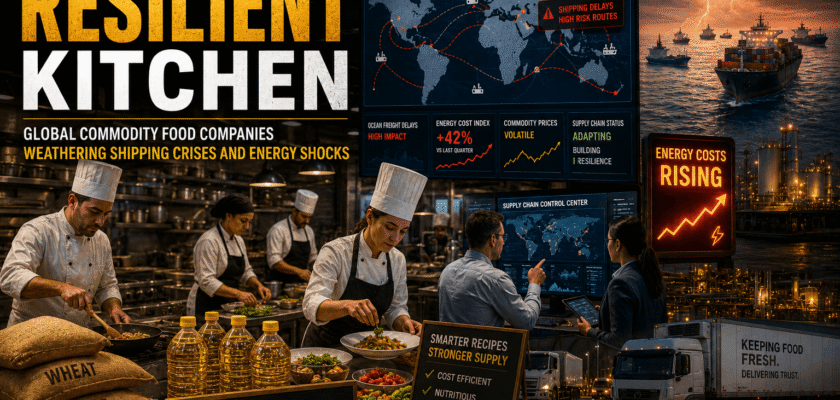
Resilient Kitchen: Why Food Companies Are Rewriting the Operating Recipe
Resilient kitchen has become a useful way to describe how global food companies are responding to shipping disruptions, higher energy bills and volatile commodity prices. The modern kitchen is not only a place where ingredients are cooked. It is the final point of a long chain involving farms, fertilizer, processing plants, packaging suppliers, ships, ports, warehouses, refrigeration and retail shelves.
When oil prices rise or shipping routes are disrupted, food companies face pressure at several stages at the same time. Transport becomes more expensive. Cold storage costs rise. Fertilizer and feed become costlier. Packaging materials may become harder to source. Delivery times become less predictable.
The companies that survive these shocks are not simply cutting costs. They are redesigning products, routes, inventory and recipes.
Why the Food Price Picture Still Looks Fragile
The FAO Food Price Index averaged 130.8 points in May 2026. That was slightly lower than April, but still 2.9% higher than a year earlier and close to a three-year high.
The May data showed:
- Cereal prices rose by more than 2.6%
- Sugar prices increased by 7.5%
- Vegetable oil prices fell month to month but remained over 20% higher year on year
- Energy costs continued to influence fertilizer, freight and biofuel demand
- Global cereal production for 2026/27 was forecast to decline
This means the pressure has not disappeared. It has only changed shape.
Shipping Crises Affect More Than Imported Food
A shipping crisis does not only affect imported coffee, cocoa or cooking oil. It also affects domestic food because farms and factories depend on imported fuel, fertilizer, chemicals, machinery parts and packaging.
A delayed route can increase costs for:
- Wheat and edible oil
- Animal feed
- Sugar and sweeteners
- Dairy inputs
- Spices
- Food-grade plastics
- Aluminium cans
- Refrigeration equipment
- Industrial gases
- Processing machinery
Even a locally produced biscuit or sauce may contain several globally traded inputs.
Energy Shocks Enter Every Stage of the Food Chain
Energy is used throughout the food system.
It powers:
- Irrigation pumps
- Tractors and harvesters
- Fertilizer production
- Milling and processing
- Baking, frying and freezing
- Refrigerated warehouses
- Trucks and ships
- Retail refrigeration
- Restaurant kitchens
- Home cooking
When crude oil and electricity costs rise, food inflation can appear before the consumer notices the original energy shock.
Why the Strait of Hormuz Matters to Food Companies
The Strait of Hormuz is mainly known as an energy route, but its disruption also affects food. Higher fuel costs increase freight charges, fertilizer production costs and the price of temperature-controlled transport.
The World Food Programme warned that the conflict was increasing fuel and transport costs while delaying food shipments. The New York Federal Reserve also reported that global supply-chain pressure remained elevated in May 2026.
For food companies, the lesson is simple: energy chokepoints are food chokepoints too.
Ingredient Diversification Is the First Defence
Resilient food companies avoid depending on a single country, supplier or crop origin.
Ingredient diversification can include:
- Multiple wheat origins
- Alternative edible oils
- Regional sugar suppliers
- Local spice sourcing
- Backup dairy processors
- More than one packaging vendor
- Seasonal procurement windows
- Flexible quality specifications
- Approved substitute ingredients
- Emergency supplier contracts
The goal is not to reduce quality. The goal is to avoid a complete production stop when one source fails.
Recipe Reformulation Without Losing Consumer Trust
When an ingredient becomes expensive or unavailable, companies may reformulate products. This can involve changing oil blends, flour ratios, sweetener levels or pack size.
However, reformulation can damage trust if taste, nutrition or transparency changes suddenly.
A responsible reformulation process should include:
- Sensory testing
- Nutrition review
- Allergen assessment
- Shelf-life testing
- Regulatory checks
- Clear label updates
- Consumer communication
- Cost comparison
- Supplier validation
- Trial production
A cheaper recipe that customers reject is not resilient.
Smaller Pack Sizes and Price-Point Engineering
Food companies often protect affordability by reducing pack size instead of increasing the headline price. This is called price-point engineering.
It can help preserve:
- Entry-level affordability
- Retail movement
- Household trial
- Small-store sales
- Brand visibility
But companies should avoid misleading consumers. Net quantity must remain clear, and repeated shrinkage can damage brand trust.
The strongest strategy combines transparent pack design with real value.
Inventory Buffers: Useful but Expensive
Holding extra inventory can protect against shipping delays, but it also creates costs.
Extra stock requires:
- Warehouse space
- Working capital
- Insurance
- Pest control
- Expiry management
- Temperature control
- Security
- Accurate demand forecasts
Companies should not stock everything equally. Critical long-lead ingredients may need larger buffers, while fresh and short-life products need faster rotation.
Regional Warehouses Reduce Route Risk
One large central warehouse may be efficient in normal times, but it can become a weakness during port closures, fuel shortages or road disruption.
Regional warehouses can provide:
- Faster local delivery
- Lower dependence on one port
- Better emergency stock access
- Reduced last-mile distance
- More flexible customer service
- Stronger disaster response
The trade-off is higher fixed cost and more complex inventory management.
Cold Chain Costs Are Becoming a Strategic Issue
Frozen and chilled food companies face direct exposure to electricity and fuel prices.
Cold chain includes:
- Refrigerated processing
- Blast freezing
- Cold storage
- Reefer trucks
- Port plug-in power
- Retail freezers
- Temperature monitoring
A power or fuel shock can quickly reduce margins. Companies are responding through better insulation, efficient compressors, solar power, route planning and temperature analytics.
Packaging Optimization Can Save Freight and Energy
Packaging affects both cost and logistics. Lighter or more compact packaging can reduce freight, warehouse space and material use.
Useful changes include:
- Lightweight bottles
- Thinner but stronger films
- Concentrated products
- Flat-pack cartons
- Recycled materials
- Standardized case sizes
- Better pallet utilization
- Refillable formats
Packaging changes must still protect food safety and shelf life.
Local Sourcing Is Helpful but Not a Complete Solution
Local sourcing can reduce shipping exposure, but it is not automatically cheaper or safer.
Local suppliers may still depend on imported:
- Seeds
- Fertilizer
- Fuel
- Machinery
- Packaging
- Feed
The best strategy combines local sourcing with regional diversification and clear quality standards.
Why Commodity Hedging Matters
Large food companies often use futures, forward contracts or long-term supply agreements to reduce price volatility.
Hedging may help manage:
- Wheat
- Corn
- Sugar
- Cocoa
- Coffee
- Edible oils
- Energy
- Currency
Hedging does not eliminate risk. It can stabilize part of the cost base and make pricing decisions more predictable.
Energy Efficiency Is Now a Margin Strategy
Energy efficiency is no longer only an environmental project. It is a financial defence.
Food factories can reduce energy use through:
- Heat recovery
- Efficient boilers
- Variable-speed motors
- LED lighting
- Better insulation
- Smart refrigeration controls
- Solar rooftops
- Energy monitoring
- Preventive maintenance
- Production scheduling
Every unit of energy saved reduces exposure to the next price spike.
Demand Forecasting Must Become Faster
Past sales data may not be enough during a crisis. Consumer behaviour changes when food prices rise.
Households may:
- Switch brands
- Buy smaller packs
- Choose cheaper proteins
- Reduce restaurant visits
- Buy more staples
- Avoid premium products
- Seek promotions
Companies need weekly or even daily forecasting rather than slow annual planning.
Product Portfolios Need Affordable Alternatives
A resilient company should not rely only on premium products. During inflation, consumers often move toward value packs and simpler recipes.
A balanced portfolio may include:
- Premium range
- Mainstream range
- Value range
- Family packs
- Small affordable packs
- Shelf-stable options
- Ready-to-cook basics
- Nutrition-focused low-cost products
This allows the brand to retain customers even when household budgets tighten.
Supplier Finance Can Protect the Entire Chain
Small suppliers may fail during an energy shock because they have weak cash flow. Large buyers can reduce this risk through faster payments, inventory financing or shared forecasting.
Supplier support can include:
- Shorter payment cycles
- Advance purchase commitments
- Shared logistics
- Energy-efficiency support
- Joint quality testing
- Better demand visibility
A strong buyer cannot remain resilient if its suppliers collapse.
Digital Traceability Helps During Disruption
Digital traceability allows companies to track where ingredients came from, where they are stored and which products used them.
This helps with:
- Faster recalls
- Alternative sourcing
- Shipment tracking
- Quality checks
- Inventory visibility
- Supplier performance
- Temperature monitoring
- Regulatory reporting
During a disruption, visibility is often more valuable than extra stock.
Food Safety Must Not Be Sacrificed for Cost
Companies under pressure may be tempted to use cheaper suppliers, extend storage or reduce testing. This can create contamination and recall risk.
Resilience must protect:
- Supplier approval
- Microbiological testing
- Allergen control
- Temperature limits
- Pest control
- Cleaning standards
- Traceability
- Packaging integrity
- Expiry rules
- Staff hygiene
A cost-saving decision that creates a safety incident can destroy years of brand value.
Restaurants and Cloud Kitchens Face Similar Pressures
Restaurants and cloud kitchens also deal with oil, LPG, packaging and delivery costs.
They can respond through:
- Smaller menus
- Cross-utilized ingredients
- Seasonal recipes
- Waste tracking
- Batch cooking
- Energy-efficient equipment
- Central procurement
- Standard portions
- Better delivery zones
- Dynamic menu pricing
A resilient kitchen menu is designed around both customer demand and supply availability.
A Resilient Home Kitchen Strategy
Households can also apply resilient-kitchen principles.
Useful steps include:
- Keep a small staple buffer
- Plan meals around seasonal produce
- Use multiple protein sources
- Reduce food waste
- Cook in batches
- Compare unit prices
- Use leftovers safely
- Avoid panic buying
- Choose shelf-stable basics
- Track energy-heavy cooking methods
The goal is not hoarding. It is thoughtful flexibility.
A Flexible Pantry List
A flexible pantry can include:
- Rice, wheat or millets
- Lentils and beans
- Shelf-stable milk or milk powder
- Cooking oils in moderate quantity
- Spices
- Canned or dried foods
- Nuts and seeds
- Frozen vegetables
- Basic baking ingredients
- Long-life sauces
These ingredients support multiple recipes when one commodity becomes expensive.
How Companies Can Communicate Price Increases
Consumers accept price changes more easily when communication is honest.
Companies should explain:
- The reason for the increase
- What quality is being protected
- Whether pack size changed
- What value remains
- How long the change may last
- What affordable alternatives exist
Silence can make customers assume the worst.
What Investors Should Watch
Investors evaluating food companies should monitor:
- Gross margin
- Freight cost
- Energy exposure
- Commodity hedging
- Inventory days
- Working capital
- Pricing power
- Pack-size changes
- Regional sourcing
- Supply-chain diversification
A company with strong brands but weak procurement can still suffer during a commodity shock.
Key Risks for the Rest of 2026
Major risks include:
- Continued Strait of Hormuz disruption
- Oil prices above normal ranges
- Higher fertilizer costs
- El Nino-related crop damage
- Lower cereal output
- Biofuel demand competing with food crops
- Currency volatility
- Shipping insurance costs
- Port congestion
- Consumer resistance to price increases
Food companies must plan for several risks at once, not one single crisis.
The Resilient Kitchen Checklist
A food business should ask:
1. Do we have backup suppliers?
2. Which ingredients have the longest lead time?
3. Can recipes change without hurting quality?
4. Are cold-chain costs measured in real time?
5. Do we have regional inventory buffers?
6. Are packaging alternatives approved?
7. Is supplier financial risk monitored?
8. Can we offer lower-price formats?
9. Is food safety protected under pressure?
10. Can consumers understand our pricing decisions?
These questions turn resilience into daily management.
Final Verdict
Resilient kitchen strategies are becoming essential because shipping crises and energy shocks affect every part of the food chain. The May 2026 FAO data showed that world food prices remained close to a three-year high, while cereals and sugar continued to rise and vegetable oil prices stayed far above year-earlier levels.
Global food companies are responding through ingredient diversification, recipe reformulation, smaller packs, regional warehouses, commodity hedging, energy efficiency and faster demand forecasting.
In simple words, the strongest food companies are not waiting for supply chains to return to normal. They are designing kitchens, factories and product portfolios that can work under continuous uncertainty.
The same lesson applies at home: flexibility, waste reduction, seasonal buying and a practical pantry can protect both food quality and household budgets.


