
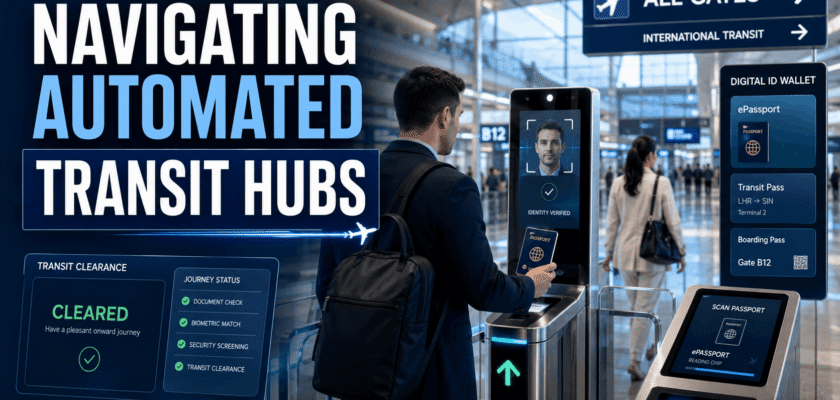
Automated Transit Hubs: Why Airport Clearance Is Changing
Automated transit hubs are changing how international travelers move through airports. Instead of only showing a passport to an officer, many passengers now meet e-gates, facial scans, fingerprint checks and digital identity workflows.
The goal is faster and safer movement. However, the first months of a new biometric rollout can feel slower because travelers must learn the process, terminals must adjust staffing and systems must handle first-time registrations.
The European Union Entry/Exit System shows how large this shift can be. Official EU pages say the system replaces manual passport stamping with digital entry and exit records for many non-EU short-stay travelers, including biometric data such as facial images and fingerprints.
Therefore, the best travel approach is simple. Understand the clearance flow before reaching the gate, keep documents ready and avoid tight connection times when a hub is newly automated.
| KEY TAKEAWAYBiometric clearance can make repeat travel smoother, but the first scan can be slower. Travelers should treat newly automated hubs as high-attention zones, not routine passport queues. |
Automated Transit Hubs and Digital Biometric Gate Clearance
Digital biometric gate clearance usually combines three checks. First, the system reads passport or digital identity data. Next, it compares the traveler with a facial image or fingerprint. Finally, it confirms permission to cross that checkpoint.
IATA says digital identity data can be securely shared ahead of travel with user consent, reducing repeated document handling. It also says biometric verification can replace manual paper document checks at airport touchpoints.
That future sounds seamless. Still, passengers need to understand consent, data sharing, manual fallback and the difference between airline checks and border checks.
What Travelers Should Expect at a Biometric Gate
✓ A passport chip scan or digital credential check.
✓ A face camera or fingerprint capture depending on the country.
✓ A screen prompt asking you to stand still and look forward.
✓ Possible questions about stay, return ticket or accommodation.
✓ A manual officer check if the gate cannot confirm identity.
✓ Longer first-time registration during major rollout periods.
✓ Faster repeat checks in some systems after the first enrollment.
Why First-Time Biometric Registration Can Delay Transit
First-time registration takes longer because the system is building or updating a travel record. The traveler may need a photo, fingerprints and passport data captured before the gate can clear the journey.
UK government guidance for the EU Entry/Exit System says some travelers may need to register biometric details such as fingerprints and a photo when they arrive. It also says EES registration replaces manual passport stamping.
This creates a new timing rule. A traveler who passed the same airport smoothly last year should not assume the same timing during a biometric transition.
| CONNECTION BUFFER BOXDuring a new e-gate rollout, a two-hour international connection may feel tight. A three-hour buffer is safer when passport control, terminal change or self-transfer is involved. |
Step-by-Step Gate Clearance Protocol
✓ Step 1: Check whether your transit requires immigration or stays airside.
✓ Step 2: Keep passport, boarding pass and visa or authorization ready.
✓ Step 3: Remove sunglasses, mask, cap or anything blocking your face.
✓ Step 4: Place the passport exactly as shown on the scanner screen.
✓ Step 5: Stand still and look at the camera until the scan finishes.
✓ Step 6: Place fingers on the reader only if the system asks.
✓ Step 7: Follow manual officer instructions if the gate sends you for review.
✓ Step 8: After clearance, recheck gate number, terminal and boarding time.
Automated Hubs Are Not the Same Everywhere
A common mistake is thinking every biometric system works the same way. In reality, airport e-gates, airline boarding biometrics, border systems and private fast-lane programs can have different rules.
For example, an airline may use face verification for boarding, while the border authority may still need fingerprints. A lounge or security lane may use a separate identity check.
Because of this, travelers should read each screen carefully. The fastest passengers are not always the most experienced travelers. They are the ones who follow the exact local process.
Who Should Be Extra Careful
✓ First-time visitors to a biometric border system.
✓ Travelers with separate tickets or self-transfer connections.
✓ Families with children or elderly passengers.
✓ Passengers with damaged passports or old passport chips.
✓ Travelers whose appearance has changed sharply from their passport photo.
✓ Passengers with visa, residence permit or name-mismatch issues.
✓ People transiting through terminals that require re-check-in or bag collection.
Privacy and Consent: What to Check Before Sharing Data
Biometric clearance uses sensitive personal data. Travelers should know whether the data is required by a border authority or optional for airline convenience.
IATA One ID materials emphasize passenger control, informed consent and minimum necessary data sharing. That matters because not every airport identity feature is mandatory.
Before opting into optional biometric boarding or digital identity wallets, travelers should check the privacy notice, storage period and whether deletion is possible.
Common Mistakes at Digital Biometric Gates
⚠ Standing too far from the camera.
⚠ Leaving sunglasses or a mask on during face capture.
⚠ Moving before the camera finishes scanning.
⚠ Putting the passport on the scanner upside down.
⚠ Ignoring the difference between transit and immigration checks.
⚠ Booking a tight connection during a new rollout.
⚠ Relying on social media clips instead of official airport guidance.
⚠ Letting phone battery die when digital confirmations are needed.
How to Prepare Before Flying
Preparation should begin before reaching the airport. Travelers should check the route, terminal map and official border information for the destination or transit country.
If the trip includes Europe, the official Travel to Europe pages explain that first-time EES arrivals may have face and fingerprint data recorded in a digital file. This helps travelers understand why the queue may be slower.
Passengers should also save offline copies of hotel proof, return ticket, travel insurance, visa and invitation letters where relevant.
Pre-Flight Checklist
✓ Check whether your passport is biometric and undamaged.
✓ Verify visa, ETA, ETIAS or entry authorization rules where applicable.
✓ Keep airline app and boarding pass ready offline.
✓ Download terminal maps for the transit airport.
✓ Allow more time for first-time biometric registration.
✓ Carry proof of stay, return ticket and funds if required.
✓ Charge your phone and carry a small power bank.
Families and Senior Travelers Need a Slower Plan
Families should not rush through automated gates. Children may need manual help, and some systems may treat minors differently for fingerprinting.
Senior travelers may also need more time to understand screen prompts. A calm pace is better than repeated failed scans.
One family member should manage documents, while another watches luggage. This reduces stress at crowded gates.
Business Travelers Should Avoid Overconfident Connections
Business travelers often choose the shortest connection. That can backfire at automated transit hubs during early deployment.
A biometric delay can turn into a missed meeting if the schedule leaves no buffer. For important trips, the safer plan is to arrive earlier or choose a longer connection.
Frequent travelers should also track whether their first biometric registration is already complete. Repeat journeys may move faster, but the rule depends on the system and airport.
Organic Search Summary for Travelers
Automated transit hubs are reshaping international travel with biometric gates, digital identity checks and e-passport scanners.
The strongest travel strategy is simple: arrive early, understand the gate flow, protect your data and avoid tight connections during rollout periods.
Biometric systems may become faster over time. However, the transition phase needs patience, preparation and official information.
Conclusion
Navigating automated transit hubs now requires more than carrying a valid passport. Travelers must understand how digital biometric gate clearance works and how it can affect connection timing.
The new systems can improve border security and reduce document handling in the long run. However, first-time scans, terminal confusion and manual referrals can still slow journeys.
The best traveler is prepared, not panicked. Check the rules, keep documents ready, leave extra time and follow the gate instructions step by step.
Frequently Asked Questions
Q. What are automated transit hubs?
They are airport or travel hubs that use digital identity tools, e-gates, biometric scans and automated document checks to move passengers through checkpoints.
Q. What is digital biometric gate clearance?
It is a process where a gate verifies identity through passport data, facial image, fingerprints or digital credentials before allowing passage.
Q. Do biometric gates replace border officers?
Not fully. Officers still supervise gates and handle manual checks when the system cannot verify a traveler.
Q. Why do first-time scans take longer?
The system may need to collect passport data, a photo and fingerprints before creating or updating a travel record.
Q. How can I avoid delays?
Arrive early, use official guidance, keep documents ready, remove face coverings for scans and avoid tight self-transfer connections.


