
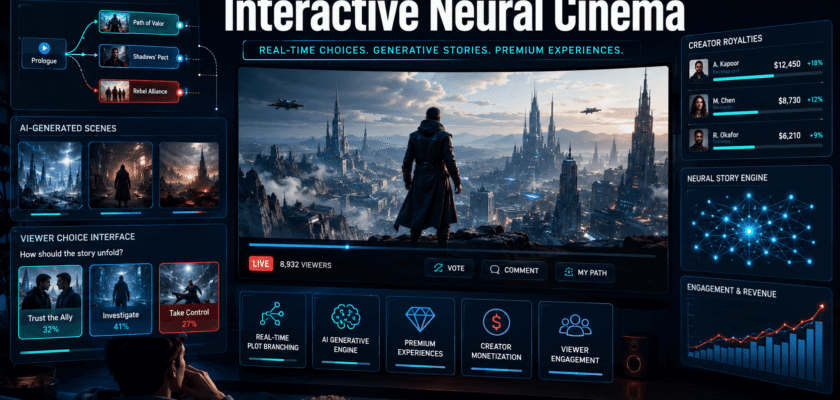
Interactive Neural Cinema: The New Streaming Bet
Interactive neural cinema is becoming a fresh idea in streaming.
It joins three fast trends. First, AI video is improving. Next, viewers want choice. Also, creators need new income paths.
In this model, a viewer does not only press play. The viewer can pick a path.
Then the platform can adjust scenes, ads, rewards, and endings in real time.
This sounds futuristic. However, the building blocks already exist.
Google says Veo 3.1 can generate high-fidelity video with native audio through the Gemini API.
Adobe also says Firefly can create video and audio assets. It also says its Firefly model is safe for commercial use.
Therefore, the next question is not only technical. It is also financial.
Who gets paid when a story changes for every viewer?
| KEY TAKEAWAYInteractive neural cinema can turn one film into many paths. Yet, each path needs clear rights, safe AI use, and fair creator payment. |
Why Interactive Neural Cinema Matters Now
Streaming platforms need stronger engagement.
Meanwhile, viewers skip content faster than before.
So, platforms are testing formats that feel more personal.
Microdramas show this shift clearly.
AP reported that Hollywood is moving into short mobile-first drama formats.
That matters because short stories reward quick choices.
AI video can add another layer. It can create small scene changes faster.
As a result, a platform can test many story paths without a full reshoot.
How Real-Time Plot Branching Can Work
✓ The viewer starts one story.
✓ The platform shows two or three choices.
✓ The story engine picks the next scene.
✓ AI tools adjust small visual or audio details.
✓ The system tracks watch time and drop-off points.
✓ Then creators earn from each licensed path.
✓ Finally, the best paths guide future episodes.
The Monetization Model Behind Plot Choices
The money model can be simple.
First, a platform can sell premium interactive access.
Next, it can sell branded story paths.
Also, it can share revenue with writers, actors, editors, and AI asset creators.
However, every choice must have a rights record.
That record should say who owns the base story.
It should also say who owns each generated scene.
Possible Revenue Layers
✓ Premium interactive episode access.
✓ Sponsored story paths.
✓ Micro-payments for alternate endings.
✓ Creator royalty pools.
✓ Localized scene versions.
✓ AI-assisted short spin-offs.
✓ Fan-voted sequel paths.
Why Royalty Rules Must Be Clear
Royalty confusion can hurt creators fast.
For example, one scene may use a writer idea.
It may also use a performer scan.
Then AI may change the background, voice, or camera movement.
So, platforms need clean logs.
They must track prompts, assets, approvals, and final use.
Otherwise, creators may lose trust.
| RIGHTS SAFETY BOXA good system should track every scene version. It should also track consent, credit, payment, and AI edits. |
Where Generative AI Video Fits
AI video should not replace the whole creative team.
Instead, it can help with safe changes.
For example, it can test scene mood, background style, or short alternate shots.
Google Veo tools now support advanced video generation through developer workflows.
Adobe Firefly also supports AI video creation for creative teams.
Still, every platform needs human review.
This review protects quality, safety, and copyright.
What Independent Digital Cinema Can Gain
Independent creators can benefit from smaller story units.
They can sell one base film.
Then they can license extra paths later.
This can help a small team earn more from one world.
Also, it can help new artists test audience demand quickly.
However, creators should not give away broad rights forever.
They should define each use in writing.
Big Risks for Streaming Platforms
⚠ Unclear actor consent.
⚠ Weak AI disclosure.
⚠ Poor story quality.
⚠ Copyright disputes.
⚠ Fake income claims.
⚠ Unsafe synthetic content.
⚠ Viewer fatigue from too many choices.
⚠ High compute cost during live generation.
A Simple Platform Checklist
✓ Use human-approved scripts.
✓ Get consent for voice and likeness use.
✓ Track every generated scene.
✓ Label AI-assisted scenes clearly.
✓ Pay creators for each used path.
✓ Keep viewer data private.
✓ Limit unsafe content generation.
✓ Test story quality before launch.
What Creators Should Ask Before Signing
Creators should ask direct questions.
First, who owns new AI-made scenes?
Next, how will royalties be counted?
Also, can the platform train models on the creator work?
Finally, what happens when a story path expires?
These questions are not small.
They decide long-term earning power.
Organic Search Summary
Interactive neural cinema is a new streaming idea.
It mixes AI video, viewer choice, and creator royalties.
The format can create new income.
However, it also needs strong rights rules.
Platforms should keep humans in control.
Creators should protect consent and ownership.
Conclusion
Interactive neural cinema may change digital cinema.
It can make one story feel personal for many viewers.
It can also create fresh revenue for creators.
Still, the model needs trust.
That trust needs consent, clear rights, human review, and fair pay.
Without these basics, the format may fail fast.
With them, it can become a powerful streaming layer.
Frequently Asked Questions
Q. What is interactive neural cinema?
It is a story format where viewers choose paths and AI tools help shape scene variations.
Q. Is this already common on major platforms?
No. The full model is still early. Yet, AI video and interactive media tools are moving fast.
Q. How can creators earn from it?
They can earn through micro-royalties, path licenses, premium access, and sponsored scenes.
Q. What is the biggest risk?
The biggest risk is unclear rights. Consent, credit, and payment must be written clearly.
Q. Should AI replace filmmakers?
No. AI should support creators. Humans should guide story, safety, and final approval.


