
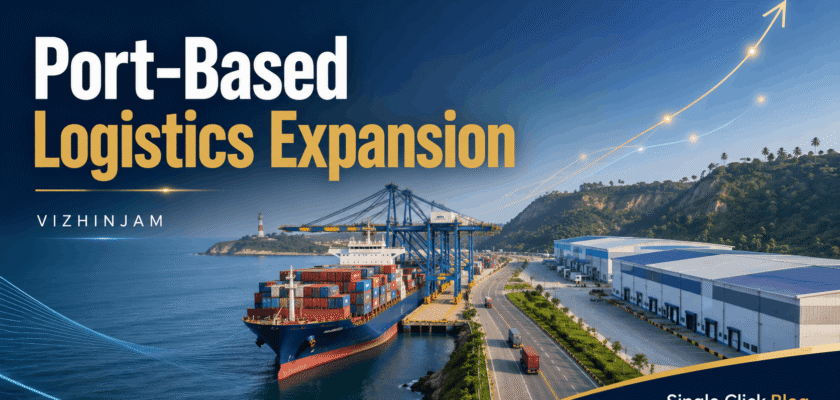
Port-Based Logistics Expansion is now a real estate story, not just a port story.
In 2026, investors are watching land near deep-sea ports, industrial roads, and warehouse clusters.
The reason is simple. Cargo wants shorter routes. Manufacturers want faster storage. Retailers want less delay.
So, decentralized industrial storage parks are becoming a new growth layer around major ports.
For India, Vizhinjam is one of the clearest examples of this shift.
Why Port-Based Logistics Expansion Is Getting Serious Attention
Ports once worked like arrival points. Now, they are turning into business ecosystems.
A modern port needs warehouses, cold chains, container yards, customs support, and manufacturing units near the gate.
This is why infrastructure capital is moving closer to port land.
Also, companies want backup storage outside crowded metro zones. That makes decentralized parks more useful.
| ✅ Quick TakeawayPort-adjacent land can save time.Warehouse clusters can reduce truck movement.Industrial storage parks can support export-led manufacturing.However, returns depend on tenants, approvals, and connectivity. |
Vizhinjam Industrial Hub Land Acquisition Value 2026
The Vizhinjam industrial hub land acquisition value 2026 update is important for investors.
Kerala approved the acquisition of 230 acres for Vizhinjam port-related development.
The estimated cost is around Rs 810 crore.
The land is planned in Kottukal, Maranalloor, and Amaravila near Thiruvananthapuram.
This land can support logistics parks, industrial units, and other port-linked facilities.
That gives investors a clearer signal. The area is not only waiting for cargo growth. It is preparing land for the next business layer.
Why Vizhinjam Matters for Real Estate Investors
Vizhinjam is designed as a deep-water transshipment port.
But the bigger real estate value may come from what grows around it.
The official Vizhinjam business plan talks about port-led industrialisation across about 3,500 acres in phases.
It also highlights a target of Rs 1,00,000 crore in port-led economic activities over the next five to eight years.
That is a strong signal for logistics, warehousing, container support, and manufacturing-linked real estate.
The MSC-Adani Signal
There is also a global shipping signal.
Adani Ports said MSC Group would acquire a 49 percent stake in Vizhinjam port for $1.4 billion.
Reuters reported that the deal is expected to help boost cargo volumes and accelerate ramp-up at the Kerala port.
For real estate, this matters.
When global shipping operators step closer to a port, nearby logistics land usually gets more attention.
Commercial Warehouse Property Investment Trends
Commercial warehouse property investment trends are also supporting this move.
India’s warehousing sector saw strong leasing in the first quarter of 2026.
Economic Times reported 19.3 million sq ft of warehousing leasing across the top eight cities.
That was a 15 percent year-on-year rise.
Manufacturing and third-party logistics firms were major demand drivers.
This trend matters because port-linked parks need the same occupiers.
They need storage, sorting, packing, value-added processing, and faster cargo release.
High Yield Manufacturing Real Estate Corridors
High yield manufacturing real estate corridors are not only about rent.
They are about lower friction.
A good corridor reduces time between factory, port, warehouse, and final buyer.
That is why manufacturers may prefer storage near ports.
Also, exporters may use these parks to hold finished goods before vessel movement.
Importers may use them for customs-linked storage and quick inland distribution.
So, the best corridor is not the cheapest location. It is the location that saves the most time.
| ✅ Investor ChecklistCheck road, rail, and port gate access.Check title, land use, and conversion status.Check flood risk and drainage planning.Check tenant mix: 3PL, cold chain, exporters, and manufacturers.Check power, fire safety, loading yards, and truck parking.Check lease lock-in, escalation, and vacancy risk. |
Why Decentralized Storage Parks Are Rising
Earlier, many warehouses followed big metro consumption zones.
Now, the map is changing.
Companies want multiple smaller nodes. This reduces pressure on one large hub.
It also protects supply chains from road delays, labor bottlenecks, and sudden demand spikes.
Port-based logistics expansion supports this new network.
A container can move from port to nearby storage faster. Then it can move inland in planned batches.
Where Returns May Come From
Returns may come from three areas.
- Rental income from Grade A storage, cold chain, and container support facilities.
- Land value growth near stronger port and road infrastructure.
- Longer leases from manufacturers and logistics operators who need stable locations.
Still, investors should not assume guaranteed returns.
Warehousing returns depend on demand, approvals, construction quality, and the strength of tenants.
Risks Investors Should Not Ignore
This opportunity also has risks.
Land acquisition can take time. Approvals can move slowly. Infrastructure links may face delays.
Also, not every land parcel near a port becomes valuable.
A weak access road can reduce warehouse demand.
Poor drainage can increase maintenance costs.
And speculative land buying can trap money for years.
| ⚠️ Smart WarningDo not buy only because a port is nearby.Buy only after checking access, approvals, tenant demand, and exit options.For retail investors, listed REITs and professionally managed platforms may be safer than direct land bets. |
What This Means for Developers
Developers need to build for users, not only for investors.
That means wide internal roads, safe turning radius, loading docks, fire systems, and worker facilities.
Also, green design will matter more.
Solar roofs, water systems, and efficient lighting can reduce operating costs.
These features can make a warehouse easier to lease.
What This Means for Businesses
For businesses, port-linked storage can improve supply chain control.
A manufacturer can keep goods closer to the export gate.
A food company can use cold storage near container movement.
A 3PL firm can serve both import and export customers from one node.
That is why port-based logistics expansion can become a serious cost-saving tool.
Future Outlook
The next phase will depend on execution.
If land acquisition, road links, and investor participation move together, Vizhinjam can become more than a port.
It can become a port-led real estate corridor.
Across India, similar corridors may rise near other deep-water and multimodal hubs.
Therefore, infrastructure capital is not only chasing buildings.
It is chasing faster movement, lower friction, and stronger supply chains.
Final Takeaway
Port-Based Logistics Expansion is changing how investors look at industrial real estate.
The Vizhinjam industrial hub land acquisition value 2026 update shows how land, cargo, and storage are now linked.
At the same time, commercial warehouse property investment trends show strong demand from manufacturing and 3PL users.
So, the best opportunity may sit where port access, clean land, strong tenants, and smart design meet.


