
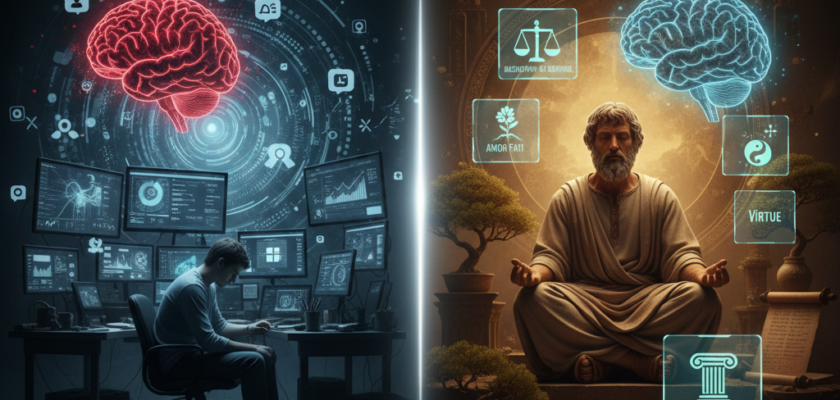
The Stoic Mindset: Ancient Wisdom for Solving Modern Problems
In the chaotic, fast-paced world of 2026, where digital distractions, economic uncertainties, and global anxieties constantly vie for our attention, it’s easy to feel overwhelmed. Yet, answers to our modern dilemmas might lie in wisdom that is over two millennia old. The Stoic mindset, an ancient Greek and Roman philosophy, offers practical tools and a powerful framework for cultivating inner peace, resilience, and clarity amidst life’s inevitable challenges.
This isn’t about emotionless suppression; it’s about understanding what you can control, accepting what you cannot, and focusing your energy on virtuous action.
1. The Dichotomy of Control: Master What You Can, Accept What You Can’t
This is perhaps the most fundamental Stoic principle. It teaches us to distinguish between what is within our power (our thoughts, actions, reactions) and what is outside our power (other people’s opinions, external events, the past, the future).
- Modern Application: In 2026, we’re bombarded with news and events beyond our control. Stoicism teaches us to let go of anxiety over traffic, market fluctuations, or social media trends, and instead focus on our responses to them.
- Benefit: By focusing solely on our controllable sphere, we conserve mental energy, reduce stress, and prevent pointless worry.
2. Premeditatio Malorum: Anticipating Adversity
The Stoics practiced “premeditation of evils” – consciously thinking about potential negative outcomes or challenges that might arise.
- Modern Application: Before a big presentation, a difficult conversation, or a challenging project, take a few minutes to mentally walk through what could go wrong. Not to dwell on it, but to prepare.
- Benefit: This isn’t pessimism; it’s proactive resilience. When challenges do arise, you’re less surprised, more emotionally prepared, and often have already considered potential solutions, allowing for a calmer, more effective response.
3. Amor Fati: The Love of Fate (Embracing What Happens)
“Love of Fate” means not just accepting, but truly embracing everything that happens to you, good or bad, as necessary for your journey.
- Modern Application: Missed a flight? Lost a job? Faced an unexpected setback? Instead of fighting or lamenting it, view it as an opportunity for growth, a shift in direction, or a chance to develop new strengths.
- Benefit: This mindset transforms obstacles into lessons. It helps you move past resentment and self-pity, enabling you to extract value from every experience, fostering adaptability and peace.
4. Memento Mori: Remember You Will Die
This isn’t a morbid obsession but a powerful reminder of life’s brevity and preciousness.
- Modern Application: In an era of infinite scrolling and endless distractions, Memento Mori is a powerful call to action. It prompts us to reflect on our priorities, pursue meaningful goals, and spend time wisely.
- Benefit: This contemplation helps clarify what truly matters, encourages us to live with purpose, appreciate the present moment, and let go of trivial concerns or grudges.
5. Virtue as the Highest Good: Living with Integrity
For Stoics, living a virtuous life (wisdom, courage, justice, temperance) was the only true good, independent of external circumstances.
- Modern Application: Faced with ethical dilemmas at work, pressure to conform on social media, or choices that test your integrity, the Stoic asks: “What is the right thing to do?”
- Benefit: When your actions are guided by virtue, you gain an unshakable inner confidence and self-respect, regardless of external outcomes or others’ opinions. This leads to deep satisfaction and mental peace.
The Stoic Toolkit for 2026
| Stoic Principle | Modern Problem Addressed | How It Helps |
| Dichotomy of Control | Anxiety over uncontrollable events | Reduces worry, focuses energy |
| Premeditatio Malorum | Unexpected setbacks, stress | Builds resilience, fosters calm response |
| Amor Fati | Resentment, regret, victimhood | Promotes adaptability, finds opportunity in adversity |
| Memento Mori | Procrastination, misplaced priorities | Encourages purpose-driven living, appreciation |
| Virtue as Good | Ethical dilemmas, external pressures | Cultivates inner strength, self-respect |
Conclusion
The Stoic mindset is not about being emotionless, but about intelligently managing our emotions and perceptions. It provides a robust framework for navigating the complexities of 2026 – from digital overload to personal challenges – by empowering us to choose our responses, cultivate resilience, and live a life guided by purpose and integrity. The wisdom of the ancients is, remarkably, more relevant than ever.
How do you practice Stoicism in your daily life? Which principle resonates most with you? Share your thoughts in the comments below!


