


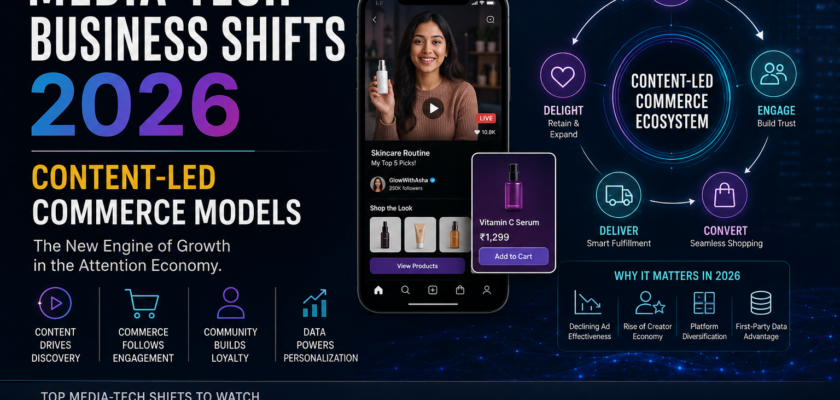
Beyond Digital Ads: How Media Platforms are Shifting to Physical Retail and Curated Food Markets.
The baseline economics powering the digital publishing industry have collapsed into absolute saturation. For over a decade, the business playbook for digital media houses was entirely standardized: produce high-volume content, optimize for aggressive algorithmic discovery pipelines, accumulate millions of programmatic page views, and monetize that passive attention via third-party digital advertising networks. Success was measured by the scale of your ad-supported impressions.
But as we navigate 2026, that legacy digital ad model has hit an impenetrable wall.
Driven by the final erosion of third-party tracking cookies, the rise of AI-driven search synthesis tools that answer user queries without sending outbound clicks, and plummeting programmatic ad yields, reliance on banner advertisements is now an operational liability. Digital media networks are facing structural stagnation unless they aggressively diversify their corporate ecosystems.
To survive this era of digital attention bankruptcy, forward-thinking conglomerates are executing the most significant Media-Tech Business Shifts 2026 trend: the migration into physical real estate and curated food commerce.
Publishers are no longer content simply writing about lifestyle, hospitality, and culture; they are actively building, leasing, and operating the physical venues where those experiences happen. By bridging the gap between digital content and experiential retail, media brands are unlocking highly scalable, high-margin revenue streams that search algorithms can never commoditize.
1. The Digital to Real-World Asset Blueprint
The primary catalyst forcing this structural transformation is the search for sustainable business diversity. Programmatic digital advertising yields thin, single-digit margins that are completely dependent on the whims of tech monopolies. Physical commerce, by contrast, gives media brands direct ownership of consumer wallets.
                  [ Legacy Media Monetization ]
    (Digital Content ──► Programmatic Ads ──► Low-Margin Revenue)
                                  │
                                  ▼
               [ The 2026 Experience Commerce Loop ]
    (Digital Curation ──► Physical Retail ──► Diversified High Margins)
                                  │
         ┌────────────────────────┴────────────────────────┐
         ▼                                                 ▼
┌─────────────────────────────────┐               ┌─────────────────────────────────┐
│     Experiential Retail Hubs    │               │    Editorially Curated Food     │
│ • Turning content into spaces   │               │ • Tapping local culinary gems   │
│ • Direct consumer sales channels│               │ • High-yield merchant leasing   │
│ • Un-bottlenecked brand equity  │               │ • Premium real-life experiences │
└─────────────────────────────────┘               └─────────────────────────────────┘
By transitioning into content-led commerce models, media conglomerates leverage their existing digital audience trust to de-risk physical real estate ventures.
When a trusted media voice launches a brick-and-mortar storefront or an experiential retail lounge, they don’t have to spend millions on customer acquisition. Their built-in, highly engaged audience baseline converts directly into day-one foot traffic, providing an un-bottlenecked competitive advantage over traditional retailers who lack a native media machine.
2. Case Study: The Spatial Commerce Paradigm Shift
The definitive proof of this media-tech paradigm shift arrives with the historic expansion of global media brands taking over physical square footage. The layout perfectly illustrates how digital curation seamlessly converts into real-life destinations.
A. The Digital Launch Runway
Media networks initiate the operational rollout by deploying dedicated lifestyle platforms across major urban nodes. Powered by local expert journalists, these platforms act as the ultimate digital guides to the finest cultural, artistic, and dining experiences across a city’s premium metropolitan districts.
B. The Physical Execution: Editorially Curated Spaces
The digital momentum serves as the direct launchpad for massive physical assets, where publishers set up expansive, beautifully designed culinary centers.
                [ The Curated Media Market Architecture ]
 _________________________________________________________________
|  • Footprint: ~25,000 Square Feet of Premium Asset Space         |
|  • Curation: Editorially Vetted Kitchens & Master Craft Bars     |
|  • Activation: Live Performance Stages & Private Creator Pods    |
|  • Revenue: Multi-Tiered Vendor Profit-Shares & Ticketing        |
|_________________________________________________________________|
Instead of hosting generic fast-food chains, these editorially curated markets act as a living reflection of the brand’s digital guides, bringing award-winning chefs and local culinary gems together under a single, highly optimized roof.
For shareholders, this diversification marks the transformation from a pure digital publishing house into a high-scale media-tech empire, creating material revenue gains through physical lease points, ticket sales, and premium brand experiences.
3. Strategic Matrix: Programmatic Ad Dependency vs. Experiential Commerce
| Operational Vector | Legacy Ad-Supported Media Formats | Experiential Commerce Hubs (2026) |
| Primary Revenue Stream | Volatile digital banners and text impressions | Physical merchant lease margins & event sales |
| Customer Acquisition Cost | High; dependent on unpredictable algorithms | Ultra-Low; driven by native media engines |
| Business Ecosystem | Intensely vulnerable to third-party ad blocks | Deeply insulated via offline lifestyle assets |
| Gross Margin Yield | Under continuous pressure from tech platforms | Up to 4x higher than standard digital models |
| Risk Characterization | High vulnerability to sudden click-rate drops | Minimized Risk; tangible, diversified growth |
4. Monetizing the Senses: Why Algorithms Cannot Replicate Taste
The underlying psychological foundation driving the success of Media-Tech Business Shifts 2026 trends is a broader cultural phenomenon known as the “Return of Touch”. As generative AI engines continue to flood the internet with cheap, programmatic text and synthetic images, digital discovery is losing its human element. Consumers are experiencing severe screen fatigue, making real-world, tactile interactions highly valuable.
Physical food halls and curated retail spaces deliver exactly what a smartphone display cannot provide: physical confidence, sensory evaluation, and shared community emotion.
When a media brand acts as the trusted filter, separating the exceptional from the average in the real world, they establish an unshakeable connection with their community.
Advertisers and commercial partners are willingly paying large premiums to enter these spaces. They recognize that connecting with an urban professional enjoying a curated meal offers a vastly superior return on investment compared to chasing a fading, brief banner ad click on a crowded website layout.
Conclusion
The survival of the modern media sector depends on its ability to step out from behind the screen. The innovative expansion of publishing platforms into physical food markets proves that content is at its best when it drives real-world connection.
By trading the volatile, low-yield abacus maze of programmatic advertising for the durable, uncapped upside of experiential real estate, publishing houses are rewriting the laws of brand longevity.
The old model of simply reporting on a city’s culture is giving way to a new era where media houses actively build it. As these media-led physical markets continue to scale across major international corridors, they offer a clear blueprint for the future of digital publishing: stop fighting for clicks in a saturated online world, build premium real-world destinations, and let your trusted curation speak for itself.


