
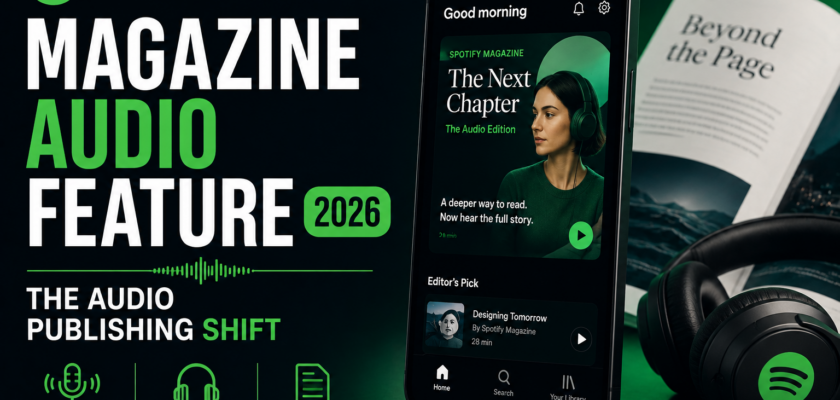
Audio-Magazine Convergence: Why Spotify is Bundling Audio Editions of Popular Print Stories.
The operational map of the digital streaming economy has officially expanded into high-end print journalism. For over a decade, premium audio distribution networks operated within very distinct product lanes. Platforms dedicated the vast majority of their engineering capitals to curating massive musical libraries, licensing high-profile celebrity podcast networks, and deploying algorithmic discovery tools. When spoken-word audio expansion occurred, it focused almost exclusively on traditional audiobooks. This model assumed that users required a clear, sharp separation between their daily casual music streaming habits and their long-form intellectual reading routines.
But as we advance through late May 2026, that structural division has been permanently removed.
The audio landscape has entered an era of rapid content convergence, led by the launch of the Spotify magazine audio feature 2026 framework.
Officially launched under the product label “Articles,” the streaming giant is integrating high-end long-form journalism directly into its core media hub.
By transforming high-prestige print editions into easily digestible audio assets, the platform is expanding past basic music tracking. This shift aims to systematically capture user attention during daily commutes, lower the friction of reading deep stories, and unlock massive growth channels across the non-music streaming sector.
1. The Gateway Metric: Slicing Long-Form Content into Digestible Audio
The primary operational strategy driving this massive media convergence centers on a clear psychological insight: modern consumers find jumping straight into a 15-hour audiobook highly intimidating. While multi-hour audiobooks have seen steady adoption among dedicated readers, casual listeners frequently hesitate to commit their limited free time to massive literary texts.
Therefore, the platform has engineered a clever middle ground by introducing narrated magazine pieces directly into the system.
                    [ The Intimidating Audio Wall ]
     (15-Hour Heavy Audiobooks ──► Consumer Commute Friction ──► Stagnant User Trials)
                                     │
                                     ▼
                [ The Shorter-Form Content Gateway ]
     (Sub-2-Hour Narrated Articles ──► Low Friction Trial ──► Deep Audiobook Adoption)
These curated, shorter listening pieces function as a friction-free entry point to build deeper digital reading habits:
- The Launch Library Asset: The initial release injects more than 650 high-profile English-language magazine articles straight into the application database.
- The Time-Cap Formula: To protect user engagement, every single narrated piece is capped at a highly practical length of under two hours.
- The Strategic Gateway: Consequently, by helping users experience shorter, premium journalism, the system builds an easy bridge. This transition naturally guides listeners toward streaming full-length books over time.
2. Deconstructing the Value Bundle: Monetization and Media Alliances
The commercial execution of this historic content bundling strategy relies on deep partnerships with the world’s leading media brands, alongside a smart tier system for global users.
A. High-Prestige Publisher Distribution
The platform has formed direct licensing partnerships with premier publishing houses to secure an elite initial content roster.
Subscribers can instantly stream beautifully narrated stories from iconic names including Rolling Stone, The Atlantic, Vogue, Variety, Billboard, Vibe, GQ, WIRED, Vanity Fair, and Pitchfork.
This direct collaboration creates a powerful synergy. It allows traditional print media to share their high-quality reporting with a massive, younger global audience.
B. The Two-Tier Monetization Split
To maximize revenue while preserving subscriber loyalty, the feature uses a highly coordinated pricing model:
  [ Consumer Enters Articles Hub ] ───► [ Premium Subscribers: Uses Monthly 15-Hour Cap ]
                                                   │
                                                   ▼
                                    [ Free Ad-Supported Tier Users ]
                              "Individual Articles Unlocked at $1.99 Each"
                                                   │
                                                   ▼
                                    [ Dynamic Audio Delivery Choice ]
                              "Mix of Human Narrators and Clear Digital AI Voices"
For Premium subscribers, these long-form articles are included directly within their existing 15-hour monthly audiobook allowance.
Conversely, free tier users can buy individual narrated pieces as ala-carte choices for $1.99 per article.
Furthermore, to lower production overheads and ensure fast updates, the files use a smart mix of professional human narrators and advanced, clear digital AI voices.
Crucially, to preserve complete transparency, any piece utilizing synthetic voice generation is clearly labeled within the user interface. This clear labeling allows audiences to make informed choices while enjoying a seamless listening experience.
3. Strategic Matrix: Isolated Print Subscriptions vs. 2026 Integrated Audio Article Bundles
| Operational Vector | Traditional Standalone Print Media | Spotify Integrated “Articles” Hub (2026) |
| Primary Consumption Mode | Manual text reading across apps or paper pages | Hands-free listening optimized for commutes |
| Monetization Structure | Individual paywalls and separate print rates | Bundled natively into existing Premium tier lines |
| Content Discovery Method | Manual searches or organic social media feeds | Algorithmic personalization and smart audio recommendations |
| Narration Infrastructure | Non-existent or limited to basic text-to-speech | Premium human narration mixed with labeled AI voice tech |
| Risk Characterization | High risk of print subscriber loss over time | Withdrawn Risk; tech-backed ecosystem growth |
4. Non-Music Streaming Growth: Personalizing the Narrative Journey
The long-term impact of this sweeping content expansion is permanently reshaping the economics of the publishing industry. For years, major publishers struggled to monetize their deep text archives behind expensive, individual website paywalls.
By routing these rich text catalogs through a unified personalization engine, the platform connects articles with listeners who match that specific content.
  [ Publisher Syncs Text Archive ] ───► [ Audio Analytics Track User Intent ]
                                                       │
                                                       ▼
                                        [ Hyper-Targeted Recommendations ]
                                "Direct Feed Placement Based on Real Habits"
                                                       │
                                                       ▼
                                        [ New Ad and Subscription Revenue ]
                                "Unlocks Fresh Long-Tail Income for Authors"
The system’s advanced recommendation model automatically tracks a user’s deep interests. For instance, if a user spends hours streaming technical podcasts or reading sci-fi summaries, the algorithm automatically surfaces long-form WIRED tech deep dives directly onto their home dashboard.
Thus, the platform creates a highly efficient long-tail revenue stream for premium writers and media partners.
This seamless distribution matches content to true consumer intent, proving that the ultimate goal of modern audio innovation isn’t about replacing traditional reading, but about transforming text into a fluid, hands-free companion that enriches our daily lives.
Conclusion
The remarkable rollout defining the Spotify magazine audio feature 2026 paradigm outlines a permanent evolution in how media is consumed: true ecosystem growth is achieved by breaking down traditional content walls to match the multi-tasking habits of the modern listener. The old abacus maze of hopping between different journalism apps, managing separate website paywalls, and buying isolated reading subscriptions is being simplified by smart audio bundling.
By combining premium print reporting with advanced AI voice tech and personalized discovery engines, developers are charting a clear path forward for the publishing industry.
These integrated audio updates don’t take away from the original value of traditional print; they rescue high-quality journalism from quiet archives and place it straight into the ears of millions of active listeners worldwide. As these shorter narrated articles continue to expand across global markets, they deliver a powerful truth for modern lifestyle design: when you make great stories easier to listen to, you build a smarter, more deeply connected world.


