
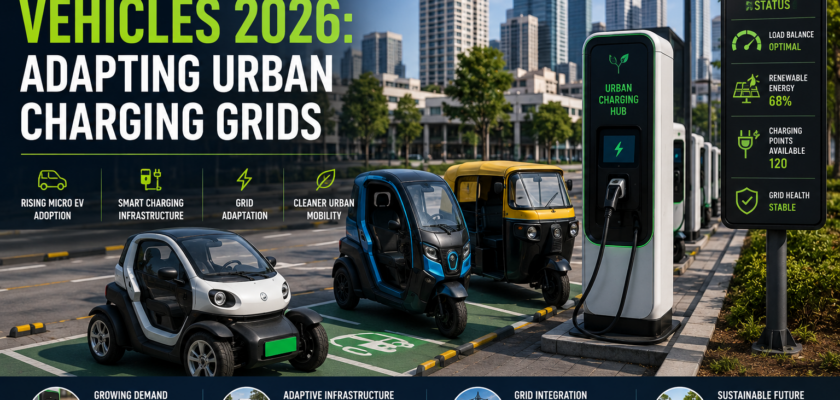
The Micro-EV Surge: How 2026’s Grid Infrastructure is Adapting to Ultra-Compact Urban Vehicles.
The structural layout of metropolitan transit is undergoing a massive, data-driven transformation. For nearly a decade, global automakers focused their engineering efforts on building heavy, long-range electric SUVs and large luxury sedans. This approach assumed that highway range and massive battery packs were necessary to convince drivers to ditch fossil fuels. However, this heavy vehicle strategy created severe spatial challenges across dense city centers, cluttering narrow streets and straining localized electrical grids.
Fortunately, modern city drivers are rapidly shifting toward smaller, high-efficiency transport options.
We have officially entered a new era characterized by the rapid integration of micro electric vehicles 2026 models into daily city life.
Driven by worsening parking scarcity and climbing utility rates, urban commuters are ditching oversized vehicles for compact alternatives.
By switching to ultra-lightweight, two-seater electric quadricycles, drivers are managing their personal travel budgets with precision. However, this sudden wave of downsized vehicles requires a complete overhaul of urban EV infrastructure assets. Municipalities are racing to transition away from high-power, space-heavy charging locations to build distributed networks of compact car charging hubs right at the curbside.
1. The Efficiency Equation: Why Smaller Battery Architectures Win
The primary catalyst accelerating the adoption of lightweight quadricycles centers on superior energy economics. A traditional, full-sized electric passenger car requires a massive 60 kWh to 100 kWh battery pack to manage its heavy frame.
In contrast, compact micro-cars utilize highly optimized, low-voltage power architectures that drop resource requirements significantly.
                    [ The Heavy EV Grid Strain ]
     (100 kWh Battery Pack ──► High-Power DC Fast Chargers ──► Local Grid Overloads)
                                     │
                                     ▼
                [ The 2026 Micro-EV Power Shield ]
     (8 kWh Battery Pack ──► Low-Amperage Curbside Plugs ──► Stable Distributed Load)
These highly efficient vehicle structures deliver multiple operational benefits for municipal power distribution grids:
- Drastic Weight Reductions: Micro-vehicles weigh less than 500 kilograms, requiring a tiny fraction of the kinetic energy needed to move a standard sedan.
- Minimal Power Requirements: Consequently, these vehicles utilize ultra-efficient battery packs ranging from a small 6 kWh to 15 kWh.
- Lowering Grid Friction: Therefore, a commuter can complete an entire week of city driving using the same electrical energy a large electric SUV burns in a single afternoon, lowering structural energy strain.
2. Re-Engineering the Street: Building Low-Amperage Curbside Infrastructure
The massive growth of these tiny vehicles is forcing a complete redesign of public charging access. On-road parking fields can no longer rely solely on massive, expensive DC fast-charging pillars that draw immense power from local substations.
Instead, engineers are deploying smart, low-voltage charging connections directly into existing urban street fixtures.
  [ Commuter Parks Micro-EV ] ───► [ Plugs into Smart Low-Voltage Street Lamp ]
                                                   │
                                                   ▼
                                    [ Balanced Overnight Charging ]
                              "Uses Standard 15A Lines with Zero Substation Upgrades"
                                                   │
                                                   ▼
                                    [ Low-Cost Commute Secured ]
                              "Delivers Full Charge without Straining the Grid"
Cities are retrofitting standard utility poles and parking meters into smart, low-amperage charging points.
- Eliminating Expensive Construction: These smart setups utilize standard 240V, 15-amp electrical lines, completely avoiding the need for expensive street excavation or utility upgrades.
- Optimized Overnight Workloads: Because micro-cars feature smaller batteries, they charge fully in less than three hours using basic household-level currents.
- The Neighborhood Benefit: Thus, these distributed networks allow city neighborhoods to support thousands of active vehicles cleanly, bypassing the risk of localized blackouts.
3. Strategic Matrix: High-Power Traditional EV Stations vs. 2026 Compact Charging Hubs
| Infrastructure Vector | Traditional High-Power EV Stations | 2026 Compact Charging Hubs |
| Grid Power Draw | Extreme; demands dedicated high-voltage substations | Minimal; integrates into existing street utilities |
| Physical Space Taken | Large; requires dedicated commercial parking fields | Tiny; fits neatly onto sidewalks and small curbs |
| Installation Timelines | Slow; held back by months of municipal permitting | Fast; modular blocks deploy in less than a day |
| Vehicle Match Profile | Built for heavy, long-range passenger SUVs | Optimized for lightweight urban quadricycles |
| Risk Characterization | High risk of grid overloads during peak hours | Withdrawn Risk; tech-backed load balancing |
4. Smart Grid Balancing: Turning Tiny Batteries into Distributed Energy Reserves
The final core trend reshaping urban mobility transforms parked micro-vehicles from passive power users into active grid assets. Because thousands of these compact cars sit parked across business districts during office hours, their connected batteries form a massive, distributed energy bank.
Consequently, utility companies are utilizing advanced software to manage changing power demands smoothly.
  [ Peak Power Demand Spikes ] ───► [ Smart Software Signals Parked Micro-EVs ]
                                                    │
                                                    ▼
                                     [ Micro-Power Injections Executed ]
                                "Vehicles Return Small Energy Drops to Grid"
                                                    │
                                                    ▼
                                     [ Fleet Energy Levels Stable ]
                                "Commuters Receive Automated Charging Credits"
Utility networks utilize advanced cloud tracking to balance regional power needs in real time.
When power consumption spikes during hot summer afternoons, the smart system draws small, harmless bits of energy from connected car networks to stabilize the regional grid.
Conversely, when power demands drop late at night, the network automatically charges the fleet using clean wind energy.
Thus, proactive fleet management turns compact vehicles into vital tools for green energy storage. This smart grid integration ensures city networks remain stable, proving that the ultimate path to zero-emission transit is won by building efficient, interconnected power networks right where we live and work.


