
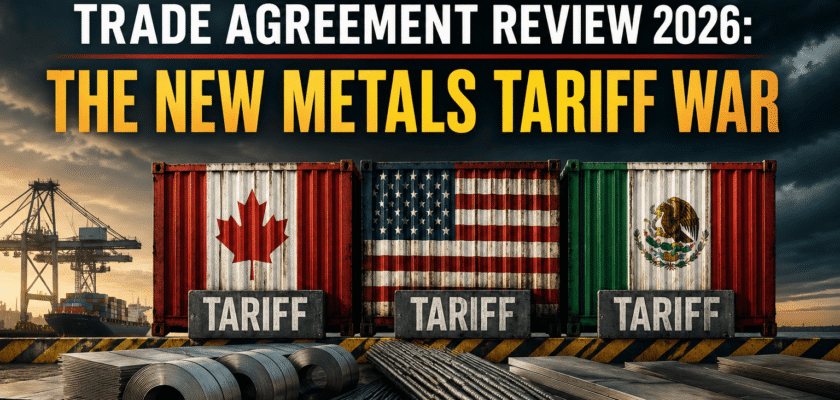
Tariffs and Trade Review: Negotiating Steel and Aluminum Frameworks Across North American Borders.
The underlying roadmap directing continental supply chains is undergoing a rapid, structural transformation. For nearly three decades, cross-border manufacturing operations across the Western Hemisphere relied heavily on a predictable, duty-free trading network. This free-trade zone encouraged industrial companies to build highly integrated production loops, moving raw metals, vehicle components, and finished products smoothly across shared borders. This legacy framework successfully lowered consumer prices, but it left domestic metal producers highly vulnerable to shifting global trade volumes and market manipulation.
However, an aggressive shift toward protective border policies has permanently dismantled that duty-free landscape.
The intense diplomatic tension tracking the North American trade agreement review 2026 cycle marks a massive turning point.
Trilateral officials are gathering for critical meetings to evaluate the future of regional trade rules.
The first formal bilateral round of negotiations commenced on Wednesday, May 27, 2026, in Mexico City.
Led by Mexican Economy Minister Marcelo Ebrard and U.S. Trade Representative Jamieson Greer, the talks focus heavily on steel and aluminum import tariffs. These aggressive border duties have effectively disrupted free trilateral trade, forcing corporate managers to adjust their operational supply lines fast. Consequently, corporate leaders are shifting their long-term manufacturing setups to build defense lines against changing market rules. This tactical adjustment is driving a complete re-evaluation of regional sourcing, proving that true supply chain resilience requires adapting to aggressive global economic diplomacy right as it reshapes the industrial map.
1. The Border Bottleneck: Why the New Full-Value Accounting Squeezes Importers
The primary industrial catalyst driving this massive trade re-pricing centers on an aggressive update to how import duties are calculated. Standard trade rules previously applied special material duties solely to the precise volume of raw metal contained within an imported component.
In contrast, the newly implemented U.S. Section 232 enforcement model applies tariffs to the total customs value of imported goods.
                    [ Legacy Fractional Calculation ]
     (Import Component ──► Tax Only the Raw Metal Weight ──► Modest Border Costs)
                                     │
                                     ▼
                [ The 2026 Full-Customs Value Squeeze ]
     (Import Component ──► 50% Tax on Total Goods Value ──► High Manufacturing Strain)
This structural shift in duty calculation creates compounding cost pressures across continental automotive and industrial factory networks:
- The Massive Baseline Jump: Core metal imports face a staggering 50 percent flat tariff applied directly to their full customs value.
- Targeting Finished Derivatives: Derivative items containing heavy metal infrastructure are hit with a sweeping 25 percent import tax.
- The Elimination of Splitting: Consequently, companies can no longer separate metal weight from non-metal elements to lower cross-border tax burdens.
2. Re-Engineering the Production Line: The Fight Over Automotive Rules of Origin
The rapid expansion of this trade friction is forcing an intentional realignment of manufacturing footprints across regional manufacturing corridors. Factory networks can no longer rely on using cheaper offshore raw materials while hoping to retain duty-free trading privileges.
Instead, negotiating teams are using the trade review to demand stricter domestic content levels before allowing low-tariff market access.
  [ Stricter Rules Proposed ] ───► [ Push to Raise North American Auto Content ]
                                                    │
                                                    ▼
                                     [ Unified Tariff Borders Outlined ]
                                "Requires Smelting and Pouring Within Region"
                                                    │
                                                    ▼
                                     [ Domestic Sourcing Mandate Locked ]
                                "Protects Allied Factories From Circumvention"
U.S. trade negotiators are pushing hard to strengthen core origin standards to boost domestic manufacturing investments.
- Demanding Higher Factory Wages: Current frameworks require up to 45 percent of vehicle value to be built in higher-wage factories.
- The Melted and Poured Rule: New proposals require that foundational steel must be completely melted and poured within North American foundries to qualify for exemptions.
- Building a Continental Customs Wall: Furthermore, Washington is proposing unified external tariff borders to block outside industrial materials from leaking through trade boundaries.
- The Strategic Realignment: Thus, forcing companies to prove absolute transparency in their supply networks protects regional jobs, showing that smart border rules build stronger domestic supply bases.
3. Strategic Matrix: Open Free Trade Zones vs. 2026 Protective Unified Borders
| Trade Evaluation Axis | Traditional Open Free Trade Zones | 2026 Protective Unified Borders |
| Tariff Application Base | Minimal; metal content calculations lower tax strain | Extreme; duties hit the full customs value of goods |
| Rules of Origin Stance | Relaxed; allows assembly of cheap offshore parts | Strict; demands verified continental metal pouring |
| Cross-Border Tracking | Fragmented; relies on basic import declarations | Deep; real-time supply chain transparency loops |
| Primary Economic Focus | Offshoring optimization to minimize labor costs | Nearshoring security to preserve manufacturing jobs |
| Risk Characterization | High vulnerability to supply chain stops and drops | Withdrawn Risk; tech-backed material security |
4. Sourcing Adjustments: Using Targeted Sourcing Options to Lower Trade Exposure
The final core trend reshaping economic diplomacy involves using specific, region-verified metal supplies to navigate around heavy border penalties. Because maintaining high-tariff supply channels creates an unsustainable financial drain, manufacturers are rearranging their supplier loops.
Consequently, logistics managers use automated compliance tracking to source raw materials from approved, low-tariff regions.
  [ Material Scarcity Hits Plant ] ───► [ Automated Compliance Systems Scan Origins ]
                                                         │
                                                         ▼
                                          [ Shift to U.S. Smelted Metals ]
                                    "Lowers Import Tariffs Down to a Prefential 10%"
                                                         │
                                                         ▼
                                          [ Production Stability Secured ]
                                    "Protects Factory Lines From Sudden Duty Spikes"
The updated tariff rules offer clear financial breaks for companies that use verified domestic metal parts.
If a derivative component is made using steel or aluminum melted and cast entirely inside the United States, its border tax drops to just 10 percent.
This preferential framework provides an elegant way for regional manufacturers to lower their overall tariff exposure.
By matching supply lines with strict origin requirements, companies insulate their operations from devastating border adjustments.
Thus, proactive supply management transforms a major regulatory challenge into a powerful driver for regional growth. This strategic alignment keeps production lines moving smoothly, proving that long-term industrial survival is won by adapting to real-world policy shifts right as they occur.


