
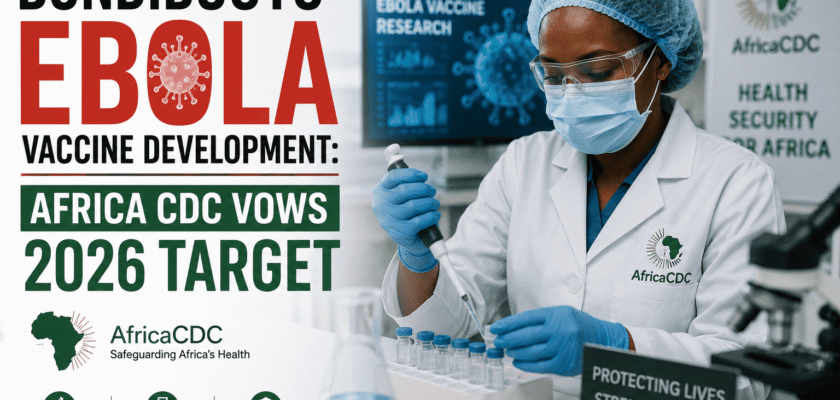
Bundibugyo Strain Breakthrough: Africa CDC Confirms New Ebola Vaccine Ready by End of 2026.
The operational blueprint governing international epidemic response frameworks is facing a critical, high-stakes emergency deployment. For decades, global medical science concentrated its primary vaccine research and development capital on neutralizing the highly lethal Zaire strain of the Ebola virus. This targeted investment led to the development of highly successful, approved vaccines that health teams routinely use in ring-vaccination strategies to suppress local flare-ups quickly. However, this narrow scientific focus left global health security highly vulnerable to alternate varieties of the pathogen, which do not respond to existing standard shots.
Unfortunately, a sudden, aggressive multi-country outbreak has ruthlessly exposed this critical therapeutic gap.
We have officially entered a volatile period marked by the mobilization of emergency healthcare networks across East Africa.
The rapid progression of Bundibugyo Ebola vaccine development initiatives marks a massive turning point in continental health security.
Driven by a surge in cases across the Democratic Republic of the Congo (DRC) and Uganda, authorities are enacting emergency mandates.
The current crisis began on May 15, 2026, when health officials formally confirmed a rare Ebola outbreak.
Responding to the rising threat, the World Health Organization (WHO) declared a Public Health Emergency of International Concern on May 17, 2026.
The next day, Africa CDC declared a Public Health Emergency of Continental Security to streamline regional health resources. Consequently, medical bodies are coordinating global actions, proving that stopping viral threats requires accelerating Africa CDC health updates 2026 goals right as outbreaks emerge.
1. The Variant Vulnerability: Why Current Vaccines Fail Against the Bundibugyo Strain
The primary epidemiological catalyst driving this intense research push centers on the unique genetic structure of the Bundibugyo virus (BDBV). Standard licensed vaccines are engineered to target the surface proteins of the classic Zaire virus variant exclusively.
In sharp contrast, the Bundibugyo strain features an alternate molecular blueprint that renders standard monoclonal antibodies completely ineffective.
                     [ Legacy Zaire Vaccine Limits ]
     (Standard Shots Fired ──► Surface Protein Mismatch ──► Zero Pathogen Neutralization)
                                      │
                                      ▼
                [ The 2026 Bundibugyo Variant Shield ]
     (Targeted Antigen Mapping ──► Broad Heterologous Matching ──► Complete Infection Block)
This structural mismatch creates immense treatment challenges across remote frontline isolation field clinics:
- Zero Approved Protections: There are currently no licensed vaccines or approved therapeutics available to treat Bundibugyo infections.
- High Fatality Risk: Historically, this specific viral strain carries a severe case fatality rate ranging from 30 to 50 percent.
- Relying on Passive Care: Consequently, clinical treatment relies entirely on basic symptom management, intensive fluid replacement, and oxygen support.
2. Inside the Lab: The Continental Push for Emergency Clinical Trials
The real-world execution of this medical defense strategy relies on establishing fast, coordinated research paths between international laboratories and local health hubs.
A. Securing Strategic Vaccine Candidates
Africa CDC Director General Jean Kaseya announced that researchers have already identified promising vaccine candidates for emergency evaluations.
The agency is investing heavy technical and strategic resources to guarantee a functional vaccine is ready by the end of December 2026.
Concurrently, international partnerships are taking shape, including detailed technical consultations with Moscow’s Gamaleya National Research Centre.
Scientists are analyzing whether specialized vaccine platforms can be quickly adapted to provide cross-protective benefits against the Bundibugyo variant.
B. Deploying Comprehensive Field Testing Networks
Furthermore, this accelerated drug tracking layout connects with immediate emergency funding to establish field trial stations:
  [ Outbreak Triggers High Case Surge ] ───► [ Health Agencies Deploy Expert Teams ]
                                                       │
                                                       ▼
                                        [ Emergency Program Funds Released ]
                                  "UNICEF Releases $5.75 Million for Response"
                                                       │
                                                       ▼
                                        [ Active Field Trials Prepared ]
                                  "Monitors Fast Tracking of Vaccine Safety Studies"
The strict logistical requirements of the response are backed by substantial international funding to protect local populations.
UNICEF has activated its highest Level 3 Corporate Emergency status, releasing $5.75 million in emergency funds to scale up field operations.
Health ministries are deploying mobile laboratories and setting up secure isolation containment zones across affected mining towns.
These localized field hubs track the virus’s spread while preparing communities for emergency clinical trial protocols.
Consequently, integrated research structures compress drug development timelines safely, showing that fast field networks can protect health security during sudden crises.
3. Strategic Matrix: 2014 Ebola Response Protocols vs. 2026 Integrated Health Security
| Crisis Management Axis | 2014 Fragmented Epidemic Response | 2026 Integrated Health Security |
| Declaration Velocity | Slow; delayed for months after initial local infections | Instant; emergency alerts issue within 48 hours |
| Vaccine Availability | Missing; early trials started late in the crisis | Targeted; candidate testing locks a 2026 end goal |
| Financing Delivery | Fragmented; relied on slow international charity appeals | Fast; emergency corporate funding drops immediately |
| Data Synchronization | Manual; paper records cause critical reporting gaps | Unified; mobile lab data syncs with continental hubs |
| Risk Characterization | High risk of unmonitored border crossing spread loops | Withdrawn Risk; tech-backed trace systems |
4. Strict Cross-Border Surveillance: Preventing Regional Viral Leaks
The final core trend defining advanced medical containment focuses on building highly coordinated border check networks to stop international transmission. By linking tracking data across adjacent territories, health agencies build an unshakeable defense line over busy trading paths.
  [ Confirmed Case Crosses Border ] ───► [ Surveillance Software Flags Local Contacts ]
                                                         │
                                                         ▼
                                          [ Ring Quarantine Measures Lock ]
                                    "Daily Health Tracking Covers Full 21 Days"
                                                         │
                                                         ▼
                                          [ Regional Viral Containment Secured ]
                                    "Saves Lives by Blocking Widespread Outbreaks"
Tracking networks use real-time digital surveillance to map population movements along transit roads and mining trails.
When a case is identified, local teams deploy strict trace procedures, monitoring contacts daily for the full 21-day incubation window.
This fast isolation method prevents hidden transmission chains from building up inside large urban centers.
Thus, proactive border management turns dangerous outbreaks into controlled, contained situations, protecting millions from health disruptions.
This organized focus keeps neighboring economies safe and stable, proving that global health resilience is won by combining fast vaccine research with uncompromised border security.


