
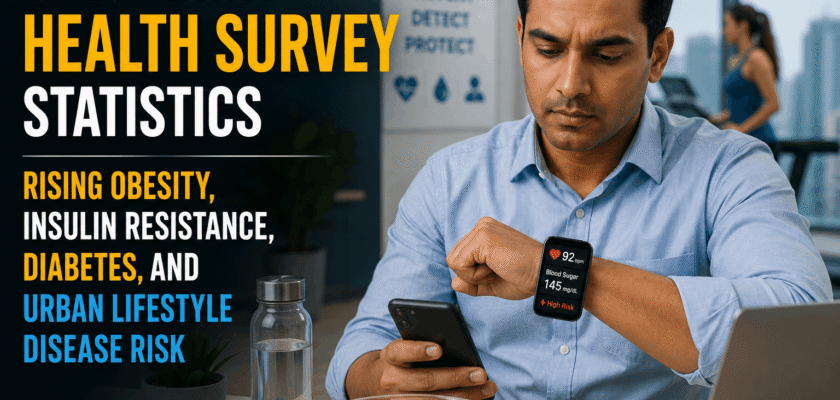
Latest Indian Health Survey Statistics: Why Urban India Must Pay Attention
Latest Indian health survey statistics show a worrying shift in India’s urban health. Obesity, high blood sugar, insulin resistance, and metabolic disorders are rising faster than many people expected. This is not only a medical issue. It is now a daily lifestyle warning for office workers, students, business owners, and families.
In simple words, many Indians are becoming metabolically unhealthy even before they look seriously ill. A person may look normal from outside but still have high belly fat, poor blood sugar control, fatty liver risk, or early insulin resistance.
Therefore, the five-year shift in Indian health data should not be ignored.
Why Latest Indian Health Survey Statistics Look Alarming
Latest Indian health survey statistics are alarming because the change is happening in a short period. Reports based on NFHS-6 2023-24 findings show a sharp rise in overweight or obesity among adults, especially women aged 15–49. High blood sugar indicators have also increased, which points toward a bigger diabetes risk.
This matters because obesity and high blood sugar often move together. When body fat rises, especially around the waist, the body may find it harder to use insulin properly. As a result, insulin resistance can begin silently.
Moreover, urban life adds more risk because many people sit for long hours, eat late, sleep less, and depend on packaged food.
What Is Insulin Resistance?
Insulin resistance means the body does not respond properly to insulin. Insulin is a hormone that helps move sugar from the blood into cells for energy.
When insulin does not work well, blood sugar starts rising slowly. At first, a person may not feel any clear symptom. However, over time, insulin resistance can increase the risk of prediabetes, type 2 diabetes, fatty liver, high triglycerides, belly fat, and heart disease.
So, insulin resistance is like an early warning sign. If people catch it early, they can often improve it with better food, movement, sleep, and weight control.
Latest Indian Health Survey Statistics and Urban Lifestyle Disease
Latest Indian health survey statistics show why urban lifestyle disease prevention has become urgent. Many city residents now spend most of the day sitting. They travel by car or bike, work on laptops, use phones for long hours, and eat high-calorie food.
This lifestyle creates a dangerous mix:
- Less walking
- More sitting
- Late-night eating
- Sugary drinks
- Refined carbs
- Stress
- Poor sleep
- Low sunlight
- Low muscle activity
- High belly fat
Because of this, even young adults are seeing early signs of metabolic risk.
Why Urban Indians Are More at Risk
Urban Indians face a special problem. Many people have high body fat but low muscle mass. This means a person may not look very obese, but their body may still carry harmful fat.
This hidden fat, especially around the belly and organs, can increase insulin resistance. It may also raise the risk of fatty liver, diabetes, blood pressure, and heart disease.
In addition, many urban jobs do not require physical movement. People sit at desks, travel in traffic, order food online, and sleep late. Therefore, the body burns fewer calories but receives more sugar, oil, and refined carbs.
Rising Obesity and Diabetes Trends in India
Rising obesity and diabetes trends are connected. When obesity rises, diabetes risk often rises too. This is especially true when weight gain happens around the waist.
India already carries a heavy diabetes burden. ICMR-INDIAB research has described diabetes, prediabetes, hypertension, obesity, and dyslipidaemia as major metabolic non-communicable disease challenges in India.
The problem is not limited to older people. Today, many people in their 20s and 30s show early warning signs like belly fat, tiredness after meals, sugar cravings, irregular sleep, and low activity.
However, early action can reduce risk.
Signs That May Point Toward Insulin Resistance
Insulin resistance may not always show clear symptoms. Still, some warning signs can help people take action early.
Common signs may include:
- Belly fat or waist gain
- Tiredness after meals
- Sugar cravings
- Frequent hunger
- Dark patches around the neck
- Weight gain despite normal eating
- High triglycerides
- Fatty liver
- Borderline blood sugar
- Family history of diabetes
These signs do not confirm insulin resistance by themselves. Therefore, a doctor’s test is important.
Important Tests to Discuss With a Doctor
If someone has weight gain, family history of diabetes, belly fat, or high sugar risk, they should talk to a doctor. A doctor may suggest tests based on age, symptoms, and risk factors.
Useful tests may include:
- Fasting blood sugar
- HbA1c
- Fasting insulin
- Lipid profile
- Liver function test
- Blood pressure check
- Waist measurement
- Thyroid test, if needed
- Vitamin D and B12, if advised
Also, people should not self-diagnose or start medicines without medical advice.
How Food Habits Are Driving Metabolic Disorders
Food habits have changed a lot in cities. Many people now eat more refined flour, fried snacks, sugary tea, soft drinks, desserts, and ultra-processed foods.
These foods digest quickly and can raise blood sugar faster. Also, they often contain less fibre and protein. As a result, hunger returns quickly and overeating becomes easier.
A better plate should include:
- Protein
- Vegetables
- Fibre-rich carbs
- Healthy fats
- Curd or fermented food, if suitable
- Less sugar
- Less refined flour
- Controlled portions
This does not mean people must follow a strict diet. Small daily changes can still create a big health impact.
Simple Indian Diet Changes for Better Blood Sugar
A practical Indian diet can support blood sugar control without becoming boring.
Try these simple changes:
- Add protein to breakfast
- Replace sugary drinks with water or lemon water
- Eat salad before lunch and dinner
- Choose dal, paneer, eggs, curd, sprouts, fish, or chicken for protein
- Reduce maida-based snacks
- Keep dinner lighter
- Avoid late-night sweets
- Choose whole grains in controlled quantity
- Eat fruit instead of fruit juice
- Limit fried food to occasional use
Moreover, eating slowly can also help because the brain gets time to feel full.
Why Walking After Meals Helps
Walking after meals is one of the easiest habits for blood sugar control. Even 10 to 15 minutes of light walking after lunch or dinner can help muscles use some glucose from the blood.
This habit is simple, free, and practical. It does not need a gym membership.
For office workers, a short walk after lunch can make a real difference. Similarly, families can walk together after dinner instead of sitting immediately in front of a screen.
Exercise Plan for Urban Lifestyle Disease Prevention
Urban lifestyle disease prevention needs regular movement. The goal is not to become a bodybuilder. The goal is to improve insulin sensitivity, muscle health, heart fitness, and waist control.
A simple weekly plan can include:
- 30 minutes brisk walking, 5 days a week
- Strength training, 2 to 3 days a week
- Stretching, 5 to 10 minutes daily
- Stair climbing when possible
- Short walking breaks during work
- Less sitting after meals
Strength training is important because muscles help use glucose better. More muscle support can improve metabolic health over time.
Sleep and Stress Also Affect Insulin Resistance
Many people focus only on food and exercise. However, sleep and stress also play a big role.
Poor sleep can increase hunger, cravings, and insulin resistance. High stress can raise cortisol, which may affect belly fat and blood sugar.
Therefore, health planning should include:
- 7 to 8 hours of sleep
- Fixed sleep timing
- Less screen time before bed
- Deep breathing
- Meditation or prayer
- Time away from work stress
- Morning sunlight
- Better work-life boundaries
These habits may look simple, but they support long-term metabolic health.
Why Young People Should Not Ignore the Warning
Many young people think diabetes and blood pressure are old-age problems. However, latest Indian health survey statistics and clinical trends suggest that lifestyle disease risk is moving into younger age groups.
Long sitting, fast food, stress, poor sleep, and low exercise can damage health slowly. The body may give small warnings first, but people often ignore them.
That is why prevention should start early. It is easier to reduce belly fat at 28 than to manage diabetes complications at 48.
What Families Can Do Together
Health becomes easier when the full family changes together. If only one person eats healthy while others order junk food daily, the habit becomes hard to maintain.
Families can start with simple steps:
- Cook more meals at home
- Keep fruits visible
- Reduce sugary snacks at home
- Walk together after dinner
- Plan weekly physical activity
- Limit late-night screen time
- Check blood sugar and BP regularly
- Support each other without body shaming
A supportive home can prevent many lifestyle diseases.
Final Verdict
Latest Indian health survey statistics show that urban India is facing a serious metabolic health shift. Rising obesity, high blood sugar, insulin resistance, and lifestyle disease risk are no longer rare problems. They are becoming common in daily city life.
However, this trend can change if people act early. Better food, regular walking, strength training, good sleep, stress control, and health checkups can reduce risk.
In simple words, insulin resistance is not a final sentence. It is a warning signal. If you respond early, your body can improve.
The smartest health move in 2026 is not a crash diet. It is a consistent lifestyle that protects your blood sugar, waist, energy, and long-term health.


