


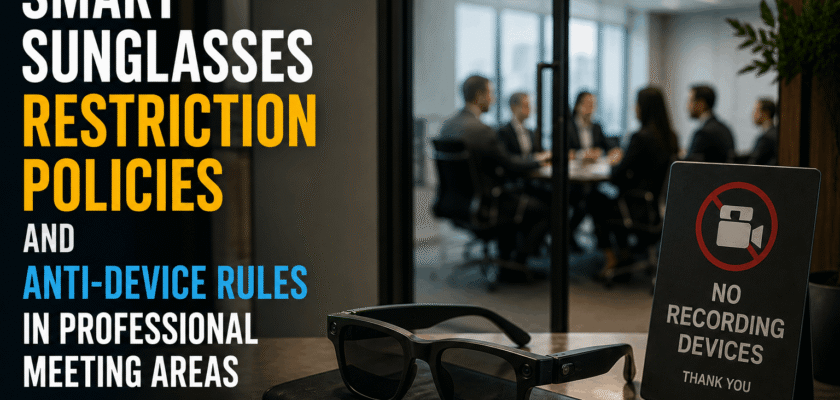
Smart Sunglasses Restriction Policies: Why This Debate Is Growing
Smart sunglasses restriction policies are becoming a serious topic in offices, exam halls, boardrooms, and professional meeting areas. In 2026, smart eyewear is no longer only a fashion gadget. It can include cameras, microphones, speakers, Bluetooth, voice assistants, and AI support.
This creates a new privacy problem. A normal-looking pair of glasses may record audio, capture images, take videos, or connect with an AI assistant. Therefore, companies and professional bodies now need clearer rules for where such devices can and cannot be used.
The issue is not only technology. It is also about trust, consent, and modern digital boundaries.
Why Smart Sunglasses Restriction Policies Matter in 2026
Smart sunglasses restriction policies matter because professional meetings often include private information. A meeting may discuss client data, legal plans, product ideas, finance numbers, employee issues, or business strategy.
If someone wears connected eyewear in that room, others may not know whether the device is active. Even if the wearer has no bad intention, the device can still create doubt.
As a result, many organizations are now thinking about anti-device rules in professional zones. These rules help people speak freely without worrying about hidden recording or data leaks.
What Makes Bluetooth Eyewear Different From Normal Glasses?
Bluetooth eyewear looks simple from outside, but it may work like a mini smart device. Some models can connect to phones, play audio, use voice commands, take photos, record videos, or support AI features.
That makes it different from normal glasses.
A phone is easy to spot during a meeting. However, smart eyewear can stay on a person’s face throughout the discussion. This makes privacy control harder.
Moreover, some people may not notice tiny lights, camera points, or recording signals. Because of this, smart glasses can create discomfort in serious professional spaces.
Smart Sunglasses Restriction Policies and Workplace Privacy
Smart sunglasses restriction policies connect directly with workplace privacy. Employers have a duty to protect company data and employee rights. If smart eyewear records a private meeting without consent, it can create legal, ethical, and business problems.
Workplace privacy experts now warn that smart glasses can become a governance issue. The risk is not only one recording. The bigger risk is a weak policy that fails to explain what employees can do with wearable technology.
Therefore, companies should not wait for a major leak. They should create clear rules before the problem grows.
Why Professional Meeting Areas Need Anti-Device Rules
Professional meeting areas need anti-device rules because they often handle sensitive talks. These areas may include:
- Boardrooms
- Legal meeting rooms
- HR discussion rooms
- Investor meeting spaces
- Client presentation rooms
- Government offices
- Exam control rooms
- Research labs
- Product design rooms
- Strategy rooms
In these places, even a small leak can cause serious damage. So, restricting smart eyewear can protect both the organization and the people inside the room.
The Rise of Modern Digital Boundaries 2026
Modern digital boundaries 2026 are not only about phones and laptops. They now include smartwatches, earbuds, AI pins, smart rings, and smart glasses.
Earlier, a company could simply ask people to keep phones away. Now, connected devices are smaller and harder to detect. This means privacy rules must become more detailed.
For example, a meeting room policy may say:
- No camera-enabled eyewear
- No active voice assistant
- No recording without written consent
- No connected wearable during confidential meetings
- No cloud upload of meeting content
- No AI transcription tool without approval
These rules create clarity for everyone.
Why Consent Is the Main Issue
Consent is the biggest concern with smart eyewear. In a professional room, every person should know if recording is happening. They should also know why the recording is needed and where it will be stored.
Without consent, recording can break trust.
For example, a team member may share a personal HR concern. A client may share private business numbers. A founder may discuss an unreleased product. If smart glasses record that information secretly, the damage can be serious.
Therefore, smart sunglasses restriction policies should clearly explain consent rules.
How Smart Eyewear Can Create Data Leak Risk
Smart eyewear can create data leak risk in many ways. It may capture whiteboards, laptops, printed documents, people’s faces, voices, and confidential slides.
Also, some connected devices may upload data to cloud platforms. If the user does not manage settings properly, private content can move outside the workplace.
This risk becomes bigger when AI tools process images, audio, or voice commands. Even accidental recording can create problems.
That is why many privacy teams now treat smart eyewear as part of data security planning.
Smart Sunglasses Restriction Policies for Offices
Offices can create simple and practical rules for smart eyewear. The goal should not be to ban all technology everywhere. Instead, the goal should be to protect sensitive spaces.
A balanced office policy can include:
- Allow smart eyewear in open public areas
- Restrict smart eyewear in confidential meetings
- Ban recording in HR and legal rooms
- Require consent before using AI transcription
- Ask visitors to declare camera-enabled eyewear
- Place clear signs outside restricted zones
- Train staff on wearable device risks
- Create rules for data storage and deletion
This approach keeps technology useful while reducing privacy risk.
What Schools and Exam Bodies Can Learn
Schools and exam bodies already worry about cheating, hidden cameras, and AI assistance. Smart eyewear increases that concern because it can look like normal glasses.
Therefore, many exam environments may need stricter device checks. The rule should be simple: if a device can record, connect, or assist with answers, it should not enter the exam room unless officially approved for accessibility.
This protects exam fairness and reduces confusion for students.
Why Companies Should Not Depend Only on Trust
Trust is important, but it is not enough for modern device control. Most employees may use smart glasses responsibly. However, a few careless or unethical actions can harm everyone.
Also, some leaks may happen by accident. A person may forget that a voice assistant is active. A file may sync automatically. A meeting clip may upload to a cloud app.
Therefore, written rules are better than verbal expectations.
How Employees Should Use Smart Eyewear Responsibly
Employees who use smart eyewear should follow basic etiquette. This helps avoid discomfort and privacy issues.
Good habits include:
- Turn off camera and microphone in meetings
- Tell people before recording anything
- Avoid smart glasses in private discussion rooms
- Check privacy settings often
- Do not upload office content to personal cloud apps
- Follow company device policy
- Remove smart eyewear when asked
- Respect people who do not want to be recorded
These habits build trust and reduce workplace conflict.
What Visitors Should Know Before Entering Professional Zones
Visitors may not know a company’s device policy. So, offices should make the rules visible and simple.
A sign outside a meeting room can say:
“Camera-enabled or recording-capable eyewear is not allowed in this room without permission.”
This is clear, polite, and easy to understand. It also avoids awkward personal questioning.
Moreover, reception teams can inform visitors before confidential meetings begin.
Smart Eyewear and Mental Distraction
Smart sunglasses restriction policies are not only about privacy. They are also about focus. Connected eyewear can bring calls, notifications, voice prompts, audio, and AI responses into a meeting.
This can reduce attention.
A professional meeting needs eye contact, listening, and presence. If people constantly interact with hidden digital tools, the quality of discussion can fall.
So, banning or limiting Bluetooth eyewear in meeting rooms can also improve attention and respect.
The Right Way to Create a Smart Eyewear Policy
A good policy should stay clear and fair. It should not sound like fear-based control.
Companies can follow this simple structure:
- Define what smart eyewear means
- List restricted zones
- Explain consent rules
- Explain recording rules
- Mention visitor policy
- Add accessibility exceptions
- Explain data storage rules
- Share action steps for violations
- Train employees
- Review the policy every year
This makes the rule practical and easier to follow.
Final Verdict
Smart sunglasses restriction policies are becoming important because smart eyewear can record, connect, and process information in ways people may not notice. In professional meeting areas, this creates privacy, consent, security, and focus problems.
However, the best solution is not panic. The best solution is clear digital boundaries.
Companies should allow useful technology where it makes sense, but they should restrict smart eyewear in confidential rooms, HR meetings, legal discussions, exams, and sensitive business areas.
In simple words, modern offices need modern rules. Smart eyewear may be useful, but privacy and trust must come first.


