


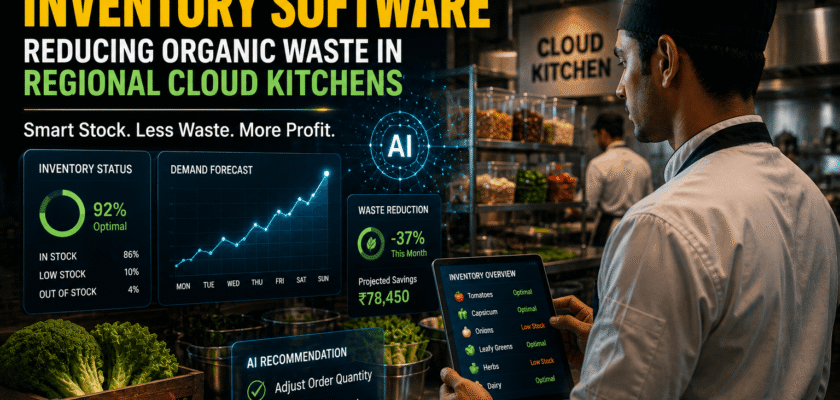
AI-Driven Inventory Software: Why Cloud Kitchens Need Smarter Stock Control
AI-driven inventory software is becoming important for regional cloud kitchens because food waste, ingredient cost, and delivery pressure are rising together. A cloud kitchen may run many brands from one small space, so even a small stock mistake can create waste or order delays.
In 2026, local food operators cannot depend only on guesswork. They need data that tells them how much rice, vegetables, sauces, paneer, meat, bread, spices, and packaging material to keep ready.
Therefore, AI-driven inventory software is turning into a smart kitchen companion for cloud kitchens that want lower waste and better profit.
Why AI-Driven Inventory Software Matters in 2026
AI-driven inventory software matters because food cost can decide whether a cloud kitchen survives or fails. If a kitchen buys too much stock, vegetables may spoil and prepared food may go into the bin. If it buys too little, orders may get cancelled.
Both problems hurt the business.
AI tools can study past sales, peak hours, festivals, weather, weekdays, weekends, and local ordering patterns. After that, they can suggest better stock levels.
As a result, kitchen owners can reduce organic waste and avoid over-purchasing.
What Is AI-Driven Inventory Software?
AI-driven inventory software is a digital system that uses data and artificial intelligence to track stock, predict demand, and reduce waste. It helps kitchen teams know what to buy, how much to prepare, and when to reorder.
A good system can track:
- Raw ingredients
- Semi-prepared items
- Finished food
- Expiry dates
- Supplier orders
- Daily consumption
- Waste logs
- Recipe-level usage
- Low-stock alerts
- Demand forecast
This makes kitchen planning more accurate and less stressful.
How Regional Cloud Kitchens Face a Waste Problem
Regional cloud kitchens often work with tight margins. They may serve tier-II and tier-III cities where customers are price-sensitive. At the same time, delivery platforms, packaging cost, rent, staff salary, and food inflation put pressure on profit.
Food waste makes this pressure worse.
Common waste points include:
- Extra chopped vegetables
- Unused gravy batches
- Expired sauces
- Overstocked dairy items
- Wrong demand prediction
- Unsold cooked rice
- Poor portion planning
- Supplier delivery mismatch
- Festival demand miscalculation
- Menu items with low sales
Because of this, smart stock control becomes necessary.
AI-Driven Inventory Software and Demand Forecasting
AI-driven inventory software improves demand forecasting by reading sales patterns. For example, a kitchen may sell more biryani on weekends, more snacks during rainy evenings, and more thalis during office lunch hours.
A manual manager may remember some patterns. However, AI can read many patterns together.
It can check:
- Past order history
- Local events
- Weather
- Holidays
- App discounts
- Time of day
- Area demand
- Menu popularity
- Delivery distance
- Customer repeat rate
Therefore, the kitchen can prepare smarter instead of preparing blindly.
How AI Reduces Organic Waste
Organic waste includes food scraps, spoiled vegetables, expired dairy, leftover cooked food, and unused ingredients. AI reduces this waste by matching stock with expected demand.
For example, if the software predicts low demand for paneer rolls today, the kitchen can prepare less paneer filling. If the system sees high demand for dal rice during lunch, it can suggest more dal prep.
Moreover, AI can warn the manager before ingredients expire. This helps the kitchen use older stock first.
This is why AI-based inventory planning can support both cost control and sustainability.
Recipe-Level Stock Tracking: The Real Game Changer
Recipe-level stock tracking means the system connects every dish with its ingredients. If one veg burger uses 80 grams patty, 20 grams sauce, one bun, and 30 grams vegetables, the system updates stock after every order.
This helps the owner know the real cost of each dish.
It also shows which menu item creates more waste or lower profit.
For example, one dish may look popular but may waste too much garnish or sauce. Another dish may sell less but give better margin.
So, AI-driven inventory software helps owners make smarter menu decisions.
Smart Culinary Ecosystems in Tier-II Cities
Smart culinary ecosystems are not only for big metro restaurants. Tier-II cities are also becoming strong food delivery markets. Customers in cities like Jaipur, Kota, Indore, Lucknow, Surat, Nagpur, Bhopal, and Coimbatore now order food online regularly.
Regional cloud kitchens can use technology to compete with large chains.
A smart culinary ecosystem includes:
- Cloud kitchen management software
- AI inventory planning
- Digital recipe cards
- Kitchen display systems
- Waste tracking
- Supplier dashboards
- Customer feedback tools
- Delivery analytics
- Menu optimization
- Staff task planning
This system helps small food brands look more professional.
How AI Helps With Supplier Ordering
Supplier ordering is a common pain point in food businesses. If a kitchen orders late, stock may not arrive on time. If it orders too much, money gets stuck in inventory.
AI can help by suggesting reorder quantity and reorder timing.
For example, the system may say:
- Order tomatoes today because stock will finish by dinner
- Reduce coriander order because waste is high
- Buy more rice before weekend demand
- Avoid extra cream because expiry is near
- Change supplier if delivery delay repeats
This gives owners better control over purchase planning.
Why FIFO and FEFO Still Matter
AI is useful, but basic kitchen discipline still matters. FIFO means First In, First Out. FEFO means First Expiry, First Out.
These rules help kitchens use older stock before newer stock and use items with earlier expiry first.
Cloud kitchen inventory experts recommend FIFO and FEFO because they reduce spoilage and improve inventory turnover.
AI can support these rules by sending alerts and showing expiry order on the dashboard.
Waste Tracking Makes the Problem Visible
Many kitchens do not know their real waste amount. Staff may throw food away without recording it. As a result, the owner only sees lower profit but not the exact reason.
Waste tracking solves this problem.
SmartKitchen notes that food waste tracking systems help professional kitchens monitor where the highest costs arise and take targeted action.
A waste log can show:
- What item was wasted
- How much was wasted
- Why it was wasted
- Which shift wasted more
- Which recipe caused waste
- Which supplier caused spoilage
- Which item needs portion control
Once waste becomes visible, the kitchen can reduce it.
How AI Improves Recipe Uniformity
Cloud kitchens must keep taste the same every day. If one cook uses too much spice today and less tomorrow, customers may complain.
AI-driven systems can support recipe uniformity through digital recipe cards and portion guides.
A recipe dashboard can show:
- Exact ingredient weight
- Cooking time
- Prep steps
- Spice level
- Sauce quantity
- Packing method
- Allergen note
- Quality checklist
This helps new staff follow the same process and keeps customer experience stable.
AI-Driven Inventory Software and Menu Optimization
AI-driven inventory software also helps with menu optimization. It can show which dishes sell fast, which dishes waste ingredients, and which dishes give better profit.
For example, a kitchen may discover that two dishes use the same sauce. This can help reduce prep complexity. Another dish may require a special ingredient that spoils often. The owner may remove or modify that dish.
Menu optimization helps kitchens reduce waste and increase margin.
Therefore, AI does not only manage stock. It also improves the full menu strategy.
How Weather and Local Events Affect Food Demand
Food demand changes with weather and local events. Rainy days may increase demand for snacks, tea, pakoras, momos, and hot meals. Summer may increase demand for cold beverages, salads, and light food.
Similarly, exams, weddings, cricket matches, festivals, and local fairs can change order patterns.
AI can study these signals and suggest better prep planning.
For example, if a cricket final is happening tonight, the system may predict more group food orders. As a result, the kitchen can prepare extra pizza bases, biryani, rolls, or snacks.
Why Packaging Inventory Also Matters
Cloud kitchens often focus only on food ingredients. However, packaging is also important. If containers, stickers, paper bags, spoons, or seals run out, the kitchen cannot deliver properly.
AI inventory systems can track packaging too.
This helps avoid last-minute stress during peak hours. It also prevents overbuying packaging that takes storage space.
A complete inventory system should manage food and non-food items together.
How AI Supports Profit Control
Profit in a cloud kitchen depends on small details. Ingredient cost, waste, delivery commission, packaging, discounts, and staff efficiency all matter.
AI-driven inventory software supports profit control by showing real cost data.
It can help owners know:
- Food cost per dish
- Waste cost per day
- Stock value
- Supplier price changes
- High-margin items
- Low-margin items
- Slow-moving ingredients
- Peak demand hours
- Loss-making menu items
- Purchase variance
This helps owners make decisions based on data, not guesswork.
Challenges of AI Inventory Software
AI inventory software also has challenges. Small kitchens may worry about cost, training, and data entry.
Common challenges include:
- Staff may resist new tools
- Wrong data can create wrong forecasts
- Software may feel complex
- Internet issues can disturb workflow
- Setup cost may feel high
- Recipe data entry takes time
- Suppliers may not integrate digitally
- Owners may ignore reports
However, these problems can be managed with simple training and gradual adoption.
Start small, then scale.
How Small Cloud Kitchens Can Start
A small cloud kitchen does not need a very expensive system on day one. It can start with basic digital discipline.
First steps can include:
- Digital inventory sheet
- Daily stock count
- Recipe portion chart
- Waste log
- Expiry date tracking
- Supplier price record
- Sales report review
- Weekly menu analysis
- Low-stock alerts
- Staff training
After that, the kitchen can move to full AI-driven inventory software when order volume grows.
Why Human Chefs Still Matter
AI can predict demand and track stock, but human chefs still matter. Food is not only data. Taste, smell, texture, plating, creativity, and customer emotion need human skill.
The best kitchen model is humans plus AI.
Chefs create good recipes. AI helps the team follow them consistently. Managers understand customers. AI helps them see patterns faster.
So, AI does not remove people. It supports better food decisions.
Future of Regional Cloud Kitchens
Regional cloud kitchens will become more technology-driven in 2026 and beyond. IMARC notes that cloud kitchens are increasingly using AI and data analytics to refine menus, predict high-demand dishes, reduce food wastage, and improve inventory planning.
This trend will help smaller food brands grow beyond one location.
A regional brand can use data to decide which dish works in which city. It can also reduce waste by planning stock based on local taste.
Therefore, smart inventory will become a growth tool, not only a cost-control tool.
Final Verdict
AI-driven inventory software is becoming a must-have tool for regional cloud kitchens. It helps reduce organic waste, predict demand, manage suppliers, control recipe portions, and improve profit.
For small and mid-size food businesses, this technology can create a big advantage. It can reduce guesswork and make daily kitchen planning more accurate.
However, AI works best when staff follow basic kitchen discipline. FIFO, FEFO, waste logging, recipe control, and regular stock checks still matter.
In simple words, the future cloud kitchen will not win only by cooking tasty food. It will win by cooking the right quantity, at the right time, with the right stock, and with minimum waste.


