


Contactless Home Bio-Sensors: Why Sleep Tracking Is Changing
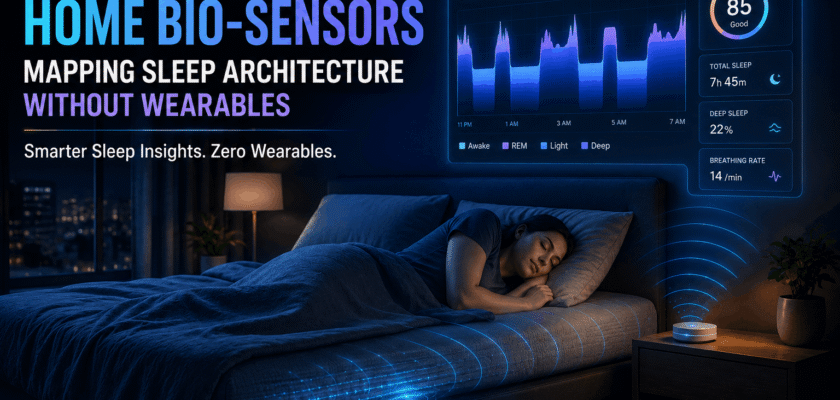
Contactless home bio-sensors are changing how people track sleep, recovery, breathing, and nighttime movement. Earlier, most sleep tracking depended on watches, rings, bands, or headbands. Now, new systems can monitor sleep without asking users to wear anything.
This shift matters because many people stop using wearables at night. Some forget to charge them. Some feel discomfort. Others do not like sleeping with a device on the wrist or finger.
Therefore, contactless home bio-sensors are becoming an important part of the ambient wellness shift. They work quietly in the background and make sleep tracking feel more natural.
Why Contactless Home Bio-Sensors Matter in 2026
Contactless home bio-sensors matter because sleep health is now a major wellness priority. People are not only counting steps anymore. They want to understand sleep quality, breathing rhythm, recovery, restlessness, and sleep stages.
In 2026, home wellness technology is moving from active tracking to passive tracking. Active tracking needs the user to wear, tap, charge, or start a device. Passive tracking works in the room or under the mattress with less effort.
As a result, sleep tracking can become easier for busy workers, older adults, students, athletes, and people who dislike wearables.
What Are Contactless Home Bio-Sensors?
Contactless home bio-sensors are devices that monitor body signals without direct skin contact. They may sit under a mattress, beside a bed, inside a smart lamp, in a bedside device, or inside a smart home system.
These sensors can use different methods, such as:
- Radar sensing
- Pressure sensors
- Ballistocardiography
- Motion detection
- Breathing pattern analysis
- Thermal sensing
- Audio signals
- Mattress vibration data
- AI-based sleep scoring
- Smart home integration
The goal is simple: understand sleep without disturbing sleep.
How Contactless Home Bio-Sensors Track Sleep Architecture
Contactless home bio-sensors can help map sleep architecture. Sleep architecture means the structure of your sleep across the night. It includes awake time, light sleep, deep sleep, REM sleep, sleep cycles, and interruptions.
Wearable devices often estimate these stages using heart rate and movement. Contactless systems may use breathing, motion, pressure changes, and radar signals.
For example, an under-mattress sensor can detect body movement and breathing changes. A radar-based device can sense tiny chest movements from a distance. Then AI models analyze the signals and estimate sleep stages.
This makes sleep tracking possible without wearing a band.
Why Sleep Architecture Is Important
Sleep architecture matters because total sleep time does not tell the full story. A person may sleep for eight hours but still wake up tired if sleep cycles are broken.
Good sleep usually includes enough deep sleep, REM sleep, and stable cycles. Deep sleep supports body recovery. REM sleep supports memory, mood, and learning. Light sleep helps transition between stages.
If sleep architecture is disturbed, people may feel tired, unfocused, irritable, or low on energy.
Therefore, tracking sleep structure can help people notice patterns and improve habits.
Contactless Sleep Monitoring vs Wearable Sleep Tracking
Contactless sleep monitoring and wearable tracking both have benefits. Wearables are portable and can track daytime activity too. However, contactless systems can feel more comfortable at night.
Here is a simple comparison:
| Factor | Contactless Sensors | Wearables |
|---|---|---|
| Comfort | High, no device on body | Depends on user |
| Charging issue | Usually lower | Common problem |
| Daytime tracking | Limited | Strong |
| Sleep tracking | Strong focus | Good but varies |
| Setup | Bedside or under mattress | Wear and sync |
| Best for | Sleep comfort | Full-day wellness |
So, the best choice depends on your lifestyle.
Why People Are Moving Beyond Wearables
Many people like wearables, but they also face small daily problems. A watch can feel tight. A ring may feel uncomfortable. A headband may disturb sleep. Also, some users forget to charge the device.
Because of these issues, sleep tracking often becomes inconsistent.
Contactless home bio-sensors reduce this friction. Once installed, they can work in the background. This makes long-term sleep monitoring easier.
Moreover, people who share beds, care for elderly parents, or want passive home health data may prefer contactless systems.
What Latest Research Says About Contactless Sleep Monitoring
Recent research shows that contactless sleep monitoring is improving, but it still needs careful validation. A 2026 JMIR Human Factors study evaluated a contactless under-mattress device against home polysomnography and described it as promising for long-term sleep monitoring in natural home settings. The study also noted that sleep stage identification is improving but still has limitations.
Another 2026 paper on radar-based sleep staging suggested that non-contact radar sensing, combined with advanced temporal modelling, can provide reliable sleep staging performance without wearables.
This means the technology is useful, but users should not treat every consumer score as a medical diagnosis.
Contactless Home Bio-Sensors and Breathing Data
Contactless home bio-sensors can also track breathing patterns. Breathing changes during sleep can show restlessness, stress, congestion, or possible sleep disturbance.
Some systems can detect respiratory rate by reading chest movement, mattress vibration, or radar reflection. If breathing becomes irregular, the device may show patterns in the sleep report.
However, these tools should not replace a doctor. If someone has snoring, choking, daytime sleepiness, or suspected sleep apnea, they should seek medical advice.
Consumer sensors can give signals, but clinical testing is still important.
Why Radar-Based Sleep Tracking Is Getting Attention
Radar-based sleep tracking is getting attention because it can detect tiny movements without touching the body. The device sends low-power signals and reads movement patterns from breathing and body motion.
This makes it useful for bedroom wellness devices.
Radar systems may help track:
- Sleep-wake time
- Breathing rate
- Restlessness
- Body movement
- Possible sleep stage patterns
- Nighttime interruptions
- Long-term sleep trends
In addition, radar-based devices may work well for people who cannot wear devices due to skin irritation, discomfort, or medical reasons.
Contactless Home Bio-Sensors and Smart Homes
Contactless home bio-sensors can become part of smart homes. They can connect with lights, temperature control, air quality monitors, alarms, and wellness dashboards.
For example, if a sensor detects poor sleep, the system may suggest cooler room temperature. If the person wakes often, it may recommend reducing noise or screen time before bed.
In the future, smart homes may adjust the bedroom environment automatically.
This can include:
- Lower room temperature
- Softer lighting
- Better air circulation
- White noise control
- Smart alarm timing
- Humidity adjustment
- Sleep routine reminders
This is why ambient wellness is becoming bigger than just one device.
Benefits of Sleep Tracking Without Wearables
Sleep tracking without wearables has many benefits.
It can help users:
- Track sleep without discomfort
- Avoid charging a night device
- Monitor long-term patterns
- Reduce missed sleep data
- Understand sleep timing
- Notice restlessness
- Improve bedtime habits
- Compare sleep with room conditions
- Support elderly home monitoring
- Build a calmer wellness routine
Moreover, contactless tracking feels less intrusive for many users.
Limits of Contactless Home Bio-Sensors
Contactless home bio-sensors are useful, but they are not perfect. Users should understand their limits.
Common limits include:
- Sleep stage accuracy may vary
- Shared beds can confuse tracking
- Pets may affect sensor data
- Mattress type can change readings
- Device placement matters
- Medical diagnosis is not guaranteed
- Cheaper devices may be less accurate
- Privacy settings need attention
- Internet connection may be needed
- App interpretation can be oversimplified
Therefore, users should focus on long-term trends, not one-night scores.
Can Contactless Sensors Replace Sleep Labs?
No, contactless sensors cannot fully replace sleep labs. A sleep lab uses polysomnography, which tracks brain waves, eye movement, muscle activity, heart signals, breathing, oxygen, and other clinical markers.
Contactless home sensors are more convenient, but they do not capture everything a clinical sleep study captures.
However, they can help with early awareness and long-term tracking. If the data shows repeated issues, users can discuss it with a doctor.
So, the best role of contactless sensors is wellness monitoring, not final diagnosis.
Privacy Concerns With Bedroom Sensors
Privacy is very important because sleep data is personal. A bedroom sensor may collect movement, breathing patterns, sleep timing, and health-related signals.
Before buying any device, users should check:
- What data the device collects
- Whether audio or video is recorded
- Where data is stored
- Whether cloud processing is used
- Who can access the data
- Whether data can be deleted
- Whether sharing is optional
- How the company protects privacy
A sleep device should improve wellness without creating fear.
How to Use Sleep Data Correctly
Sleep data is useful only when you use it wisely. Do not panic over one bad night. Everyone has poor sleep sometimes.
Instead, look at weekly and monthly patterns.
Ask simple questions:
- Am I sleeping at a fixed time?
- Do I wake often?
- Do I feel tired despite enough sleep?
- Does caffeine affect my sleep?
- Does late-night screen use reduce deep sleep?
- Does room temperature affect rest?
- Do workouts improve sleep quality?
This makes sleep data practical.
Simple Ways to Improve Sleep Architecture
Technology can track sleep, but habits improve sleep. Contactless home bio-sensors can show patterns, but the user must change routine.
Simple sleep improvement steps include:
- Keep a fixed sleep time
- Avoid heavy dinner late at night
- Reduce caffeine after evening
- Limit phone use before bed
- Keep the room dark
- Keep the room cool
- Walk or exercise during the day
- Get morning sunlight
- Avoid long daytime naps
- Use a calm bedtime routine
These steps can improve sleep naturally.
Who Should Consider Contactless Home Bio-Sensors?
Contactless home bio-sensors may suit people who want sleep data without wearing a device.
They may be useful for:
- Office workers with poor sleep
- Students with irregular routines
- Older adults
- People who dislike smartwatches
- People who forget to charge devices
- Athletes tracking recovery
- Caregivers monitoring sleep trends
- Biohacking and wellness users
- People with sleep routine goals
- Smart home users
However, people with serious symptoms should speak with a medical professional.
What to Check Before Buying a Contactless Sleep Device
Before buying, check practical points.
Look for:
- Sensor type
- Sleep stage tracking
- Breathing rate tracking
- App quality
- Privacy policy
- Cloud or local processing
- Accuracy validation
- Mattress compatibility
- Shared-bed support
- Subscription cost
- Data export option
- Customer support
Also, read independent reviews and check whether the company explains limitations clearly.
Future of Ambient Wellness
Ambient wellness means health tracking that happens quietly in the background. It does not force users to constantly wear, tap, or manage devices.
In the future, home wellness may include connected sensors for sleep, air quality, temperature, breathing, movement, stress patterns, and recovery.
However, this future must stay human-friendly. Devices should reduce stress, not create more obsession with scores.
The best wellness technology should help people sleep better, live better, and understand their bodies without turning every night into a test.
Final Verdict
Contactless home bio-sensors are pushing sleep tracking beyond wearables. They make it easier to monitor sleep architecture, breathing, movement, and recovery without wearing a watch, ring, or headband.
This technology is promising, especially for long-term home tracking. However, users should treat the data as guidance, not medical proof. Clinical sleep problems still need professional diagnosis.
In simple words, the future of sleep tracking is becoming quieter. Your bedroom may soon understand your sleep without asking you to wear anything.
For people who want better rest with less effort, contactless home bio-sensors could become one of the most useful wellness tools of 2026.


