
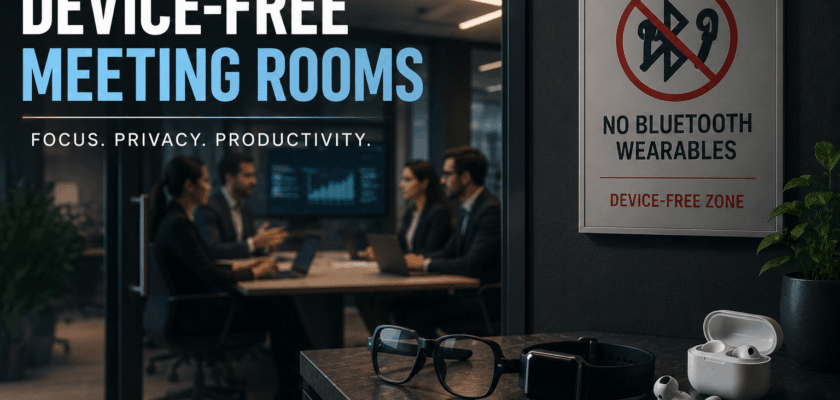
Device-Free Meeting Rooms: Why This Workplace Rule Is Growing
Device-free meeting rooms are becoming more important in 2026 because modern workplaces now face a new privacy challenge. Earlier, companies mostly worried about phones, laptops, and voice recorders. Now, Bluetooth wearables, AI glasses, smartwatches, earbuds, and camera-enabled devices can quietly enter serious meeting spaces.
This creates a trust problem. A person may wear smart glasses or connected earbuds during a confidential discussion, and others may not know whether audio, video, or meeting data is being recorded.
Therefore, many workplaces are now thinking about device-free meeting rooms as a simple way to protect privacy, focus, and professional boundaries.
Why Device-Free Meeting Rooms Matter in 2026
Device-free meeting rooms matter because professional meetings often include sensitive information. A company may discuss client contracts, employee issues, product plans, legal matters, finance reports, or internal strategy.
If a wearable device records that information without permission, the damage can be serious. It can affect trust, legal compliance, customer relationships, and company reputation.
Moreover, wearable devices are harder to notice than phones. A phone in someone’s hand is visible. But smart glasses or earbuds may look normal.
As a result, companies need clear rules before a small device creates a big problem.
What Are Device-Free Meeting Rooms?
Device-free meeting rooms are professional spaces where employees, visitors, and vendors must keep certain connected devices outside or switched off.
These devices may include:
- Smart glasses
- Bluetooth earbuds
- Smartwatches
- AI pins
- Recording devices
- Camera-enabled wearables
- Personal voice assistants
- Unapproved laptops
- Personal phones
- Any device with active microphone or camera
The goal is not to reject technology. The goal is to protect confidential discussion.
Device-Free Meeting Rooms and Workplace Privacy
Device-free meeting rooms directly support workplace privacy. In 2026, privacy experts warn that smart glasses are becoming a policy problem because they are more discreet, more capable, and more integrated with AI features.
This matters because many companies still do not have a clear policy for smart glasses or AI wearables.
If employees use such devices casually in confidential spaces, the company may face privacy complaints. In some places, recording laws also require consent from all people in a conversation.
So, a device-free meeting room rule gives everyone a clear boundary.
Why Bluetooth Wearables Are Different From Phones
Bluetooth wearables are different because they can stay active while looking harmless. A smartwatch can show messages. Earbuds can listen for voice commands. Smart glasses can capture photos, video, or audio hands-free.
TechTarget reported that smart glasses now create enterprise risks through covert recording, data leaks, and compliance violations.
This is why old phone-only policies are no longer enough.
A company may already ban phones during some meetings, but that rule may not cover AI glasses or wearable microphones. Therefore, workplace policies need an update.
Modern Digital Boundaries in Professional Spaces
Modern digital boundaries mean clear rules for where technology can and cannot go. In the past, people assumed professional behavior was enough. However, wearable technology has changed the situation.
A modern workplace may need different rules for different areas.
For example:
- Open office: wearables allowed with limits
- Cafeteria: casual device use allowed
- Client room: recording disabled
- HR room: no smart wearables
- Legal room: no personal devices
- Boardroom: device-free zone
- Exam or training room: strict device control
This balanced approach protects privacy without banning all technology everywhere.
Why Meeting Room Focus Is Also a Big Reason
Device-free meeting rooms are not only about privacy. They are also about focus.
Bluetooth wearables can create hidden distractions. A smartwatch can vibrate. Earbuds can receive audio. Smart glasses can show notifications. Even if no recording happens, attention can still break.
A serious meeting needs full presence. People need to listen, think, respond, and decide.
Therefore, device-free zones can improve both privacy and meeting quality.
How Smart Glasses Create New Workplace Risks
Smart glasses create new risks because they look like normal glasses but can act like cameras, microphones, and AI assistants.
Some smart glasses can:
- Capture photos
- Record videos
- Take voice commands
- Process audio
- Connect to phones
- Store cloud data
- Translate conversations
- Support AI prompts
- Send notifications
- Work hands-free
This makes them useful in some jobs. However, in private meetings, they can create serious discomfort.
Device-Free Meeting Rooms and Consent
Consent is the heart of meeting privacy. If someone records a meeting, every participant should know and agree.
Without consent, recording can break trust and may create legal issues. Fisher Phillips has warned that AI glasses can create legal exposure when workplace discussions get recorded without proper consent, especially where recording laws require all-party consent.
Therefore, companies should clearly say when recording is allowed and when it is banned.
A device-free rule makes this easier to enforce.
Why Companies Should Not Wait for a Leak
Many companies create policies only after something goes wrong. That is risky.
One leaked meeting clip, client document, HR discussion, or strategy note can damage trust quickly. Once private information reaches social media, private chats, or competitors, the damage becomes hard to reverse.
So, companies should act before a leak happens.
Device-free meeting rooms are a preventive step. They show employees and clients that privacy matters.
What a Good Device-Free Policy Should Include
A good policy should stay simple and practical. It should not confuse employees.
It should explain:
- Which rooms are device-free
- Which devices are restricted
- Whether smartwatches are allowed
- Whether Bluetooth earbuds are allowed
- Whether medical or accessibility devices are exempt
- Who can approve recording
- What visitors must follow
- Where devices should be stored
- What happens after violation
- How often the policy is reviewed
This gives clear guidance to everyone.
Accessibility Exceptions Must Stay Fair
A blanket ban can create problems if someone uses a wearable for medical, disability, or accessibility reasons. For example, some smart devices may support hearing, vision, health monitoring, or workplace accommodation.
Legal experts have warned that a blanket smart glasses ban may raise compliance concerns if a device works as an assistive tool.
Therefore, companies should include fair exceptions. The rule should protect privacy while respecting genuine needs.
A simple approval process can solve this issue.
How to Set Up Device-Free Meeting Rooms
Companies can create device-free meeting rooms without spending too much money.
Useful steps include:
- Put a clear sign outside the room
- Create a secure device shelf or locker
- Ask visitors to follow the rule
- Turn on meeting room privacy reminders
- Allow only approved meeting devices
- Ban personal recording tools
- Keep official recording consent-based
- Train managers to enforce the rule
- Review the policy every few months
- Collect employee feedback
This makes the rule easy to follow.
What Employees Should Do
Employees also need to act responsibly. Even if a company does not have a perfect policy, workers should respect privacy during serious meetings.
Employees should:
- Remove smart glasses in confidential rooms
- Turn off Bluetooth earbuds
- Keep smartwatch notifications silent
- Ask before recording
- Avoid AI transcription without approval
- Follow visitor rules
- Respect no-device signs
- Report unclear situations to managers
- Use approved tools only
- Avoid sharing meeting content casually
These habits protect both the employee and the company.
Why Visitors and Vendors Need Clear Rules
Visitors and vendors often bring personal devices into offices. They may not know company policy.
So, the rule should be visible before the meeting begins.
A simple sign can say:
“Device-Free Meeting Room: No Bluetooth wearables, smart glasses, or recording devices without approval.”
This avoids awkward personal questioning. It also protects confidential business conversations.
Moreover, reception teams can remind visitors politely.
Device-Free Meeting Rooms and Company Culture
Device-free meeting rooms can improve company culture if handled correctly. The rule should not feel like punishment. It should feel like respect.
When employees know that private discussions stay private, they may speak more openly. Clients may also feel more comfortable sharing sensitive details.
However, leaders must follow the same rule. If senior managers ignore the policy, employees will not take it seriously.
So, culture starts from the top.
Risks of Poor Implementation
A device-free policy can fail if it is unclear or unfair.
Common mistakes include:
- Banning devices without explanation
- Ignoring accessibility needs
- Applying rules only to junior staff
- Allowing leaders to break the rule
- Not giving storage options
- Forgetting visitors
- Not covering smart glasses
- Not defining Bluetooth wearables
- No consent rule for recordings
- No training for managers
Therefore, companies should design the policy carefully.
Why This Trend Will Grow
This trend will grow because wearable technology is becoming more normal. Smart glasses, AI earbuds, and tiny recording devices will become cheaper and more common.
Also, AI features will make devices more powerful. A wearable may not only record a meeting. It may summarize it, translate it, upload it, or connect it to a cloud service.
That is why companies need modern digital boundaries now.
Device-free meeting rooms may become as common as “no smoking” or “no phone” signs in sensitive areas.
Final Verdict
Device-free meeting rooms are becoming necessary because Bluetooth wearables and AI devices are changing workplace privacy. Smart glasses, earbuds, watches, and AI pins can create recording, distraction, and data leak risks.
The best solution is not to ban every device everywhere. The best solution is to create clear zones for confidential meetings, legal discussions, HR matters, client talks, and boardroom strategy.
In simple words, modern workplaces need modern rules. Technology can support work, but privacy must protect trust.
Device-free meeting rooms offer a simple, practical, and respectful way to reclaim digital boundaries in 2026.


