
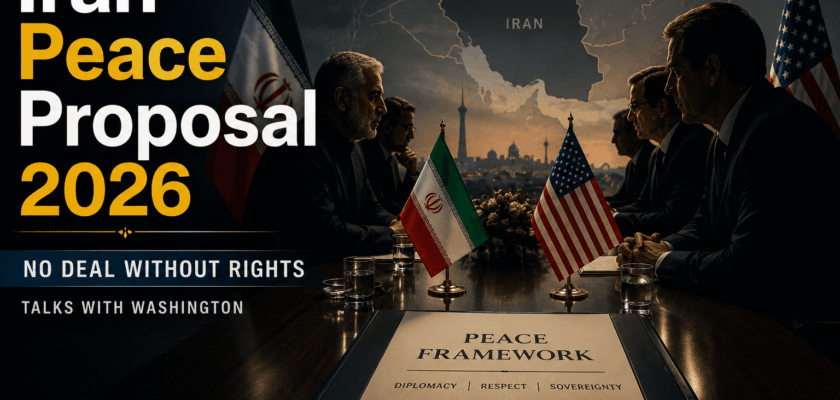
Iran Peace Proposal 2026: Why the Talks Have Become Tougher
Iran peace proposal 2026 has entered a tougher phase after Tehran said it will not approve any agreement with Washington unless Iranian rights are fully secured. This statement has changed the tone of the latest diplomatic round and made the path to a final deal more difficult.
The issue is not only about one peace document. It is about nuclear limits, sanctions relief, frozen assets, shipping security, regional influence, and political trust.
Therefore, the latest hardline position shows that both sides still remain far apart, even as pressure grows to end the conflict and reopen key trade routes.
Why Iran Peace Proposal 2026 Matters Now
Iran peace proposal 2026 matters because the Middle East crisis has already affected energy security, shipping routes, diplomatic alliances, and global markets. Any deal between Tehran and Washington could reduce tension. However, a failed deal could push the region back toward military escalation.
The Strait of Hormuz is also central to this debate. It is one of the world’s most important oil and gas shipping lanes. If it remains blocked or unstable, global fuel prices and supply chains can face pressure.
As a result, this negotiation is not only a U.S.-Iran issue. It is a global security issue.
What Did Iran’s Chief Negotiator Say?
Iran’s chief negotiator Mohammad Bagher Qalibaf said Tehran will not accept any agreement unless the rights of the Iranian people are protected. He also warned that Iran does not fully trust Washington.
This statement came as reports said the United States had sent a tougher peace framework back to Iran. The new proposal reportedly includes stricter language on Iran’s nuclear programme and the reopening of the Strait of Hormuz. (timesofindia.indiatimes.com)
In simple words, Iran is saying: no agreement without guarantees.
Iran Peace Proposal 2026 and the “No Deal Without Rights” Message
Iran peace proposal 2026 now depends heavily on what Tehran means by “rights.” For Iran, this may include sanctions relief, access to frozen funds, oil export freedom, security guarantees, and recognition of its position in the talks.
For Washington, the priority appears different. U.S. officials want stronger terms on nuclear weapons prevention and the reopening of the Strait of Hormuz.
This creates a serious negotiation gap.
One side wants rights and guarantees. The other side wants limits and enforcement.
Why Washington Sent a Tougher Framework
Reports say Washington sent back a tougher framework after earlier optimism that the deal was close. President Donald Trump had said his priorities include stopping Iran from developing nuclear weapons and reopening the blockaded Hormuz shipping lane. (economictimes.com)
This move shows that the White House may not be satisfied with soft language or unclear commitments.
A tougher framework may include:
- Clear nuclear restrictions
- Strong inspection language
- Shipping route guarantees
- Strait of Hormuz reopening terms
- Sanctions-related conditions
- Enforcement mechanism
- Security commitments
- Longer truce language
- Regional de-escalation steps
- Verification rules
However, Iran may reject terms it sees as one-sided.
Why Trust Is the Biggest Problem
Trust is the biggest problem in the Iran peace proposal 2026 debate. Iran says it does not trust the United States. Washington also wants strict guarantees because it does not trust Iranian commitments without enforcement.
This creates a cycle of suspicion.
Iran may ask for sanctions relief before major concessions. The U.S. may ask for nuclear and security commitments before easing pressure.
Because both sides want the other side to move first, negotiations become slow and tense.
The Role of the Strait of Hormuz
The Strait of Hormuz is a narrow but extremely important shipping route. A large amount of global oil and gas trade passes through or near this region.
If the route stays blocked or unsafe, the impact can reach many countries. Fuel prices may rise. Shipping insurance may become costly. Energy-importing countries may face supply pressure.
That is why Washington wants reopening and security guarantees.
For Iran, the Strait is also a strategic pressure point. So, any agreement on Hormuz will likely need careful wording.
Iran Nuclear Talks: Why the Language Matters
In nuclear talks, words matter a lot. A phrase like “limit,” “suspend,” “halt,” “inspect,” or “verify” can change the meaning of the full agreement.
Washington wants language strong enough to prevent Iran from moving toward nuclear weapons. Iran wants wording that does not look like surrender.
Therefore, both sides may fight over every line.
A final text must answer key questions:
- What nuclear activity is allowed?
- What activity is banned?
- Who will inspect?
- How often will inspections happen?
- What happens if rules are broken?
- Which sanctions will be lifted?
- When will relief begin?
- Who guarantees the deal?
Without clarity, the deal may not survive.
Why Frozen Assets Could Become a Key Demand
Iran may also seek access to frozen financial assets as part of any settlement. Reports around earlier negotiation proposals have linked Iran’s demands with access to blocked funds and oil export permissions.
For Tehran, this matters because sanctions have hurt the economy. Any peace framework that does not bring economic relief may be difficult to sell domestically.
For Washington, releasing funds without strong commitments may look risky.
So, money and security are deeply connected in this negotiation.
What Trump’s Hardline Peace Demands Signal
Trump’s hardline peace demands signal that Washington wants a deal with visible strength. The White House may want to show that any agreement prevents nuclear weapons, restores shipping routes, and protects U.S. interests.
Supporters may call this strong bargaining. Critics may say tougher terms can delay peace.
Both views have weight.
A weak deal may fail later. But a deal that feels too harsh may never get approved by Iran.
Therefore, the challenge is to create a framework that is strict enough for Washington and acceptable enough for Tehran.
Why Iran Sent a Tougher Message Back
Iran’s tougher message is likely aimed at both Washington and its domestic audience. Iranian leaders must show that they are not accepting pressure blindly.
The “no deal without rights” line helps Tehran show firmness. It also gives negotiators space to reject terms they consider unfair.
However, this also raises the risk of delay.
If both sides keep hardening their public positions, private diplomacy becomes more difficult.
Possible Outcomes From the Talks
The Iran peace proposal 2026 can move in several directions.
1. Revised Deal Moves Forward
Both sides may adjust wording and reach a limited agreement. This could reduce tension and support Hormuz reopening.
2. Talks Continue Without Final Deal
Negotiations may continue for days or weeks. This can keep markets nervous but avoid immediate escalation.
3. Talks Break Down
If no compromise happens, military risk and energy market pressure may rise again.
4. Temporary Truce Extension
Both sides may extend the current truce while negotiating details.
Each outcome carries different risks.
Why the U.S. Military Signal Matters
The U.S. has also sent a military signal. Reuters reported that U.S. Defense Secretary Pete Hegseth said America is ready to restart strikes on Iran if talks fail to produce an agreement. (reuters.com)
This statement increases pressure on Iran. However, it can also make Tehran more defensive.
In diplomacy, military pressure can create leverage. But it can also reduce trust if the other side feels threatened.
How This Affects Global Energy Markets
The Iran peace proposal 2026 debate can affect global energy markets because the crisis connects with oil routes and regional stability.
If talks improve, markets may calm. If talks fail, oil prices and shipping costs may rise.
Countries that import energy, including India, will watch this closely. A disruption near Hormuz can quickly affect fuel planning, inflation pressure, and transport costs.
Therefore, global markets care about every diplomatic signal from Tehran and Washington.
Why Allies Are Watching Carefully
U.S. allies and regional partners are watching the talks closely. Israel, Gulf countries, European governments, and Asian energy importers all have interests in the outcome.
Some want a strict deal that limits Iran strongly. Others want a quick de-escalation to protect energy routes and trade.
This makes the final framework more complex.
Washington must consider not only Iran’s response, but also allied confidence.
Why Iran’s Domestic Politics Matter
Iran’s domestic politics also matter. Any deal with the United States can become controversial inside Iran. Hardline groups may reject a deal they see as weak. Economic groups may push for sanctions relief. Ordinary citizens may want stability and lower pressure.
So, Qalibaf’s “rights” language may also serve an internal political purpose.
It tells the Iranian public that negotiators will not sign any deal without meaningful gains.
Why Washington’s Domestic Politics Matter
Washington also faces domestic pressure. Trump must show that the deal protects U.S. security and does not reward Iran without clear commitments.
Lawmakers, defense officials, allies, and media groups may review every part of the framework.
If the deal looks too soft, critics may attack it. If it is too hard, Iran may reject it.
This balance makes the White House decision difficult.
What to Watch Next
The next few days may be important. Iran may take time to study the tougher U.S. framework and prepare a response.
Watch for these signals:
- Iran’s official response
- U.S. comments on nuclear terms
- Updates on Strait of Hormuz
- Any truce extension
- Military movement or warning
- Oil price reaction
- Statements from regional allies
- Mediator activity
- Sanctions relief language
- Verification mechanism details
These signs will show whether diplomacy is moving forward or freezing again.
Final Verdict
Iran peace proposal 2026 has entered a harder phase. Tehran says there will be no deal without secured Iranian rights, while Washington is pushing tougher language on nuclear terms and the Strait of Hormuz.
This is a classic diplomatic deadlock. Iran wants guarantees and relief. The U.S. wants restrictions and enforcement. Both sides want to avoid looking weak.
Still, a deal remains possible if the final framework gives each side enough to claim success.
In simple words, peace now depends on whether Washington and Tehran can turn hardline demands into practical compromise. Until then, the world will keep watching the next response from Iran.


