

Digital Cloud Kitchen Networks: Why Order Fulfilment Is Becoming Smarter
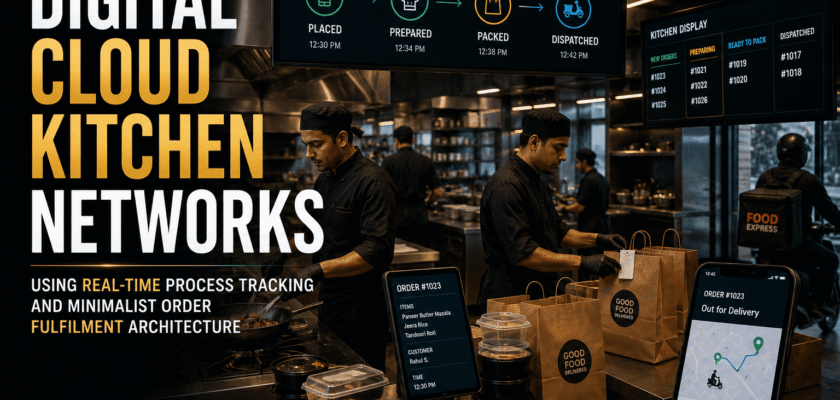
Digital cloud kitchen networks are changing how online food orders move from app to kitchen to delivery partner. Earlier, many kitchens handled orders through separate tablets, phone calls, paper slips, and manual checking. Now, smart kitchens use real-time process tracking to reduce mistakes and speed up fulfilment.
This matters because cloud kitchens do not have dine-in customers. Their full business depends on online orders, fast preparation, accurate packaging, and delivery timing.
Therefore, the best cloud kitchens now work like minimalist fulfilment systems. Every step has a purpose. Every screen shows status. Every order moves through a clear digital flow.
Why Digital Cloud Kitchen Networks Matter in 2026
Digital cloud kitchen networks matter because customers expect speed and transparency. A simple “order received” message is no longer enough. Customers want to know when the order is accepted, prepared, packed, picked up, and delivered.
At the same time, kitchens need better control. A single cloud kitchen may run multiple food brands from one location. One kitchen may prepare burgers, biryani, rolls, pasta, Chinese food, desserts, and beverages together.
Without digital tracking, mistakes can happen quickly.
As a result, real-time process tracking has become a basic need, not a luxury.
What Are Digital Cloud Kitchen Networks?
Digital cloud kitchen networks are delivery-first food businesses that use connected software to manage orders, menus, kitchen work, inventory, packaging, and delivery flow.
These networks may include:
- Online ordering platforms
- Order Management System
- Kitchen Display System
- POS integration
- Inventory tracking
- Recipe management
- Delivery tracking
- Customer notifications
- Staff task screens
- Performance dashboards
In simple words, the kitchen becomes a small digital factory for food.
Digital Cloud Kitchen Networks and Minimalist Order Fulfilment
Digital cloud kitchen networks follow minimalist order fulfilment architecture. This means the system removes unnecessary steps and keeps only what improves speed, accuracy, and quality.
A minimalist flow looks like this:
- Customer places order
- Order enters central dashboard
- Kitchen accepts the order
- KDS sends item tasks to stations
- Staff prepare food
- Packaging team checks order
- Delivery partner gets pickup alert
- Customer receives live status
- Order closes with feedback
- Data goes into reports
This flow looks simple, but it needs strong backend systems.
Real-Time Process Tracking: The Core of Modern Food Delivery
Real-time process tracking helps kitchens see exactly where each order is. It can show whether an order is new, cooking, packed, waiting for pickup, or dispatched.
This improves control because managers do not need to shout across the kitchen or search through paper slips.
Real-time tracking helps with:
- Faster order movement
- Fewer missed orders
- Better staff coordination
- Lower customer complaints
- More accurate delivery estimates
- Clear kitchen accountability
- Better rush-hour control
- Reduced manual confusion
Therefore, process tracking is the backbone of digital food operations.
Order Management System: The First Control Layer
An Order Management System, or OMS, collects orders from multiple channels into one place. This is important because cloud kitchens often receive orders from food delivery apps, websites, WhatsApp, direct apps, and phone orders.
Restaurant India notes that OMS platforms combine orders from multiple apps, while KDS tools replace manual tickets and inventory tools track stock in real time.
Without OMS, staff may have to manage many tablets at once. This can lead to missed orders, wrong preparation time, and delayed acceptance.
An OMS creates one clean command centre.
Kitchen Display System: The Kitchen’s Live Screen
A Kitchen Display System, or KDS, replaces paper tickets with digital screens. It sends orders to the correct kitchen station.
For example:
- Burger order goes to grill station
- Fries go to fryer station
- Biryani goes to rice station
- Drinks go to beverage station
- Packaging gets final checklist
This helps every station know what to do next.
A good KDS can also show priority, cooking time, delay alerts, and order grouping.
As a result, the kitchen becomes calmer and more organized.
Why Separate Tablets Create Chaos
Many cloud kitchens start with separate tablets for different platforms. One tablet may show orders from one app, another from another app, and another from direct orders.
This looks manageable at first. However, it becomes chaotic during peak hours.
Problems include:
- Missed orders
- Wrong acceptance time
- Duplicate preparation
- Delayed dispatch
- Staff confusion
- Poor customer updates
- Wrong packaging
- Bad reviews
That is why centralized systems are important for growth.
A single dashboard reduces confusion and helps the kitchen scale.
How Minimalist Architecture Improves Speed
Minimalist order fulfilment architecture improves speed by removing unnecessary handoffs. The fewer manual steps an order needs, the lower the chance of delay.
For example, if the order automatically moves from app to OMS to KDS, the kitchen saves time. If packaging gets a digital checklist, wrong items reduce. If delivery partner status updates automatically, support calls reduce.
This creates a smoother flow.
In food delivery, small time savings matter. Saving two minutes per order can create a big difference during lunch and dinner rush.
Digital Cloud Kitchen Networks and Inventory Accuracy
Digital cloud kitchen networks need accurate inventory because food orders depend on available stock. If the kitchen accepts an order but the ingredient is missing, the customer gets disappointed.
Real-time inventory tools can track:
- Raw ingredients
- Sauces
- Prepared batches
- Packaging material
- Beverages
- Dairy items
- Frozen stock
- Expiry dates
- Low-stock alerts
- Daily usage
This helps kitchens avoid stockouts and reduce waste.
Moreover, inventory data helps menu decisions.
AI Forecasting: Preparing Before the Rush
AI forecasting helps cloud kitchens predict demand before orders arrive. It can study past sales, weather, festivals, weekdays, offers, and local events.
For example, the system may predict more snacks during rainy evenings or more family meals during cricket nights.
Then the kitchen can prepare ingredients in advance.
This improves:
- Prep planning
- Staff allocation
- Stock control
- Delivery speed
- Waste reduction
- Customer satisfaction
Restaurant India reports that advanced cloud kitchens use AI to decide what dishes to keep, what price to set, and which location to expand into.
Why Customers Want Live Order Stages
Customers want live order stages because food delivery is emotional. When people are hungry, uncertainty creates frustration.
A clear status flow reduces anxiety.
A good app can show:
- Order placed
- Restaurant accepted
- Food being prepared
- Food packed
- Rider assigned
- Rider picked up
- Out for delivery
- Delivered
EngineerBabu’s 2026 cloud kitchen app guidance says customers expect to see orders move from placed to prepared to dispatched, and static confirmation is no longer acceptable.
This shows why live process tracking matters.
Why Packaging Is Part of Fulfilment Architecture
Packaging is not the last step. It is a key part of order fulfilment. A perfectly cooked order can still fail if packaging is wrong.
Cloud kitchens must track:
- Correct item count
- Sauce packets
- Cutlery choice
- Beverage seal
- Spill-proof packing
- Label accuracy
- Delivery partner handover
- Hot and cold separation
- Special instructions
- Invoice or receipt
A digital checklist can reduce wrong deliveries.
Good packaging also protects ratings.
How Cloud Kitchens Mimic Minimalist Fulfilment Systems
Cloud kitchens now work more like fulfilment centres than traditional restaurants. In a fulfilment centre, every order is tracked from entry to exit. Cloud kitchens are applying the same logic to food.
The idea is simple:
- Reduce movement
- Reduce confusion
- Track every step
- Standardize preparation
- Keep dashboards visible
- Use data for improvement
- Deliver faster
- Improve repeat orders
This architecture helps cloud kitchens grow without losing control.
Why Staff Training Still Matters
Technology can guide the kitchen, but staff training still matters. If employees ignore screens, skip checklists, or enter wrong stock data, the system loses value.
Staff should know:
- How to read KDS screens
- How to update order status
- How to report missing items
- How to follow recipe cards
- How to handle rush-hour priority
- How to use packaging checklist
- How to record waste
- How to close orders properly
A smart system works best with trained people.
Digital Cloud Kitchen Networks and Multi-Brand Operations
Multi-brand cloud kitchens need digital control more than single-brand kitchens. One location may run five to ten virtual brands.
For example:
- Burger brand
- North Indian brand
- Biryani brand
- Chinese brand
- Dessert brand
- Healthy bowl brand
- Beverage brand
Without clear routing, staff may mix up recipes, packaging, and delivery labels.
Digital cloud kitchen networks solve this by separating brand identity while keeping backend operations connected.
How Data Improves Menu Decisions
Data helps owners know which menu items work and which ones fail. A dish may look popular but still create low profit if ingredients are expensive or prep time is too long.
A good dashboard can show:
- Best-selling dishes
- Slow-moving items
- High-waste items
- High-margin items
- Late preparation items
- High-complaint items
- Repeat-order dishes
- Discount-dependent items
This helps owners improve the menu.
A smaller, stronger menu is often better than a huge confusing one.
Why Minimalist Menus Help Fulfilment
Minimalist order fulfilment works better when the menu is not overloaded. Too many dishes can create prep confusion, stock issues, and slow delivery.
A focused menu helps with:
- Faster cooking
- Better inventory control
- Lower waste
- Easier staff training
- Better taste consistency
- Faster packaging
- Fewer errors
- Better customer memory
This does not mean the menu must be boring. It means the menu should be operationally smart.
Real-Time Tracking and Customer Support
Real-time tracking also reduces customer support pressure. If customers can see order status clearly, they do not need to call or message repeatedly.
Support teams can also check the same dashboard and give accurate answers.
This helps with:
- Delayed order complaints
- Refund requests
- Missing item tracking
- Rider coordination
- Kitchen delay alerts
- Customer communication
- Platform dispute handling
Clear status reduces confusion for everyone.
Why Cloud Kitchen Owners Need Dashboards
Cloud kitchen owners cannot manage growth by memory. They need dashboards to see business health.
A good dashboard can show:
- Total orders
- Average prep time
- Cancelled orders
- Late orders
- Stock alerts
- Waste value
- Top items
- Low-profit items
- Staff performance
- Customer ratings
This helps owners make faster decisions.
Without dashboards, problems stay hidden until ratings fall.
Challenges in Digital Cloud Kitchen Networks
Digital cloud kitchen networks also face challenges. Technology can fail if setup is weak or staff do not use it properly.
Common challenges include:
- Software cost
- Poor internet
- Staff resistance
- Wrong data entry
- Platform integration issues
- KDS screen overload
- Inventory mismatch
- Training gaps
- Hardware maintenance
- Cybersecurity risk
So, owners should start with essential tools and scale slowly.
How Small Kitchens Can Start
Small cloud kitchens do not need a complex system on day one. They can start with a practical setup.
Basic starting tools include:
- One centralized order dashboard
- Digital menu management
- Kitchen display screen
- Inventory sheet or software
- Packaging checklist
- Daily order report
- Waste tracking sheet
- Customer feedback tracker
- Delivery partner coordination process
- Weekly menu review
After that, AI forecasting and advanced analytics can be added.
What Makes a Cloud Kitchen System Trustworthy
A trustworthy cloud kitchen system should be simple, fast, and transparent. It should not make staff more confused.
Good software should offer:
- Easy order view
- Clear status buttons
- Low-stock alerts
- Multi-brand support
- Delivery tracking
- Report dashboard
- Staff permissions
- Data backup
- Reliable support
- Simple training
If the system is too complex, staff may return to paper slips.
Why Cybersecurity Matters in Food Tech
Cloud kitchens also handle customer data, order history, phone numbers, addresses, payments, and business reports. This makes cybersecurity important.
Owners should protect:
- POS login
- Delivery app accounts
- Customer data
- Staff access
- Payment systems
- Admin dashboard
- Supplier records
- Business analytics
- Cloud backups
- API integrations
Strong passwords, access control, and trusted software are basic needs.
Future of Digital Cloud Kitchen Networks
The future of digital cloud kitchen networks will become more automated and data-driven. Kitchens may use AI to suggest prep quantity, predict rush hours, route orders, detect delays, and recommend menu changes.
Future systems may include:
- AI prep planning
- Smart packaging checks
- Voice-based kitchen updates
- Camera-based quality checks
- Automated stock deduction
- Demand-based pricing
- Delivery route optimization
- Centralized multi-location control
- Customer taste prediction
- Real-time profit tracking
This can make food delivery faster and more reliable.
Final Verdict
Digital cloud kitchen networks are changing food delivery operations through real-time process tracking, OMS, KDS, inventory tools, and AI forecasting. The goal is not to make kitchens look more technical. The goal is to make every order faster, cleaner, and more accurate.
Minimalist order fulfilment architecture helps cloud kitchens reduce confusion. It moves orders through a clear digital path from app to kitchen to packaging to delivery.
In simple words, modern cloud kitchens are not just cooking spaces. They are smart fulfilment systems for food.
The kitchens that trust the process, track every step, and keep operations simple will have a stronger chance to win customer loyalty in 2026.


