


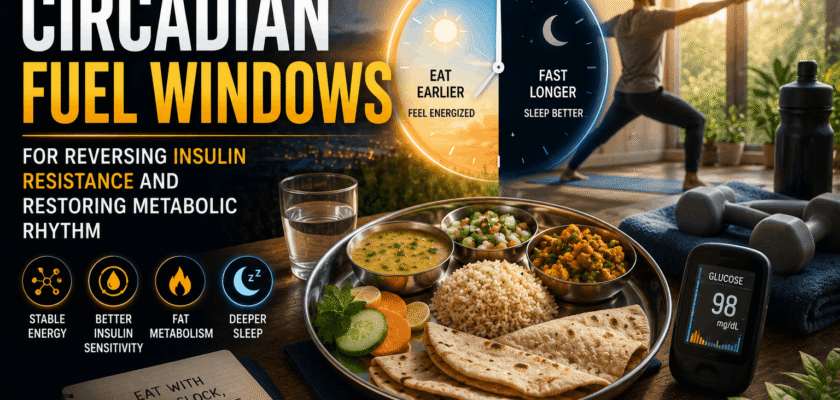
Circadian Fuel Windows: Why Meal Timing Matters Now
Circadian fuel windows are becoming important because modern endocrinology is looking beyond simple calorie counting for insulin resistance. Earlier, many people focused only on how many calories they ate. Now, doctors and researchers are also asking when those calories enter the body.
This matters because the body does not process food the same way all day. Insulin sensitivity is usually better earlier in the day and weaker late at night. Therefore, eating the same meal at different times may create different blood sugar responses.
In simple words, reversing insulin resistance is not only about eating less. It is also about eating at the right time.
Why Circadian Fuel Windows Matter for Insulin Resistance
Circadian fuel windows matter because insulin resistance is closely linked with the body clock. The body has internal rhythms that control sleep, hunger, hormones, digestion, liver function, and glucose use.
When people eat late at night, skip breakfast, sleep badly, and snack across the full day, the body clock can become confused. As a result, blood sugar control may become weaker.
This is why meal timing is becoming a serious health topic in 2026.
A smart eating window can support metabolic rhythm and make healthy eating easier to follow.
What Are Circadian Fuel Windows?
Circadian fuel windows mean planned eating periods that match the body’s natural active phase. The idea is to eat most calories earlier in the day and avoid heavy late-night meals.
A simple circadian fuel window may look like:
- First meal: 8 AM to 10 AM
- Main meal: afternoon or early evening
- Last meal: 2 to 4 hours before sleep
- Night: no heavy snacking
This is not the same as extreme fasting. It is a practical way to respect the body clock.
The goal is better blood sugar control, better digestion, and better sleep support.
Circadian Fuel Windows vs Calorie Counting
Calorie counting focuses on total energy intake. It asks, “How much did you eat?”
Circadian fuel windows also ask, “When did you eat?”
Both questions matter.
A person can count calories but still eat most food late at night. Another person may eat balanced meals earlier and avoid late-night snacking. Even if calories look similar, the body’s response may differ.
This is why modern metabolic health advice is moving toward timing plus quality plus quantity.
The best plan does not ignore calories. It simply adds timing as another important layer.
Why Late-Night Eating Can Worsen Blood Sugar
Late-night eating can worsen blood sugar because the body is preparing for rest. At night, digestion slows, insulin sensitivity may decline, and the liver follows its own internal rhythm.
If a person eats a heavy meal close to bedtime, glucose may stay higher for longer. Sleep quality may also fall.
Over time, this habit can support weight gain, fatty liver risk, and insulin resistance.
That is why many experts now suggest finishing dinner earlier instead of eating large meals late at night.
Reversing Insulin Resistance: Why Timing Helps
Reversing insulin resistance needs several lifestyle changes. Food quality, exercise, sleep, stress control, and weight management all matter.
However, meal timing can make the process easier.
When meals happen at regular and earlier times, the body can predict fuel intake. This may support better hormone rhythm and glucose control.
A circadian-friendly pattern can help people:
- Reduce late-night cravings
- Improve fasting blood sugar
- Support better sleep
- Avoid constant snacking
- Reduce insulin load
- Improve meal discipline
- Build a stable routine
Therefore, timing can support the full metabolic plan.
What Is Insulin Resistance?
Insulin resistance means the body’s cells do not respond well to insulin. Insulin is a hormone that helps move sugar from blood into cells for energy.
When cells resist insulin, the body needs more insulin to control blood sugar. At first, blood sugar may still look normal because the pancreas works harder. Later, blood sugar can rise.
Insulin resistance can increase the risk of:
- Prediabetes
- Type 2 diabetes
- Belly fat
- Fatty liver
- High triglycerides
- High blood pressure
- PCOS-related metabolic issues
- Heart disease risk
So, early action is very important.
Signs You May Have Insulin Resistance
Insulin resistance can stay silent for years. Still, some signs may point toward risk.
Possible signs include:
- Belly fat
- Tiredness after meals
- Sugar cravings
- Frequent hunger
- Dark patches around the neck
- High waist size
- High triglycerides
- Fatty liver
- Borderline blood sugar
- Family history of diabetes
These signs do not confirm insulin resistance by themselves. A doctor should guide testing and treatment.
Tests to Discuss With a Doctor
If you suspect insulin resistance, speak with a doctor. Do not self-diagnose only from online content.
A doctor may suggest:
- Fasting blood sugar
- HbA1c
- Fasting insulin
- Lipid profile
- Liver function test
- Blood pressure check
- Waist measurement
- Thyroid test, if needed
- Vitamin D and B12, if advised
- Oral glucose tolerance test, if needed
These tests can help understand metabolic risk more clearly.
How to Start Circadian Fuel Windows Safely
You do not need to start with a strict fasting plan. A simple routine is better.
Start with these steps:
- Eat breakfast or first meal earlier
- Keep lunch balanced
- Finish dinner 2 to 4 hours before sleep
- Avoid heavy late-night snacks
- Keep a 12-hour overnight break
- Drink water instead of sugary drinks
- Keep meal timing similar daily
- Avoid extreme fasting without medical advice
This basic approach can suit many people.
However, people with diabetes medicines, pregnancy, eating disorder history, or serious medical conditions should ask a doctor first.
The 12-Hour Eating Window Method
A 12-hour eating window is a simple starting point. For example, a person can eat from 8 AM to 8 PM and then avoid calories overnight.
This is not extreme. It mainly stops late-night snacking.
A 12-hour window can help beginners build discipline without feeling deprived.
Later, some people may move to a 10-hour or 9-hour window if it suits their body and medical condition.
The key is consistency, not punishment.
Early Eating Window vs Late Eating Window
An early eating window usually works better with the body clock than a late eating window. For example, eating from 8 AM to 6 PM may support better glucose control than eating from 12 PM to 10 PM.
The reason is simple. The body usually handles food better during the active part of the day.
A late eating window may keep digestion active near bedtime. This can hurt sleep and blood sugar control.
Therefore, people should avoid turning time-restricted eating into late-night eating.
What to Eat Inside the Fuel Window
Meal timing helps, but food quality still matters. You cannot fix a poor diet only by changing timing.
A good plate should include:
- Protein
- Vegetables
- Fibre-rich carbs
- Healthy fats
- Fermented food, if suitable
- Enough water
- Less added sugar
- Less refined flour
- Less fried food
- Controlled portions
For Indian meals, this can mean dal, curd, paneer, eggs, sprouts, vegetables, roti in control, rice in control, salad, and less sugary tea or sweets.
Protein Helps Blood Sugar Stability
Protein is important because it helps control hunger and supports muscle. More muscle can improve glucose use.
Good protein options include:
- Dal
- Chana
- Rajma
- Paneer
- Curd
- Eggs
- Fish
- Chicken
- Tofu
- Sprouts
Adding protein to breakfast or the first meal can reduce cravings later in the day.
This makes circadian fuel windows easier to follow.
Why Walking After Meals Helps
A short walk after meals can support blood sugar control. Even 10 to 15 minutes of light walking after lunch or dinner can help muscles use glucose.
This habit is simple and free.
It does not require a gym. It does not need equipment. It only needs consistency.
For people with desk jobs, post-meal walking can be one of the easiest metabolic habits.
Strength Training and Insulin Sensitivity
Strength training is useful because muscles store and use glucose. When muscle mass improves, the body can handle sugar better.
A simple weekly plan can include:
- 2 to 3 days of strength training
- 5 days of walking
- Short stretching daily
- Less sitting after meals
- Stair climbing when possible
Strength training does not always mean heavy gym workouts. Bodyweight exercises, resistance bands, and supervised beginner workouts can also help.
Sleep Timing Supports Metabolic Rhythm
Sleep is a major part of metabolic rhythm. Poor sleep can increase hunger, cravings, stress hormones, and insulin resistance.
A good sleep routine includes:
- Fixed sleep time
- Fixed wake time
- Less screen use before bed
- Earlier dinner
- Dark room
- Cool room
- Morning sunlight
- Less caffeine late in the day
- Calm bedtime routine
- 7 to 8 hours of sleep
Circadian fuel windows work better when sleep timing is also stable.
Stress Can Disturb Blood Sugar
Stress can affect blood sugar because it changes hormones like cortisol and adrenaline. Chronic stress may increase cravings, emotional eating, and belly fat risk.
Stress control does not need to be complicated.
Useful methods include:
- Deep breathing
- Prayer or meditation
- Walking
- Journaling
- Talking to a trusted person
- Reducing screen overload
- Better work boundaries
- Nature time
- Music
- Proper sleep
These habits support the metabolic plan.
Who Should Be Careful With Fasting Windows?
Time-restricted eating is not suitable for everyone. Some people need medical guidance before changing meal timing.
Be careful if you have:
- Diabetes on medication
- Pregnancy
- Breastfeeding
- Eating disorder history
- Very low body weight
- Chronic kidney disease
- Severe acidity issues
- Heavy athletic training
- Night shift work
- Serious medical illness
In these cases, a doctor or registered dietitian should guide the plan.
Why Night Shift Workers Need a Different Plan
Night shift workers cannot always follow a normal morning-to-evening eating pattern. Their schedule is different.
However, they can still reduce metabolic stress by keeping meal timing regular, avoiding heavy meals before sleep, and limiting constant snacking.
Night shift workers should focus on:
- Consistent eating window
- Light meal before sleep
- Protein-rich meals
- Less sugary caffeine
- Planned snacks
- Dark sleep environment
- Medical checkups
- Regular movement
Their plan should match their work reality.
Common Mistakes People Make
People often make mistakes when trying to reverse insulin resistance.
Common mistakes include:
- Skipping breakfast but eating late at night
- Eating very little protein
- Drinking sugary tea or juice often
- Eating refined snacks inside the window
- Sleeping late
- Sitting after every meal
- Trying extreme fasting too soon
- Ignoring stress
- Not checking blood reports
- Copying someone else’s diet
A simple, steady plan works better than extreme changes.
Sample Circadian-Friendly Day
Here is a simple sample day:
7:00 AM: Wake up and get sunlight
8:30 AM: Protein-rich breakfast
1:00 PM: Balanced lunch
4:30 PM: Light snack, if needed
7:00 PM: Early dinner
7:30 PM: 10-minute walk
10:30 PM: Sleep routine
11:00 PM: Sleep
This is only an example. People can adjust timing based on work, family, and health needs.
Why This Is Not a Crash Diet
Circadian fuel windows are not a crash diet. The goal is not to starve. The goal is to align food with the body clock.
A crash diet often fails because it creates hunger, fatigue, and rebound eating.
A circadian plan works better because it builds rhythm.
The focus is:
- Regular meals
- Earlier fuel
- Less late-night eating
- Better sleep
- Better movement
- Better food quality
This makes the plan more sustainable.
When to Expect Results
Results vary from person to person. Some people may feel better sleep and fewer cravings within days. Blood sugar changes may take weeks or months.
Progress depends on:
- Starting health condition
- Food quality
- Activity level
- Sleep quality
- Stress level
- Weight change
- Medicine use
- Consistency
- Age
- Family history
So, do not judge the plan by one day. Track trends over time.
Final Verdict
Circadian fuel windows are changing the way people think about reversing insulin resistance. Modern endocrinology is moving beyond calorie counting alone and looking more closely at meal timing, sleep, movement, and metabolic rhythm.
Eating earlier, avoiding heavy late-night meals, walking after meals, building muscle, sleeping well, and reducing stress can all support better insulin sensitivity.
However, this is not a replacement for medical care. People with diabetes, medicines, pregnancy, or serious health conditions should take professional advice.
In simple words, your body does not only care about what you eat. It also cares about when you eat. That is why circadian fuel windows may become one of the most practical metabolic health tools of 2026.


