
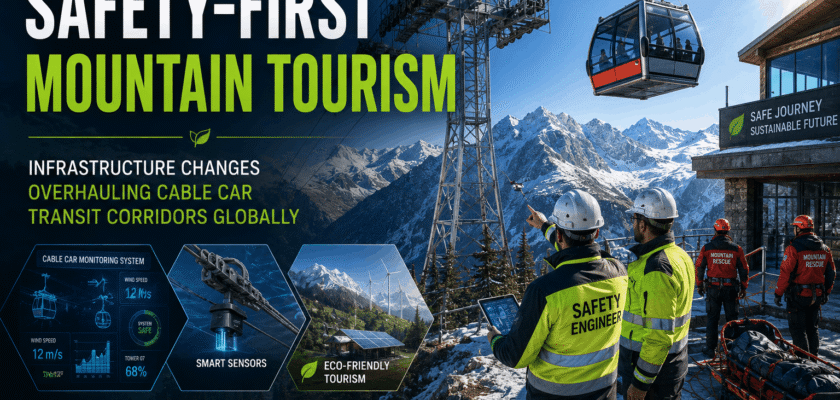
Safety-First Mountain Tourism: Why Ropeway Safety Is Now a Priority
Safety-first mountain tourism is becoming one of the most important travel topics in 2026 because cable cars, gondolas, and ropeways are no longer only scenic attractions. They are now major high-altitude transit systems that carry thousands of tourists through mountains, valleys, ski zones, pilgrimage routes, and eco-tourism destinations.
The recent Gulmarg Gondola incident showed why safety cannot be treated as a back-office issue. More than 300 tourists were stranded mid-air after a technical snag halted the service, and emergency teams had to carry out a long rescue operation.
Therefore, mountain tourism must now move from “beautiful experience” to “safe experience first.”
Why Safety-First Mountain Tourism Matters in 2026
Safety-first mountain tourism matters because tourist demand is growing in high-altitude destinations. More visitors want snow views, cable car rides, adventure routes, and mountain resorts. At the same time, climate stress, crowd pressure, ageing infrastructure, and mechanical load are increasing risk.
A cable car failure is different from a normal road delay. Passengers can get stuck hundreds of feet above ground. Rescue may require ropes, ladders, trained teams, emergency medical support, and perfect coordination.
So, every mountain destination must ask one question: is the safety system growing as fast as tourism demand?
What Happened at Gulmarg Gondola?
The Gulmarg Gondola technical snag became a major warning sign for high-altitude tourism operators. Reports said more than 300 tourists were trapped inside 65 cabins, with some cabins hanging nearly 500 feet above ground. Emergency evacuation protocols were activated quickly, and a seven-hour rescue operation brought all passengers to safety without injuries.
The incident involved NDRF, SDRF, Jammu and Kashmir Police, Army’s Chinar Corps, and local administration. This shows that rescue success depends on multi-agency coordination, not only ropeway staff.
After the snag, the gondola service was suspended for repairs, a new gearbox installation, and a safety audit by a French firm.
Safety-First Mountain Tourism and Cable Car Trust
Safety-first mountain tourism depends on trust. Tourists board a cable car because they believe the system is safe, inspected, and professionally managed.
If one incident goes viral, tourists may start questioning the full destination. Families may cancel trips. Travel operators may face refund pressure. Local businesses may lose confidence.
That is why ropeway safety is not only an engineering issue. It is also a tourism economy issue.
A safe cable car system protects:
- Tourists
- Local jobs
- Hotels
- Guides
- Taxi operators
- Restaurants
- Adventure businesses
- Destination reputation
- Government trust
- Long-term tourism growth
So, safety upgrades are also economic protection.
Why Cable Car Transit Corridors Need Structural Upgrades
Cable car transit corridors need structural upgrades because many mountain systems operate under difficult conditions. High altitude, snow, wind, rain, ice, fog, temperature changes, and heavy tourist load can stress equipment over time.
A strong cable car corridor needs:
- Modern cabins
- Reliable gearboxes
- Strong braking systems
- Backup power
- Emergency drive systems
- Cable health monitoring
- Wind sensors
- Rescue equipment
- Control room dashboards
- Regular safety audits
These systems should not work only on normal days. They must also work during emergencies.
High-Altitude Structural Upgrades: What They Include
High-altitude structural upgrades mean improving the physical and digital safety layers of ropeway systems.
These upgrades may include:
- Stronger towers
- Better cable inspection tools
- Improved cabin locks
- Modern braking systems
- Redundant motors
- Backup generators
- Real-time sensor monitoring
- Emergency communication systems
- Better evacuation platforms
- Weather-resilient equipment
The goal is simple: prevent breakdowns where possible and reduce rescue time if a breakdown happens.
Safety Audits Must Become More Frequent
Safety audits must become more frequent because cable car systems face daily wear and tear. A once-in-a-while inspection is not enough when tourist load is rising.
The Gulmarg incident already triggered repairs and a safety audit plan, including audit support from a French firm.
A good audit should check:
- Cable condition
- Gearbox health
- Motor performance
- Brake reliability
- Cabin attachment systems
- Tower alignment
- Electrical backup
- Weather sensors
- Control room logs
- Rescue readiness
An audit should not be a formality. It should lead to visible fixes.
Predictive Maintenance Can Prevent Bigger Failures
Predictive maintenance uses sensors, data, and software to detect problems before they become dangerous. Instead of waiting for a part to fail, operators can monitor vibration, temperature, load, cable tension, and abnormal movement.
If the system sees unusual vibration in a gearbox, it can alert engineers early. If cable tension changes beyond safe limits, operators can stop service before passengers board.
This approach can reduce sudden breakdown risk.
For modern ropeways, predictive maintenance should become standard practice.
Rescue Drills Should Happen Before Emergencies
Rescue drills should not happen only after an incident. They should happen before emergencies.
A real cable car rescue can be stressful. Passengers may panic. Weather may change. Children and elderly passengers may need special support. Media attention may create pressure.
Regular drills prepare teams for these moments.
A proper drill should include:
- Cabin evacuation practice
- Rope rescue simulation
- Night rescue scenario
- Bad weather response
- Passenger communication test
- Medical emergency response
- Police coordination
- SDRF/NDRF coordination
- Family information desk
- Media communication protocol
The more teams practice, the better they respond.
Passenger Communication Is Critical
Passenger communication is one of the most important parts of cable car safety. When a cabin stops mid-air, tourists need clear information.
If passengers do not know what happened, panic increases. If they receive calm updates, they can wait more safely.
Every cable car cabin should ideally have:
- Emergency communication system
- Clear safety instructions
- Helpline details
- Multilingual guidance
- Panic-control messaging
- Cabin number display
- Basic first-aid information
- Emergency light
- Ventilation clarity
- Passenger behaviour rules
A calm passenger is easier to rescue than a panicked passenger.
Weather Monitoring Must Be Non-Negotiable
Mountain weather changes quickly. Wind, fog, snow, rain, lightning, and sudden temperature shifts can affect cable car safety.
Operators should track:
- Wind speed
- Snow load
- Visibility
- Lightning risk
- Ice formation
- Rain intensity
- Temperature change
- Avalanche risk
- Landslide alerts
- Closure thresholds
If conditions cross safety limits, services should stop before tourists board.
Revenue should never overrule weather safety.
Crowd Management Protects the Whole System
Crowd management is also part of safety-first mountain tourism. Too many tourists at one time can overload ticket counters, waiting areas, platforms, roads, and emergency response systems.
A better system should use:
- Time-slot booking
- Daily passenger caps
- Real-time crowd alerts
- Separate emergency lanes
- Senior citizen support
- Child safety support
- Online ticket limits
- Refund clarity during shutdown
- Queue management
- Local transport coordination
Crowd control reduces panic and improves evacuation planning.
Cable Cars Can Support Sustainable Mountain Tourism
Cable cars can support sustainable mountain tourism if they are well designed. They can reduce road traffic, pollution, parking pressure, and mountain road congestion.
However, sustainability without safety is incomplete.
A ropeway that brings tourists but lacks rescue planning creates risk. A cable car that reduces road traffic but ignores maintenance is not truly sustainable.
Therefore, the future model should be:
safe + low-impact + well-managed + locally beneficial
That is the real meaning of responsible mountain tourism.
Global Lessons From Cable Car and Funicular Incidents
Global cable car and funicular incidents show that tourism infrastructure needs constant modernization. In 2025, Reuters reported that a Lisbon funicular crash exposed safety flaws in ageing tourism transport infrastructure, with experts calling for modernization and more frequent inspection as tourist ridership grew.
This lesson applies to mountain destinations too.
When ridership increases, inspection frequency should increase. When systems age, modernization should not wait for an accident. When tourists depend on transit, safety must stay ahead of demand.
Why Old Systems Need Modern Materials
Some older tourist transport systems were built for smaller crowds and older safety expectations. Today, they face higher tourist numbers, heavier usage, and stricter safety needs.
Modern materials can improve:
- Cabin strength
- Brake reliability
- Cable durability
- Weather resistance
- Fire safety
- Impact protection
- Emergency evacuation
- Passenger comfort
- Maintenance efficiency
- System lifespan
Modernization does not always mean destroying heritage. It means preserving experience while upgrading safety.
Technology Can Make Ropeways Smarter
Smart ropeways can use technology to improve safety and efficiency.
Useful systems include:
- AI fault detection
- Sensor-based cable monitoring
- CCTV and control rooms
- GPS-based cabin tracking
- Automatic shutdown alerts
- Digital maintenance logs
- Weather-linked operation control
- Passenger flow dashboards
- Emergency communication apps
- Drone-based inspection support
Technology cannot replace human responsibility, but it can help teams act faster.
Emergency Kits Inside Cabins
Cable car cabins should be designed for emergency waiting. Even if rescue takes hours, passengers should have basic safety support.
Possible emergency cabin features include:
- Emergency light
- Communication button
- Cabin number marker
- Basic ventilation guidance
- Safety instruction panel
- Small first-aid kit where practical
- Thermal support in cold zones
- Panic-control message display
- Child safety note
- QR code for safety guide
These small features can reduce fear during a long stoppage.
Why Local Communities Must Be Trained
Local communities are often the first support layer in mountain emergencies. Guides, taxi drivers, hotel staff, shopkeepers, pony operators, and local volunteers know the area better than outsiders.
Training local stakeholders can improve response time.
They can help with:
- Crowd control
- Tourist guidance
- Family information
- First response
- Local route support
- Weather alerts
- Food and water supply
- Communication support
- Rescue team coordination
- Post-incident assistance
Safety-first tourism works best when local people are part of the system.
What Tourists Should Check Before Taking a Cable Car
Tourists should also take basic responsibility.
Before boarding a cable car, check:
- Weather condition
- Official operating status
- Crowd level
- Last ride timing
- Safety instructions
- Emergency helpline
- Health condition at altitude
- Children and elderly needs
- Refund policy
- Official alerts
Do not trust only social media updates. Always follow official operator instructions.
What Tourists Should Do If a Cable Car Stops
If a cable car stops mid-air, passengers should stay calm.
Important steps include:
- Do not shake the cabin
- Do not force doors open
- Follow announcements
- Use emergency communication if available
- Keep children seated
- Save phone battery
- Avoid panic calls
- Share cabin number if possible
- Wait for rescue instructions
- Help elderly passengers stay calm
Panic can make rescue more difficult. Calm behaviour protects everyone.
Safety-First Mountain Tourism and Insurance
Insurance and liability must become clearer for cable car tourists. Many travellers do not know what protection exists if a ride fails, injury happens, or a rescue is needed.
Operators should clearly explain:
- Passenger insurance
- Emergency medical support
- Incident reporting process
- Refund policy
- Compensation rules
- Operator responsibility
- Maintenance accountability
- Vendor accountability
- Rescue cost coverage
- Complaint process
Transparent rules build tourist trust.
Why Public Safety Reports Should Be Published
Public safety reports can improve confidence. After major incidents, authorities should share what happened, what was repaired, and what will change.
A public report does not need to reveal sensitive technical details. But it should explain:
- Cause of fault
- Repair action
- Audit findings
- Safety upgrades
- Rescue response timeline
- Future prevention steps
- Passenger support plan
- Reopening conditions
- Monitoring process
- Accountability measures
This helps tourists believe that lessons were learned.
Mountain Tourism Needs Capacity Limits
Mountain destinations are not unlimited spaces. Roads, ropeways, trails, hotels, waste systems, and rescue teams all have limits.
If too many tourists enter at once, risk increases.
Capacity planning should include:
- Ropeway passenger limits
- Road traffic control
- Hotel occupancy monitoring
- Waste management
- Emergency medical capacity
- Weather-based restrictions
- Online slot systems
- Crowd heat maps
- Tourist flow planning
- Local resident impact checks
Safety-first mountain tourism must manage numbers, not just attract numbers.
Climate Change Adds New Risk
Climate change can make mountain tourism more unpredictable. Sudden weather shifts, unusual snowfall, rain bursts, landslides, and temperature changes can affect cable car safety.
This means old safety assumptions may no longer be enough.
Operators should update plans for:
- Stronger winds
- Heat stress
- Snow pattern changes
- Ice risk
- Landslide-prone slopes
- Flash rain events
- Power disruption
- Emergency access road damage
- Longer tourist seasons
- Higher peak load
Climate-ready infrastructure is now part of tourism safety.
What Governments Should Do
Governments should create stronger ropeway safety frameworks. These rules should apply before approvals, during operations, and after incidents.
Important steps include:
- Mandatory safety audits
- Independent technical checks
- Regular rescue drills
- Weather-based closure rules
- Real-time monitoring standards
- Passenger insurance rules
- Operator accountability
- Public incident reporting
- Staff certification
- Emergency coordination plans
Tourism growth should never move faster than safety regulation.
What Operators Should Do
Cable car operators must treat safety as daily work.
They should:
- Inspect systems daily
- Keep digital maintenance logs
- Train staff regularly
- Run emergency drills
- Monitor weather continuously
- Communicate clearly with passengers
- Limit overcrowding
- Maintain backup power
- Test communication systems
- Stop operations when unsafe
A safe operator builds long-term trust.
Future of Cable Car Transit Corridors
The future of cable car transit corridors will likely be smarter, safer, and more regulated. Ropeways will continue to grow because they help connect difficult terrain and reduce road pressure.
Future systems may include:
- Predictive maintenance
- AI safety alerts
- Smart cabin monitoring
- Drone inspection
- Green power support
- Weather-adaptive operation
- Digital ticket caps
- Automatic rescue alerts
- Stronger evacuation tools
- Public safety dashboards
This future can make mountain tourism safer and more sustainable.
Final Verdict
Safety-first mountain tourism is now essential because cable car transit corridors are becoming core infrastructure in high-altitude destinations. The Gulmarg Gondola rescue showed that brave emergency teams can save lives, but the bigger goal should be prevention.
Mountain tourism needs stronger audits, predictive maintenance, rescue drills, backup systems, passenger communication, crowd control, weather monitoring, and transparent public safety reports.
In simple words, a mountain trip should be beautiful, but it must also be safe.
The destinations that invest in safety-first infrastructure will win long-term tourist trust. The ones that ignore safety may lose visitors after one viral incident.


