
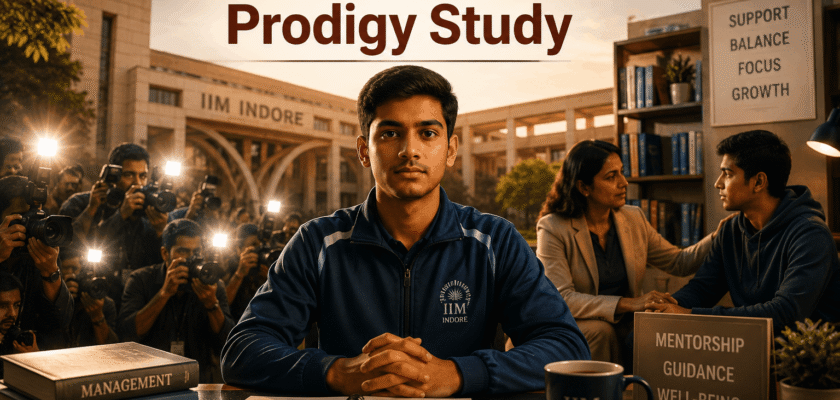
IIM Indore Prodigy Study: Why Early Fame Needs Academic Attention
IIM Indore prodigy study has become an important education topic because India is seeing young achievers enter public attention very early. The latest case is 15-year-old cricket sensation Vaibhav Sooryavanshi, whose rise after IPL 2026 has pushed academics to study how early success affects motivation, pressure, identity, and future growth.
This topic is not only about one young athlete. It is about every young scholar, performer, coder, athlete, artist, creator, and student who gets public attention before full emotional maturity.
Therefore, the IIM Indore prodigy study can help educational institutes understand how to protect young talent from media pressure while still encouraging excellence.
Why IIM Indore Prodigy Study Matters in 2026
IIM Indore prodigy study matters because early fame can bring both opportunity and stress. A young achiever may receive awards, interviews, social media praise, brand attention, and public expectations. At the same time, the same child may face criticism, trolling, performance pressure, academic disruption, and identity confusion.
NDTV reported that IIM Indore is preparing what is believed to be India’s first multidisciplinary academic study centred around a young sporting prodigy, focusing on the ingredients behind extraordinary success at a very young age.
This makes the study valuable for schools, colleges, sports academies, parents, and media platforms.
The real question is simple: how can India celebrate young talent without crushing it?
What Is the IIM Indore Prodigy Study?
The IIM Indore prodigy study is a planned academic case study focused on Vaibhav Sooryavanshi, the young Rajasthan Royals batter who gained national attention after IPL 2026. Reports say the study will examine early fame, pressure, motivation, talent development, and the broader social and psychological impact of such success.
The study is expected to use a multidisciplinary approach.
That means it may combine ideas from:
- Management studies
- Psychology
- Sports leadership
- Media studies
- Youth development
- Motivation research
- Education systems
- Family support
- Talent management
- Public communication
This wider view is important because a prodigy’s life is not shaped by talent alone.
IIM Indore Prodigy Study and Vaibhav Sooryavanshi
IIM Indore prodigy study has gained attention because Vaibhav Sooryavanshi is not a normal young player. Reports describe him as a 15-year-old Rajasthan Royals batter who impressed the cricket world and won a record five awards in IPL 2026.
He became a public figure before reaching adulthood. That creates a special case for researchers.
A young prodigy may need to handle:
- Performance expectations
- Media interviews
- Social media attention
- Public comparison
- Coaching demands
- Family pressure
- Academic disruption
- Brand opportunities
- Fan behaviour
- Criticism after failure
This is why institutes need structured support systems.
Why Young Scholars Face Media Pressure
Young scholars face media pressure because success spreads fast in the digital age. A single viral achievement can turn a student into a public personality overnight.
Media pressure may come from:
- TV interviews
- YouTube clips
- Instagram reels
- News headlines
- Fan pages
- Public debates
- Troll comments
- Brand messages
- School or institute attention
- Peer comparison
The problem is that young minds may not be ready for adult-level attention.
So, support must grow along with success.
Academic Pressure Case: What Institutes Must Learn
The academic pressure case is not limited to sports. It applies to students in Olympiads, coding contests, board exams, startups, music, chess, debate, research, and social media content creation.
Educational institutes should learn that high achievers are not pressure-proof.
A talented student may still feel:
- Fear of failure
- Loneliness
- Burnout
- Imposter syndrome
- Social anxiety
- Family expectation pressure
- Peer jealousy
- Loss of normal childhood
- Over-scheduling
- Fear of public criticism
This is why success must be managed carefully.
Early Fame Can Help and Hurt
Early fame can open doors. It can bring scholarships, coaching, financial support, mentorship, and recognition. But it can also create pressure that becomes hard to carry.
Benefits of early fame include:
- Better opportunities
- Mentorship access
- Financial support
- Motivation
- Public recognition
- Career visibility
- Confidence boost
- Networking
- Sponsorship
- National inspiration
Risks include:
- Over-expectation
- Emotional stress
- Loss of privacy
- Online trolling
- Academic imbalance
- Burnout
- Fear of failure
- Identity pressure
- Exploitation risk
- Social isolation
The goal is not to avoid fame. The goal is to manage it wisely.
Why Mass Media Expectations Are Difficult for Young Minds
Mass media expectations are difficult because media often wants a simple story. It may label a young person as “next superstar,” “genius,” “future legend,” or “national hope.”
These labels sound positive, but they can create pressure.
A child may start feeling that every performance must prove the label correct.
This can affect mental health.
Instead of asking, “How is the child growing?” public discussion may ask, “Will this child become the next big thing?”
That shift can be harmful.
Social Media Adds a Second Layer of Pressure
Social media adds pressure because feedback is instant and public. A young achiever may see praise one day and criticism the next day.
This can create emotional instability.
Social media pressure includes:
- Troll comments
- Edited videos
- Meme culture
- Overpraise
- Harsh criticism
- Fake news
- Comparison posts
- Fan expectations
- Privacy invasion
- Viral failure clips
A young person needs guidance to handle this environment.
Digital fame must come with digital protection.
Why Institutes Need Media Training for Young Achievers
Educational institutes should provide media training to young achievers. This does not mean making students robotic. It means helping them speak confidently and safely.
Media training can teach:
- How to answer interviews
- How to avoid oversharing
- How to handle difficult questions
- How to say “no comment” politely
- How to protect private life
- How to avoid social media traps
- How to stay humble
- How to manage public image
- How to handle criticism
- How to separate identity from performance
This training can protect students from unnecessary mistakes.
Mental Health Support Must Be Built In
Mental health support must be built into every system that handles prodigies. Talent alone cannot protect a young person from stress.
Institutes should offer:
- Counselling access
- Regular emotional check-ins
- Peer support groups
- Safe complaint channels
- Burnout screening
- Parent counselling
- Coach-teacher coordination
- Rest planning
- Social media safety guidance
- Crisis support
This support should be normal, not shameful.
A young achiever should not feel weak for needing help.
Parent Role in Handling Early Fame
Parents play a major role in protecting young achievers. They must support ambition without turning every day into a performance test.
Parents should:
- Protect sleep
- Avoid constant comparison
- Limit media overload
- Encourage normal friendships
- Keep education balanced
- Listen without judgement
- Avoid over-commercialising success
- Watch for burnout signs
- Respect the child’s emotions
- Choose mentors carefully
A parent should be a safety base, not another pressure source.
Teacher Role in Supporting Young Scholars
Teachers also play an important role. A student with public attention may need flexibility, but not unfair privilege.
Teachers can help by:
- Offering academic planning
- Allowing catch-up support
- Avoiding public embarrassment
- Encouraging peer respect
- Preventing bullying
- Coordinating with parents
- Watching mental fatigue
- Keeping expectations realistic
- Supporting time management
- Celebrating effort, not only results
A good teacher can help a young achiever stay grounded.
Coach and Mentor Role
Coaches and mentors must balance performance and wellbeing. A young prodigy should not be treated like an adult machine.
A responsible mentor should:
- Set realistic goals
- Protect recovery time
- Avoid overtraining
- Teach failure handling
- Encourage discipline
- Explain media boundaries
- Support emotional maturity
- Communicate with family
- Avoid exploitation
- Focus on long-term growth
Short-term hype should never damage long-term potential.
Why Normal Childhood Still Matters
Normal childhood still matters even for prodigies. A young achiever needs play, friends, rest, mistakes, and privacy.
If every moment becomes training, interviews, travel, or public judgement, emotional growth may suffer.
A balanced childhood helps build:
- Emotional strength
- Social skills
- Identity outside performance
- Creativity
- Self-confidence
- Healthy relationships
- Better coping ability
- Long-term motivation
- Reduced burnout risk
- Personal happiness
A child can be talented and still need normal life.
IIM Indore Prodigy Study and Leadership Lessons
IIM Indore prodigy study may also offer leadership lessons. Young achievers often show focus, courage, discipline, risk-taking, and resilience.
These traits are useful beyond sports.
Management students can learn:
- How talent develops early
- How motivation works
- How pressure affects performance
- How support systems matter
- How fame changes behaviour
- How resilience is built
- How leadership starts young
- How mentors shape outcomes
- How public narratives influence identity
- How institutions can protect excellence
This makes the study useful for management education too.
How Institutes Can Build a Prodigy Support Framework
Institutes should build a structured prodigy support framework for young achievers.
A good framework should include:
- Mental health counselling
- Academic flexibility
- Media training
- Parent guidance
- Mentor support
- Performance planning
- Social media safety
- Legal and contract awareness
- Rest and recovery policy
- Peer integration support
This framework can help students grow without breaking under pressure.
Academic Flexibility Without Academic Neglect
Academic flexibility is important, but it should not become academic neglect. A young athlete or performer may travel often, but education still matters.
Institutes can offer:
- Recorded classes
- Flexible assignment deadlines
- Online tutoring
- Academic mentor
- Exam planning
- Bridge courses
- Learning support
- Skill-based education
- Counselling for missed classes
- Career planning
The goal is to protect both talent and education.
Handling Public Failure
Young achievers must learn how to handle public failure. A prodigy may be praised heavily after success, then criticised after one mistake.
This emotional swing can be difficult.
Institutes and mentors should teach:
- Failure is normal
- One bad performance is not identity
- Criticism can be filtered
- Social media is not the full truth
- Rest is allowed
- Learning matters more than image
- Comebacks take time
- Private support is important
- Public pressure should not decide self-worth
- Consistency beats hype
This lesson may be the most important part of prodigy support.
Why Media Houses Need Responsibility
Media houses should also act responsibly while covering young achievers. They should avoid sensational headlines that create unrealistic expectations.
Responsible coverage should:
- Avoid over-labelling
- Protect privacy
- Avoid family intrusion
- Avoid harsh criticism of minors
- Give context
- Respect mental health
- Avoid clickbait pressure
- Avoid public shaming
- Highlight support systems
- Celebrate effort, not only fame
Young achievers deserve coverage, but not exploitation.
Social Media Rules for Young Prodigies
Young prodigies should follow simple social media rules.
Useful rules include:
- Do not read every comment
- Keep private accounts protected
- Avoid replying to trolls
- Let trusted adults manage public pages
- Share limited personal details
- Avoid controversial posts
- Take social media breaks
- Report fake accounts
- Save proof of abuse
- Build a positive digital identity
Digital safety is now part of student safety.
What Schools Can Do for High-Achieving Students
Schools can create support cells for high-achieving students. These students may include athletes, artists, Olympiad winners, entrepreneurs, coders, and performers.
Schools can provide:
- Counsellor access
- Flexible learning plans
- Media interaction guidelines
- Anti-bullying support
- Parent workshops
- Peer awareness sessions
- Time management coaching
- Career guidance
- Stress management workshops
- Digital safety education
This makes excellence healthier.
Warning Signs of Burnout
Parents, teachers, and mentors should watch burnout signs.
Warning signs include:
- Constant tiredness
- Loss of interest
- Irritability
- Sleep problems
- Declining performance
- Avoiding practice or study
- Frequent crying
- Social withdrawal
- Fear of failure
- Body pain without clear cause
- Loss of confidence
- Panic before public events
If these signs appear, support should start early.
Do not wait until breakdown.
Why Case Studies Help Education Policy
Case studies help education policy because they turn real-life stories into structured learning. A case study can show what worked, what failed, and what support is needed.
The IIM Indore prodigy study may help institutes understand:
- Talent development pathways
- Role of family support
- Pressure of early fame
- Media impact
- Motivation patterns
- Psychological resilience
- Career risk
- Education balance
- Institutional responsibility
- Public expectation management
This can guide future student support models.
The “Vaibhav Model” and Its Wider Meaning
Some reports describe IIM Indore’s work as studying the “Vaibhav Model.” The idea is to understand how extraordinary talent develops and how early success can be supported responsibly.
But the model should not become blind copying.
Every child is different.
One prodigy’s path may not fit another child. The real lesson should be about support systems, discipline, mentorship, emotional safety, and long-term development.
The goal is not to manufacture pressure. The goal is to protect potential.
What Young Scholars Should Remember
Young scholars should remember that success is valuable, but self-worth is bigger than achievement.
They should focus on:
- Learning
- Health
- Discipline
- Humility
- Good mentors
- Real friendships
- Rest
- Education
- Privacy
- Long-term growth
A young achiever does not need to prove everything immediately.
Greatness can grow slowly.
Final Verdict
IIM Indore prodigy study is an important education development because it brings academic attention to early fame, young talent, media pressure, and mental resilience. By studying Vaibhav Sooryavanshi’s rise, researchers may help schools, institutes, sports academies, parents, and media houses understand how to support young achievers better.
The biggest lesson is simple: talent needs protection, not just publicity.
Young scholars and prodigies should get media training, mental health support, academic flexibility, family guidance, and safe digital boundaries. Institutes must celebrate excellence while also protecting childhood, privacy, and emotional growth.
In simple words, India should not only create prodigies. It should also create systems that help them stay healthy, grounded, and ready for long-term success.


