Zero-Contamination Logistics: Why Cold Chains Matter on World Food Safety Day 2026
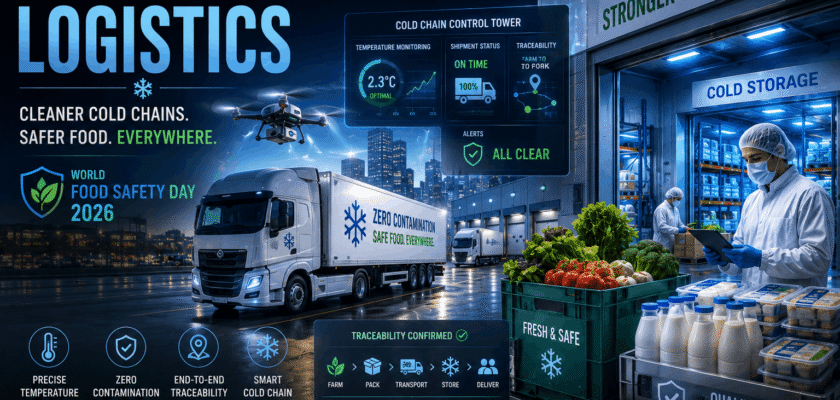
Zero-contamination logistics is becoming one of the most important food safety ideas of 2026 because modern food systems are longer, faster, and more connected than ever. A packet of frozen food, a dairy product, a seafood shipment, a ready-to-eat meal, or a vaccine-like nutrition product may move through farms, processing units, warehouses, vehicles, retail stores, cloud kitchens, and home delivery networks before reaching the consumer.
Every handover creates risk. Every temperature break creates risk. Every weak hygiene step creates risk. That is why World Food Safety Day 2026 is a strong moment to discuss how modern cold chains can prevent contamination before it reaches the plate.
The official 2026 theme from WHO and FAO is “From burden to solutions – safe food everywhere.” WHO explains that foodborne diseases remain a major global burden, but they are largely preventable when data guides targeted action. This fits perfectly with cold chain logistics because temperature records, traceability data, hygiene checks, and rapid recall systems turn food safety from guesswork into measurable control.
Why World Food Safety Day 2026 Focuses on Solutions
World Food Safety Day is observed every year on 7 June. The 2026 theme focuses on moving from the burden of foodborne illness to practical solutions that make safe food available everywhere. This message matters because food safety is not only a kitchen issue. It affects health, livelihoods, education, market access, agriculture, tourism, and economic trust.
For food brands, restaurants, cloud kitchens, exporters, grocery platforms, and cold-storage operators, the message is direct: do not wait for contamination to happen. Build systems that prevent it, detect it early, and remove unsafe food quickly.
Modern cold chains are one of those systems. They protect perishable foods by maintaining correct temperature, reducing spoilage, extending shelf life, and helping businesses prove that food remained safe through the supply chain.
What Is Zero-Contamination Logistics?
Zero-contamination logistics is a supply-chain approach that reduces contamination risk at every stage of food movement. The word “zero” does not mean risk can be completely removed from the real world. It means the system is designed with a zero-tolerance mindset toward preventable contamination.
It combines cold chain control, hygienic handling, packaging integrity, digital traceability, trained staff, clean vehicles, safe warehousing, quick recalls, and documented standard operating procedures.
In simple words, zero-contamination logistics means food should not become unsafe while being stored, transported, handled, picked, packed, or delivered.
Modern Cold Chains: The Backbone of Safe Perishable Food
FAO describes the cold chain as a temperature-controlled system that preserves the quality, safety, and shelf life of perishable goods from production to consumption. FAO also highlights that cold chains help reduce food loss and waste by maintaining consistently low temperatures and controlled environments.
This is important for foods such as dairy, meat, fish, frozen products, fresh fruits, vegetables, ready-to-eat meals, bakery creams, ice cream, and processed chilled foods.
A strong cold chain includes pre-cooling, refrigerated storage, reefer transport, cross-docking, retail refrigeration, last-mile delivery, and temperature logging. If one link fails, the whole chain becomes weaker.
Why Temperature Abuse Creates Food Safety Risk
Temperature abuse happens when perishable food stays outside its safe temperature range for too long. This can happen during loading, unloading, power failure, vehicle delay, poor door discipline, weak packaging, or last-mile delivery mistakes.
When temperature rises, bacteria can grow faster. Quality can fall. Shelf life can shorten. Food may look normal but still become unsafe. This is why temperature monitoring is not just a quality-control step. It is a food safety requirement.
For chilled foods, frozen foods, dairy, meat, seafood, and ready-to-eat items, temperature discipline must be treated like a critical control point.
Cold Chain Stages That Need Strict Control
Zero-contamination logistics requires every stage of the cold chain to work properly. The biggest risk often appears during handovers, not during long storage.
The key stages include farm or production cooling, processing-room hygiene, cold storage, order picking, loading dock management, refrigerated transport, retail refrigeration, foodservice storage, and last-mile delivery.
Each stage needs clear rules: what temperature is allowed, who checks it, how often it is recorded, what happens if the temperature breaks, and who approves release or rejection of the product.
Real-Time Temperature Monitoring: From Manual Logs to Live Data
Modern cold chains are shifting from paper temperature logs to real-time monitoring. IoT sensors, RFID systems, data loggers, GPS trackers, and cloud dashboards allow companies to see temperature conditions during storage and transport.
Research on food cold chains has proposed real-time temperature measurement protocols using RFID, IoT, and statistical process control to reduce losses caused by temperature abuse.
This matters because delayed discovery is expensive. If a company only learns about temperature failure after the shipment arrives, the product may already be compromised. Real-time alerts allow teams to act earlier.
Traceability: The Second Pillar of Zero-Contamination Logistics
Temperature control protects food, but traceability proves what happened. Traceability means the company can identify where a food product came from, where it moved, who handled it, and where it was sold.
The U.S. FDA has highlighted that its Food Traceability Rule is intended to allow faster identification and rapid removal of potentially contaminated food from the market. The rule focuses on additional recordkeeping for certain foods to support faster recalls.
This principle is useful globally. When traceability is strong, unsafe food can be removed quickly. When traceability is weak, recalls become slower, wider, and more expensive.
Cold Storage Gaps: Why Legacy Warehouses Are a Weak Link
Many cold chain failures happen because old warehouses were not built for today’s digital traceability and temperature-control needs. DHL Supply Chain warned in 2026 that many legacy cold-storage warehouses lack the digital capabilities required to maintain traceability across critical tracking events ahead of FDA traceability requirements.
This point matters for all food businesses, not only U.S. companies. Food logistics is moving toward digital proof. Warehouses that cannot record, share, and verify movement data may become compliance risks.
Modern cold storage should support temperature mapping, dock monitoring, barcode or RFID scanning, batch tracking, humidity control, automated alerts, cleaning logs, and audit-ready records.
Hygiene at Handover Points
Handover points are high-risk zones. These include loading docks, sorting areas, delivery vans, retail backrooms, and cloud-kitchen receiving areas. Food can be exposed to warm air, dirty surfaces, open containers, pests, water leakage, and human handling mistakes.
Zero-contamination logistics requires clean handover design. Dock doors should stay closed as much as possible. Pallets should not sit in uncontrolled heat. Staff should use clean gloves and sanitized tools. Floors, crates, and containers should be cleaned regularly.
Food safety is not only about cold temperature. Clean contact surfaces and trained handlers matter just as much.
Packaging Integrity: The Silent Safety Layer
Packaging is a silent but powerful safety layer. Good packaging protects food from physical contamination, moisture, oxygen, pests, leakage, and handling damage. It also supports temperature stability during movement.
For frozen and chilled foods, packaging should survive cold storage, vehicle vibration, stacking pressure, condensation, and last-mile handling.
Poor packaging can create hidden risk. A small seal failure can allow contamination. A weak carton can collapse. A damaged pouch can leak. That is why packaging inspection should be part of cold chain SOPs.
Cloud Kitchens and Cold Chain Discipline
Cloud kitchens depend heavily on ingredient freshness, safe storage, and fast order fulfilment. They may receive meat, dairy, vegetables, sauces, desserts, and ready-to-cook products from multiple suppliers. If cold chain discipline is weak, food safety risk rises quickly.
Cloud kitchens should use receiving-temperature checks, separate raw and cooked zones, labelled storage, first-expiry-first-out rotation, cleaning logs, allergen controls, and supplier traceability.
For online food delivery, consumer trust depends on invisible discipline. The customer sees only the meal. The business must control the chain behind it.
Last-Mile Delivery: The New Food Safety Battlefield
Last-mile delivery is now a major food safety battlefield because more consumers buy groceries, frozen foods, meal kits, and ready-to-eat items online. The final delivery stage can expose food to heat, traffic delays, poor insulation, and repeated door openings.
A strong last-mile cold chain uses insulated boxes, gel packs or dry ice where appropriate, route optimization, delivery-time limits, temperature indicators, and trained riders or drivers.
If last-mile handling fails, all earlier cold-chain work can be wasted. That is why the final mile must be treated as a critical food safety stage, not just a delivery operation.
World Food Safety Day 2026 and Data-Driven Prevention
The 2026 World Food Safety Day theme says data on illness, burden, and lost lives can guide action toward focused and cost-effective solutions. Cold chain logistics is one of the clearest examples of this idea.
Useful cold chain data includes temperature logs, door-open events, truck route records, cleaning logs, batch movement, recall history, complaint trends, sensor alerts, and rejection reasons.
When companies study this data, they can find weak points. Maybe one loading dock warms products too often. Maybe one route causes delays. Maybe one supplier has repeated temperature failures. Data turns food safety into prevention.
Technology Stack for Zero-Contamination Logistics
A modern food safety logistics stack can include digital temperature sensors, GPS tracking, RFID or barcode scanning, warehouse management systems, transport management software, electronic proof of delivery, digital cleaning records, and automated recall dashboards.
AI can also support demand planning, route optimization, anomaly detection, predictive maintenance for refrigeration units, and faster investigation of contamination complaints.
However, technology is useful only when staff follow processes. A sensor alert means nothing if nobody acts. Zero-contamination logistics needs both digital tools and human discipline.
Food Safety Culture: The Human Side of Cold Chains
Food safety culture means everyone in the organization understands that safe food is a responsibility, not a checkbox. Drivers, loaders, warehouse staff, kitchen teams, managers, and suppliers must know why each step matters.
A strong food safety culture includes training, simple SOPs, clear escalation rules, no-blame reporting for safety risks, regular audits, and leadership support.
If workers are punished for reporting problems, they may hide them. If managers only chase speed, staff may ignore hygiene. A safe food chain needs a culture where safety comes before shortcuts.
Checklist for Food Businesses on World Food Safety Day 2026
Food businesses can use World Food Safety Day 2026 as a practical audit day. They should not only post awareness messages. They should check the actual system.
Important questions include: Are cold rooms mapped? Are vehicle temperatures recorded? Are loading docks controlled? Are cleaning logs complete? Are recalls tested? Are suppliers audited? Are staff trained? Are temperature alerts reviewed? Are delivery boxes validated? Are expired products removed on time?
The best celebration of World Food Safety Day is safer daily operation.
Checklist for Consumers
Consumers also have a role in food safety. They should check packaging, expiry dates, storage instructions, delivery condition, and signs of thawing or leakage.
When buying frozen food, avoid packs with heavy ice crystals, broken seals, or soft texture. When ordering groceries online, store chilled and frozen items quickly after delivery. When cooking, separate raw and cooked food and follow basic hygiene.
Food safety is shared responsibility. Businesses must maintain the chain. Consumers must handle food safely after purchase.
Cold Chains and Food Waste Reduction
Cold chains do more than prevent contamination. They also reduce food waste. FAO has emphasized that sustainable food cold chains create suitable temperature conditions from farm to fork, keeping food fresher and more nutritious for longer.
This matters because wasted food also means wasted water, energy, labour, land, packaging, and transport emissions. When cold chains work, more food reaches people safely.
World Food Safety Day 2026 is therefore also a good moment to connect food safety with sustainability. Safer cold chains can support both public health and waste reduction.
Risks of Over-Relying on Technology
Technology can improve cold chain safety, but it can also create false confidence. A company may install sensors but ignore calibration. It may collect data but never review alerts. It may use dashboards but fail to train staff.
Common mistakes include dead batteries in sensors, missing data during transfer, poor Wi-Fi in cold rooms, uncalibrated probes, unclear alarm ownership, and no corrective action records.
A strong system checks the technology too. Calibration, maintenance, backup processes, and manual verification remain necessary.
What Regulators and Cities Can Do
Regulators and city administrations can support zero-contamination logistics by improving food safety inspection systems, requiring traceability for high-risk foods, supporting cold storage infrastructure, training small food businesses, and encouraging digital temperature records.
Cities can also support safer food delivery through better market infrastructure, clean loading areas, reliable power, waste management, and hygiene training for food vendors.
Food safety is a system issue. Individual businesses matter, but public infrastructure and regulation also shape outcomes.
Future of Zero-Contamination Logistics
The future of zero-contamination logistics will be more digital, more transparent, and more data-driven. Expect wider use of smart labels, real-time temperature dashboards, automated recalls, AI-based risk scoring, blockchain-style traceability pilots, and energy-efficient cold storage.
Sustainable cooling will also matter because cold chains need energy. The challenge is to keep food safe without creating unnecessary climate burden.
The winning companies will combine safety, sustainability, traceability, and affordability. That is the future of modern food logistics.
Final Verdict
Zero-contamination logistics is the practical food safety message businesses should take from World Food Safety Day 2026. The official theme, “From burden to solutions – safe food everywhere,” reminds us that foodborne illness is preventable when action is guided by data and strong systems.
Modern cold chains are one of the most important solutions. They protect perishable foods through temperature control, traceability, hygiene, packaging integrity, trained staff, and rapid response when something goes wrong.
In simple words, safe food is not created only in the kitchen. It is protected through every link of the supply chain.
Food brands, cloud kitchens, grocery platforms, restaurants, exporters, retailers, and logistics companies should use World Food Safety Day 2026 to audit their cold chains, fix weak points, and build trust with consumers.
The future of food safety will belong to businesses that can prove safety, not just promise it.
Quick Action Table for Food Businesses
| Area | What to Check | Why It Matters |
| Cold rooms | Temperature mapping, door discipline, sensor calibration | Prevents hidden warm zones and spoilage risk |
| Transport | Reefer unit performance, GPS, live temperature logs | Protects food during movement and delays |
| Traceability | Batch IDs, supplier records, delivery proof, recall test | Allows fast removal of unsafe food |
| Hygiene | Cleaning logs, staff training, pest control, sanitized crates | Reduces cross-contamination risk |
| Last mile | Insulated boxes, route timing, delivery temperature checks | Protects food at the final consumer-facing stage |
| Data review | Alert ownership, corrective actions, weekly trend review | Turns food safety data into prevention |


