Africa CDC Emergency Response Plan: Why Logistics Now Decides Outbreak Control
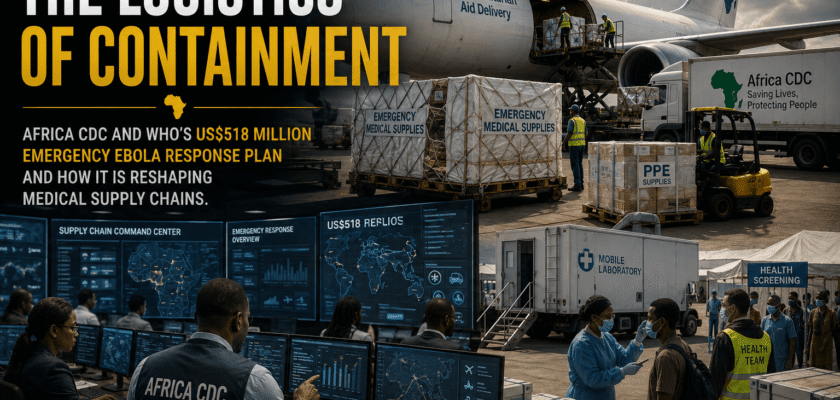
Africa CDC emergency response plan has become a major business and public-health story because outbreak control now depends as much on logistics as it does on medicine. On June 5, 2026, Africa CDC and the World Health Organization launched a six-month joint continental plan seeking US$518 million to contain the Bundibugyo Ebola outbreak in the Democratic Republic of Congo and Uganda while preparing neighbouring countries for possible cases.
The plan brings governments, laboratories, hospitals, border agencies, communities and international partners under a unified “One Response” structure. Its scope includes surveillance, laboratory testing, infection prevention, clinical care, community engagement, research, logistics and support for essential health services.
In simple words, this is not only a disease-response plan. It is a continent-scale supply-chain operation.
Why the $518 Million Response Plan Matters
The response plan matters because Ebola containment depends on speed. Diagnostic samples must reach laboratories quickly. Protective equipment must arrive before health workers are exposed. Isolation centres need medicines, clean water, power, beds and waste systems. Border teams need screening tools and reliable communication.
Reuters reported that the outbreak had gone undetected for weeks, leaving authorities behind the curve. The response also faces delayed test results, limited contact tracing, mistrust and attacks on medical teams. These conditions turn every logistics delay into a health risk.
The plan therefore treats supply chains as part of disease control, not as a back-office activity.
What the Joint Africa CDC-WHO Plan Covers
The official plan covers June to November 2026 and uses a One Response approach. It is designed to support affected countries and strengthen preparedness across the continent.
Core areas include:
- Emergency coordination and incident management
- Disease surveillance and contact tracing
- Laboratory testing and specimen transport
- Infection prevention and control
- Clinical care and isolation capacity
- Community engagement and risk communication
- Cross-border preparedness and screening
- Research and evidence generation
- Logistics and operational support
- Protection of essential health services
Each area depends on supplies moving to the right location at the right time.
Medical Supply Chains Are the Hidden Front Line
Medical supply chains connect manufacturers, donors, warehouses, airports, roads, laboratories, hospitals and field teams. When this chain works, health workers can test, isolate and treat patients quickly. When it fails, cases spread silently.
The outbreak response requires:
- Personal protective equipment
- Diagnostic kits and specimen containers
- Mobile laboratory equipment
- Disinfectants and sanitation materials
- Isolation-unit supplies
- Cold-chain equipment where required
- Communications systems
- Safe burial materials
- Ambulance and transport support
- Fuel, generators and backup power
This makes logistics one of the most important containment tools.
Why the Bundibugyo Strain Changes Procurement
The outbreak involves the rare Bundibugyo strain of Ebola. Reuters reported that commonly used Ebola tests initially failed to detect this strain and that there is no approved treatment or vaccine specifically available for it.
That changes procurement priorities. Authorities cannot rely only on standard stockpiles or familiar diagnostic systems. They need validated tests, updated laboratory protocols and fast technical guidance.
Supply chains must therefore be flexible. A warehouse full of the wrong diagnostic kits does not create readiness. Procurement must follow scientific evidence.
Laboratory Networks Need Faster Specimen Movement
A laboratory result can determine whether a patient is isolated, discharged or transferred. Delays of several days can increase exposure inside families, clinics and communities.
A strong laboratory logistics network needs:
- Safe specimen collection kits
- Triple-packaging systems
- Trained couriers
- Temperature monitoring
- Clear chain-of-custody records
- Regional testing hubs
- Backup transport routes
- Digital result reporting
- Quality-control procedures
- Emergency laboratory staffing
The response plan can strengthen regional laboratory networks so countries are not dependent on one distant facility.
Cold Chain Lessons Beyond Vaccines
Cold chain is usually discussed in relation to vaccines, but outbreak logistics may also involve temperature-sensitive samples, medicines, reagents and research materials.
A resilient cold chain needs:
- Refrigerated storage
- Portable coolers
- Temperature data loggers
- Backup electricity
- Solar-powered refrigeration
- Vehicle monitoring
- Alarm systems
- Maintenance teams
- Spare parts
- Trained handlers
The larger business lesson is clear: health products are only useful when quality is protected through the entire journey.
Border Screening as a Supply-Chain Operation
Border screening is not simply a person holding a thermometer. It requires staffing, data systems, protective equipment, referral transport and coordination between health and immigration agencies.
Prepared border points need:
- Screening stations
- Clear case definitions
- Isolation areas
- Referral ambulances
- Contact-information systems
- PPE and sanitation supplies
- Multilingual information
- Staff rotation plans
- Secure data handling
- Cross-border communication
The plan’s support for neighbouring countries is important because disease routes often follow trade, work and family travel corridors.
The Challenge of Conflict-Affected Logistics
Parts of eastern Congo face armed conflict, displacement and damaged infrastructure. These conditions make normal delivery planning unreliable.
Reuters reported security incidents involving treatment centres and burial teams. WHO also received armoured vehicles from the United Nations peacekeeping mission to support operations.
Conflict-affected logistics may require:
- Security escorts
- Smaller distributed warehouses
- Flexible delivery schedules
- Air transport
- Local community negotiation
- Route-risk monitoring
- Emergency fuel reserves
- Satellite communication
- Protected medical convoys
- Contingency stocks
This is where humanitarian logistics and commercial supply-chain planning overlap.
Why Local Warehousing Reduces Response Time
Central warehouses can provide control, but a continent-scale emergency also needs regional and local stock points. Supplies stored too far away may arrive after the critical window.
A hub-and-spoke model can include:
- Continental strategic reserves
- Regional distribution hubs
- National medical stores
- Provincial warehouses
- Hospital-level buffer stock
- Mobile emergency stores
Local buffers reduce response time, but they require accurate inventory systems and strong controls to prevent expiry, theft or duplication.
Digital Inventory Visibility Is Essential
Emergency teams need to know what is available, where it is located and how quickly it can move. Spreadsheet-only systems may fail when many partners are operating at once.
Digital visibility should show:
- Current stock levels
- Expiry dates
- Shipment status
- Daily consumption
- Facility demand
- Shortage alerts
- Supplier lead times
- Temperature excursions
- Damaged goods
- Distribution history
A common data dashboard can reduce both shortages and waste.
The Role of Forecasting During Fast Outbreaks
Demand forecasting is difficult when case counts change quickly. Ordering too little creates dangerous shortages. Ordering too much can waste donor money and leave products unused.
Forecasting should combine:
- Confirmed and suspected cases
- Contact-tracing numbers
- Health-worker staffing
- Geographic spread
- Consumption rates
- Test positivity
- Border risk
- Scenario planning
- Delivery lead times
- Safety-stock rules
Emergency forecasts should be updated frequently rather than treated as fixed annual plans.
Procurement Must Balance Speed and Accountability
Outbreak procurement must move fast, but it cannot ignore quality, pricing or transparency. Emergency purchasing can create opportunities for counterfeit goods, poor-quality supplies and inflated prices.
Strong procurement rules include:
- Prequalified suppliers
- Product-quality verification
- Transparent pricing
- Conflict-of-interest controls
- Documented emergency approvals
- Delivery-performance tracking
- Anti-counterfeit systems
- Independent audits
- Clear contract terms
- Public reporting where appropriate
Speed without controls can create a second crisis.
Why Community Trust Is Also a Logistics Asset
Supplies cannot work if communities refuse testing, treatment or safe burial services. Reuters reported mistrust and attacks on medical teams, showing that social acceptance directly affects operational delivery.
Community engagement supports logistics by helping teams:
- Access affected neighbourhoods
- Locate contacts
- Deliver care safely
- Explain isolation procedures
- Reduce rumours
- Protect burial teams
- Improve reporting
- Support discharged patients
Local leaders, health workers, faith groups and survivors can become part of the response network.
Supporting Essential Health Services
A major outbreak can pull staff, vehicles, laboratory capacity and supplies away from routine health services. The joint plan includes support for essential services because people still need maternal care, malaria treatment, immunization and emergency surgery.
Supply-chain planning must therefore protect:
- Routine medicines
- Maternal health supplies
- Childhood vaccines
- Blood products
- Malaria diagnostics
- Nutrition supplies
- Chronic-disease medicines
- Hospital oxygen
- General PPE
- Basic laboratory materials
Outbreak response should strengthen the health system rather than empty it.
The Funding Gap and Its Operational Risk
Reuters reported that donors had pledged about US$315.8 million, below earlier figures, while the joint plan seeks US$518 million. A funding gap can directly affect transport, staffing, laboratory capacity and stock availability.
When funding arrives late, agencies may:
- Delay orders
- Reduce field teams
- Limit border readiness
- Postpone warehouse expansion
- Cut community engagement
- Depend on expensive emergency freight
- Reduce buffer stock
- Delay payments to suppliers
Predictable financing is a supply-chain requirement.
How Africa CDC Is Reshaping Continental Procurement
The response highlights Africa CDC’s growing role in coordinating continent-wide health security. Instead of every country competing separately for supplies, regional coordination can improve purchasing power and reduce duplication.
A stronger continental model can support:
- Pooled procurement
- Shared supplier lists
- Regional emergency stockpiles
- Common technical standards
- Joint logistics dashboards
- Cross-border laboratory networks
- Faster customs clearance
- Shared training
- Coordinated donor reporting
- Local manufacturing partnerships
This can create lasting value beyond the current outbreak.
Local Manufacturing as a Long-Term Lesson
Africa’s dependence on imported medical products can create delays during global emergencies. The response plan strengthens the case for local production of essential health supplies.
Priority opportunities include:
- PPE
- Disinfectants
- Specimen containers
- Basic diagnostic materials
- Medical oxygen equipment
- Cold-chain devices
- Hospital furniture
- Digital health tools
- Packaging materials
- Selected medicines
Local manufacturing cannot replace every import immediately, but it can reduce lead times and improve emergency resilience.
Why Private Logistics Companies Matter
Governments and health agencies need support from airlines, courier firms, trucking companies, warehouse operators, telecom providers and technology companies.
Private-sector partners can provide:
- Express transport
- Warehousing
- Fleet tracking
- Customs support
- Temperature monitoring
- Last-mile delivery
- Route optimization
- Satellite communications
- Data platforms
- Equipment maintenance
The strongest emergency response uses public-health leadership with private operational capacity.
How Medical Supply Chains Differ from Normal Retail Logistics
Medical logistics has less tolerance for error than ordinary retail. A delayed consumer product is frustrating. A delayed diagnostic kit can increase transmission.
Medical supply chains require:
- Product traceability
- Strict quality standards
- Controlled storage
- Accurate documentation
- Infection-control procedures
- Secure handling
- Ethical allocation
- Emergency prioritization
- Clinical feedback
- Regulatory compliance
Companies entering health logistics must understand these differences.
What Supply-Chain Leaders Can Learn
Business leaders outside healthcare can also learn from the response.
Key lessons include:
- Build multiple suppliers before a crisis
- Maintain regional inventory visibility
- Test backup transport routes
- Design flexible procurement contracts
- Protect critical data
- Train teams through simulations
- Keep emergency stock based on risk
- Coordinate with public agencies
- Track supplier reliability
- Communicate honestly during shortages
Resilience is designed before disruption, not during it.
A 10-Point Emergency Logistics Checklist
Organizations supporting outbreak response should verify:
1. Is there a clear incident-command structure?
2. Are critical products listed and prioritized?
3. Are suppliers prequalified?
4. Are regional stock levels visible?
5. Are transport routes tested?
6. Are laboratory samples traceable?
7. Is cold-chain monitoring active?
8. Are border teams supplied?
9. Is community communication funded?
10. Is there a rapid escalation process?
This checklist can reveal weak points before they become operational failures.
Risks That Could Weaken the Plan
The US$518 million plan is ambitious, but it faces serious risks:
- Funding shortfalls
- Ongoing conflict
- Community mistrust
- Laboratory delays
- Weak road infrastructure
- Cross-border coordination gaps
- Staff shortages
- Counterfeit supplies
- Donor duplication
- Outbreak expansion
Success will depend on daily execution, not only the size of the announced plan.
What Success Would Look Like
A successful response would show:
- Faster case detection
- Shorter laboratory turnaround
- Higher contact-tracing coverage
- Reliable PPE supply
- Safer clinical care
- Better border preparedness
- Fewer health-worker infections
- Stronger community trust
- Reduced cross-border spread
- Continuity of essential services
These are operational outcomes that can be measured.
Final Verdict
The logistics of containment explains why Africa CDC and WHO’s US$518 million joint Ebola plan is much more than a funding announcement. It is a continent-scale operating model linking surveillance, laboratories, border readiness, clinical care, community trust and medical supply chains.
The outbreak has exposed major challenges, including late detection, testing gaps, conflict, mistrust and funding uncertainty. However, it also creates an opportunity to build stronger regional warehouses, pooled procurement, digital inventory systems, local manufacturing and cross-border health logistics.
In simple words, disease containment depends on getting the correct people, information and supplies to the correct place before the virus moves again.
If the One Response plan strengthens these systems, its impact could continue long after the current outbreak ends.


