
Introduction: Why This Is a Real Estate Warning
Wayanad debris slip structural safety audit 2026 is now a key search topic after the Kalladi tunnel-site tragedy.
The incident has pushed one hard question into focus.
Can fast infrastructure growth stay safe in fragile hill corridors?
For real estate buyers, builders, and local residents, this is not a distant policy issue.
It is about slope safety, drainage, debris control, and strict site supervision.
Wayanad Debris Slip Structural Safety Audit 2026: What Triggered the Debate
Early reports said a major landslip hit the Anakkampoyil-Kalladi-Meppadi tunnel road construction area near Meenakshi Bridge.
Reports also said workers, vehicles, and machinery were caught in mud and debris after heavy rain.
Some reports placed the death toll at three. Others later reported four deaths.
So, this article focuses on the larger safety question instead of uncertain early numbers.
The debate is no longer only about one accident.
It is about how high-density transit corridors should be built in landslide-prone hills.
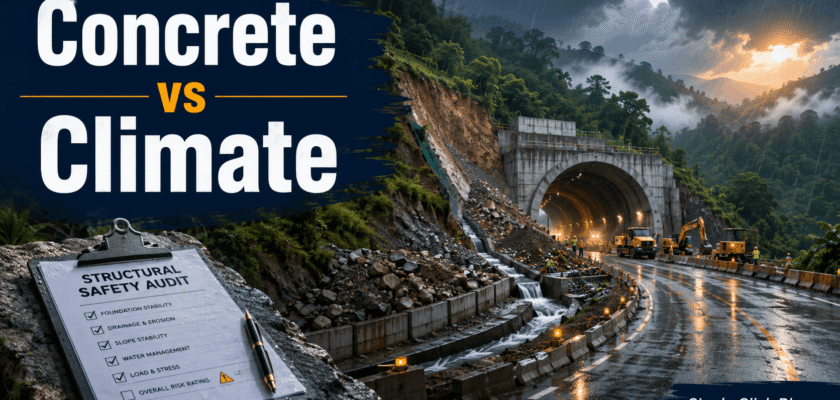
Concrete vs Climate: The Real Conflict
The phrase concrete vs climate sounds dramatic.
Yet, in hilly real estate, it is very practical.
Concrete roads, tunnels, retaining walls, and commercial hubs can improve access.
However, heavy rain, loose soil, slope cutting, and poor drainage can quickly expose weak planning.
That is why the Wayanad debris slip structural safety audit 2026 debate matters.
It shows that construction speed cannot outrun terrain risk.
Why Experts Pointed to Debris and Slope Risk
Experts quoted in local reports pointed to heavy rain and a large pile-up of excavated material.
One expert also noted that the Kalladi region has loose soil.
That matters because loose soil can fail faster when water pressure rises.
If excavated earth is stored carelessly, it can add weight near a vulnerable slope.
Then, during heavy rain, that mass can become a moving hazard.
This is why debris dumping cannot be treated as a minor site-management issue.
What Residents Fear in High-Density Transit Corridors
Residents near fast-growing hill corridors often face a double risk.
First, land values rise when roads and tunnels improve access.
Second, construction pressure increases around the same fragile slopes.
That can bring hotels, shops, warehouses, parking zones, and rental housing into risky areas.
So residents ask a simple question.
Who checks whether the hill can safely carry this new load?
Hilly Real Estate Construction Safeguard Laws Need Teeth
Wayanad already has disaster-management orders, construction-control notices, and landslide-prone-area restrictions.
Still, rules work only when they are enforced at the site.
A strong law must do more than issue paperwork.
It should control slope cutting, soil dumping, quarrying, drainage blockage, and unsafe work during heavy rain.
It should also make third-party safety audits compulsory for large public and commercial projects.
Commercial Infrastructure Landslide Vulnerability Metrics
A safe project needs clear metrics before approval.
These metrics should include slope angle, soil type, rainfall history, drainage flow, and old landslide scars.
They should also include debris-storage load, retaining-wall design, emergency exits, and worker shelter locations.
For commercial assets, one more metric is vital.
How many people will use the site during peak hours?
A low-risk slope can become high-risk when heavy footfall, parked vehicles, and blocked drains are added.
Why Warning Meetings Are Not Enough
Reports said officials had raised safety concerns before the incident.
That detail is important.
A warning has value only when it creates action.
For example, work should stop during heavy rain if the site is unstable.
Excavated soil should be removed or safely engineered.
Drainage should be checked daily during the monsoon.
Also, every warning should have a clear owner and deadline.
What a Strong Structural Safety Audit Should Check
A real audit should not be a file-only exercise.
It should include ground inspection, drone mapping, drainage testing, and rainfall-trigger risk scoring.
It should also verify whether the contractor followed the approved method statement.
The Wayanad debris slip structural safety audit 2026 search trend shows public demand for this clarity.
People want to know whether safeguards were designed, followed, and monitored.
Real Estate Buyer Checklist for Hill Areas
✅ Check if the plot sits in a landslide-prone zone.
✅ Ask for soil-test and slope-stability reports.
✅ Check natural water channels near the property.
✅ Avoid properties built on fresh cutting or filled land.
✅ Ask if nearby roads, tunnels, or drains changed water flow.
✅ Check whether retaining walls have weep holes and proper drainage.
✅ Do not trust only the view, road access, or low price.
Builder Checklist for Safer Hilly Projects
✅ Stop slope work during heavy rain alerts.
✅ Store excavated earth only in approved safe zones.
✅ Keep drains open before every monsoon spell.
✅ Use slope sensors for large commercial projects.
✅ Build worker shelters away from debris-flow paths.
✅ Keep evacuation routes clear at all times.
✅ Publish audit summaries for public trust.
Policy Fixes That Can Reduce Future Risk
The first fix is strict monsoon-time work control.
The second fix is transparent debris-disposal tracking.
The third fix is public access to hazard maps before land sales.
The fourth fix is independent review for every major hill-corridor project.
Finally, penalties should apply when warnings are ignored.
Without consequences, safety rules become routine paperwork.
Conclusion: Growth Needs a Safety Spine
Wayanad debris slip structural safety audit 2026 is more than a news keyword.
It is a warning for every hill district chasing fast development.
Roads, tunnels, hotels, and commercial assets can bring growth.
But growth without drainage, slope discipline, and audit control can turn dangerous.
The lesson is clear.
In fragile terrain, concrete must follow climate reality, not fight it.
FAQs
What is Wayanad debris slip structural safety audit 2026?
It refers to public concern around structural safety, slope checks, and construction safeguards after the 2026 Wayanad tunnel-site landslip.
Why is this important for real estate?
It affects land value, building safety, insurance risk, buyer confidence, and approval standards in hilly areas.
What makes hilly construction risky?
Loose soil, steep slopes, blocked drains, heavy rain, slope cutting, and unsafe dumping can raise landslide risk.
Should buyers avoid all hill properties?
No. Buyers should avoid unsafe plots and demand soil, drainage, and slope-safety documents before purchase.


