
Wayanad landslide news live 2026: What happened?
Wayanad landslide news live 2026 has again put hill construction safety in the national spotlight.
The July 2026 disaster struck near the Kalladi tunnel construction zone in Wayanad.
The site sits in a fragile hill belt. That makes every cut, dump, drain, and slope wall important.
Several reports said workers were killed or went missing after the landslide. Rescue work also faced rain and difficult terrain.
The Kerala government then moved to review the project. Reports also said tunnel work was paused while probes continued.
That step matters. It shows one clear point. Monsoon infrastructure cannot run only on speed and cost targets.
| ⚠️ Important wording noteThis article does not declare a final cause.Official probes must decide whether weather, slope conditions, debris handling, construction design, or operational gaps played the main role. |
Why the tragedy is a real estate warning
Real estate is not only about homes, plots, and towers.
Roads, tunnels, resorts, logistics corridors, and townships also shape land value.
In hill districts, one unsafe project can change the risk profile of a whole area.
That is why the Wayanad landslide news live 2026 story is not just a disaster update.
It is also a warning for planners, buyers, lenders, and local bodies.
High-altitude projects need stricter construction safety audits before work starts.
They also need repeat audits during the monsoon season.
High-altitude eco-sensitive zones need different rules
Flat-city construction rules cannot be copied into steep mountain terrain.
Hill slopes react to rainfall, vibration, tree loss, and loose soil dumping.
Therefore, hilly terrain real estate regulations must be stricter than normal city rules.
They should check slope angle, rock quality, drainage paths, soil depth, and local landslide history.
They should also ask a simple question. What happens when heavy rain arrives for several days?
The biggest construction risk signals
Loose debris piles
Excavated soil should not sit near unstable slopes. Rain can turn loose material into a fast-moving load.
Blocked drainage
Water must leave the site safely. Blocked drains can raise soil pressure and weaken slopes.
Poor spoil management
Spoil dumping needs a marked zone, retaining support, and daily inspection.
Work during heavy rain
High-risk cutting or hauling should stop when rainfall crosses safety thresholds.
Weak worker shelters
Temporary labour areas should never sit below risky slopes or active dumping zones.
What a stricter construction safety audit should include
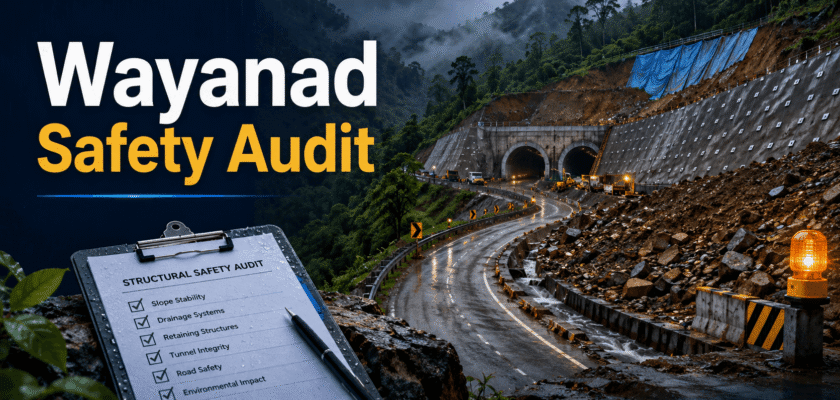
✓ Landslide susceptibility map before land clearing.
✓ Third-party geotechnical audit before blasting, cutting, or deep excavation.
✓ Drainage design that handles extreme monsoon flow.
✓ Safe spoil dumping plan with daily sign-off.
✓ Retaining wall and slope-stabilisation inspection.
✓ Worker camp risk check and evacuation route map.
✓ Rain-trigger shutdown protocol for red and orange alert days.
✓ Community warning system in local language.
✓ Real-time site log for vibration, seepage, cracks, and soil movement.
✓ Public audit summary for projects inside eco-sensitive belts.
| ✅ Simple rule for hill projectsNo hazard map means no excavation.No drainage audit means no monsoon work.No safe debris plan means no hill cutting. |
Why drainage is the silent deal-breaker
Most buyers notice road width, view, and price.
However, drainage is the first thing they should check in monsoon zones.
Water is heavy. It also moves into cracks and loose soil.
When drains fail, the slope may fail too.
That is why infrastructure safety in monsoon areas must include storm-water design.
It must also include routine desilting before the first heavy rain.
What buyers and residents should ask
✓ Is the property inside or near a landslide-prone zone?
✓ Has a geotechnical report been shared in writing?
✓ Where does storm water flow during heavy rain?
✓ Is there a retaining wall inspection certificate?
✓ Has any slope cutting happened near the site?
✓ Is there a local evacuation route?
✓ Does the builder disclose past soil slips or cracks?
Why banks and insurers should care too
Landslide risk also affects loans, insurance, and project valuation.
A risky slope can delay construction and raise repair costs.
It can also hurt resale value.
Therefore, banks should ask for hazard maps before funding large hill projects.
Insurers should also price risk based on drainage, slope support, and local rainfall exposure.
This can push the market toward safer construction.
Policy reforms that can reduce future damage
Make audits public
Every major hill project should publish a short public safety summary.
Update hazard maps
Old maps may miss new roads, new cuts, and fresh drainage changes.
Link permits to rain data
Monsoon work should follow weather alerts and site-specific risk thresholds.
Regulate debris movement
Excavated soil needs tracking from source to dumping point.
Use local warning teams
Residents often notice cracks, seepage, and slope sounds first.
The real estate lesson from Wayanad
The Wayanad landslide tragedy shows a hard truth.
A hill project can look modern on paper and still carry hidden risk on the ground.
That is why real estate growth in eco-sensitive zones needs more than clearances.
It needs live monitoring, honest audits, and strict shutdown rules during extreme rain.
Growth should not mean cutting slopes faster than safety teams can measure them.
Conclusion: Safety must come before speed
Wayanad landslide news live 2026 should become a turning point for hill construction policy.
The next road, resort, tunnel, or township must start with a stronger safety audit.
It must also respect local terrain, rain patterns, and community warnings.
In eco-sensitive zones, development can continue only when safety comes first.
That is the real lesson from Wayanad.
FAQs
What is the focus keyphrase for this blog?
The focus keyphrase is Wayanad landslide news live 2026.
Why are hilly terrain real estate regulations important?
They help control unsafe slope cutting, poor drainage, weak debris handling, and risky construction during heavy rain.
What should a buyer check before buying land in a hill area?
A buyer should check hazard maps, drainage design, slope support, soil reports, and evacuation access.
Should all construction stop in eco-sensitive zones?
Not always. But high-risk work should follow stricter audits, weather-based shutdowns, and public safety checks.


