
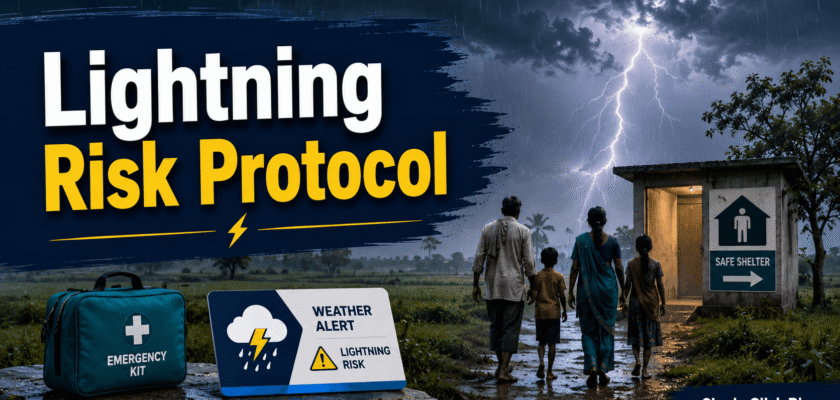
| ⚠️ Health and Safety NoteThis article is a public safety guide, not a medical diagnosis or treatment plan.Call local emergency services if someone is hit by lightning, collapses, has chest pain, severe breathlessness, confusion, major injury, or signs of shock.Follow IMD, NDMA, state disaster teams, and local police advisories during severe monsoon alerts. |
How to survive lightning strikes in open fields is not only a village safety question anymore. During extreme monsoon spikes, farmers, riders, students, sports players, and commuters can all face sudden thunderstorm risk.
The danger grows when heavy rain, lightning, and flash flood alerts arrive together. In that moment, the best health plan is simple. Move early, reduce exposure, and protect the body from panic stress.
| ✅ Key TakeawayThunder means lightning is close enough to become dangerous.A strong building or a fully enclosed vehicle is safer than an open field.Never hide under an isolated tree, near a pole, or beside metal fencing.After flood exposure, clean skin, drink safe water, and watch for fever or infection signs. |
Why Monsoon Health Precautions Rural India 2026 Matter
Monsoon health precautions rural India 2026 matter because field exposure is often unavoidable. Many people still work in farms, open markets, construction sites, school grounds, and roadside routes.
However, a storm can change the risk level within minutes. Lightning may appear before heavy rain starts. Also, flooded ground can hide drains, wires, snakes, sharp waste, and contaminated water.
Therefore, the real safety rule is not bravery. It is early exit. If thunder starts, work should pause. If water rises, low ground should be avoided.
How to Survive Lightning Strikes in Open Fields
How to survive lightning strikes in open fields begins with one decision. Do not wait for the storm to come closer.
✅ Move toward a solid building as soon as thunder starts.
✅ Use a fully enclosed vehicle if no building is nearby.
✅ Stay away from isolated trees, poles, hilltops, water bodies, and metal fences.
✅ Leave bicycles, motorcycles, tractors, and farm equipment during active lightning.
✅ Avoid umbrellas with metal tips during lightning risk.
✅ Keep group members spread out, so one strike does not injure many people.
If no safe shelter is available, reduce your height. Crouch low with feet together and head down. Do not lie flat, because that makes your body a larger target on the ground.
This is only a last-risk posture. It is not a safe shelter. So keep moving toward proper shelter when it becomes possible.
| �� Do Not Do ThisDo not stand under a single tree in a field.Do not stay near electric poles, wires, pumps, or fences.Do not lie flat on wet ground.Do not continue sports, farming, or road work during thunder.Do not assume rubber slippers or bike tyres protect you. |
The Field Safety Map For Farmers, Workers, and Students
A field safety map should be planned before rain begins. This is useful for farmers, school managers, coaches, construction supervisors, and event teams.
| Open Farm | Mark the nearest pucca room, panchayat building, school, or vehicle shelter. |
| Sports Ground | Stop play at thunder. Shift people inside before rain becomes intense. |
| Roadside Work | Avoid poles, cranes, metal sheets, signboards, and waterlogged edges. |
| School Route | Teach children to avoid trees, open sheds, ponds, and electric lines. |
| Village Market | Move vendors away from metal roofs, loose wires, and flooded drains. |
This map should be visible. Also, one person should be responsible for checking weather alerts and stopping outdoor activity.
Reducing Physical Stress During Flash Flood Alerts
Reducing physical stress during flash flood alerts is just as important as avoiding lightning. Panic running can cause falls, breathlessness, cramps, and poor decisions.
First, move steadily toward higher ground. Then, avoid fast-flowing water. Even shallow moving water can make walking unstable.
Next, protect hydration and energy. Keep clean drinking water, ORS, dry snacks, regular medicines, and a small torch in a waterproof pouch.
People with diabetes, heart disease, asthma, pregnancy, older age, or disability need earlier movement. They should not wait until evacuation becomes urgent.
| ✅ Simple Body-Stress ProtocolSlow down your breathing before moving through rain.Drink safe water in small sips if stuck for long hours.Use ORS only as directed on the packet.Keep dry clothes and medicines in a sealed bag.Seek medical care for chest pain, fainting, severe weakness, fever, or injury. |
What To Do If Someone Is Hit By Lightning
A lightning-hit person does not carry an electrical charge. So they can be touched safely after the area is safe for rescuers.
Call emergency help immediately. If trained, start basic first aid or CPR when needed. Also, move the person only if the place still has lightning danger, flooding, fire, or another immediate risk.
Do not give food or drink to an unconscious person. Do not crowd the victim. Keep the airway clear and wait for trained help.
Even if the person looks better, hospital evaluation is important. Lightning can cause burns, heart rhythm problems, hearing issues, eye problems, and hidden injuries.
Floodwater Hygiene After Monsoon Exposure
Floodwater may contain sewage, chemicals, insects, waste, and sharp objects. Therefore, walking through it should be avoided when possible.
After exposure, wash hands and legs with soap and clean water. Change wet clothes quickly. Clean small cuts and cover them with a dry dressing.
Also, do not let children play in floodwater. Do not use floodwater to wash dishes, brush teeth, prepare food, or bathe.
Get medical advice if fever, vomiting, diarrhoea, yellow eyes, swollen wounds, breathlessness, or severe body pain appears after flood exposure.
Emergency Kit For Field Workers and Rural Families
✅ Charged phone and power bank.
✅ Torch, whistle, and basic first-aid pack.
✅ ORS packets and clean drinking water.
✅ Dry snacks for long delays.
✅ Waterproof pouch for medicines and IDs.
✅ A small list of emergency contacts.
✅ Offline route note for higher ground and safe shelter.
A kit does not stop lightning. Still, it reduces chaos after a sudden alert. It also helps families move without forgetting important medicine or documents.
How Workplaces Should Handle Extreme Monsoon Spikes
Outdoor workplaces should not treat lightning as a normal rain delay. They need a clear stop-work rule.
✅ Stop field work when thunder is heard.
✅ Shift people into a safe shelter before heavy rain peaks.
✅ Avoid metal sheds that are not properly grounded.
✅ Keep supervisors trained in basic first aid response.
✅ Use official alerts from IMD, NDMA, state disaster teams, and local administration.
This protects health and productivity. It also reduces panic, injuries, and preventable delays.
Conclusion: Lightning Safety Is A Daily Monsoon Routine
How to survive lightning strikes in open fields is a life-saving skill during extreme monsoon spikes. The safest plan is to leave the open area early, avoid risky shelters, and use official alerts before movement.
At the same time, monsoon health is not only about lightning. It is also about floodwater hygiene, controlled movement, hydration, medicine access, and stress control.So, the protocol is simple. Watch the sky. Hear the thunder. Stop outdoor work. Move to shelter. Then protect the body until the alert passes.


