
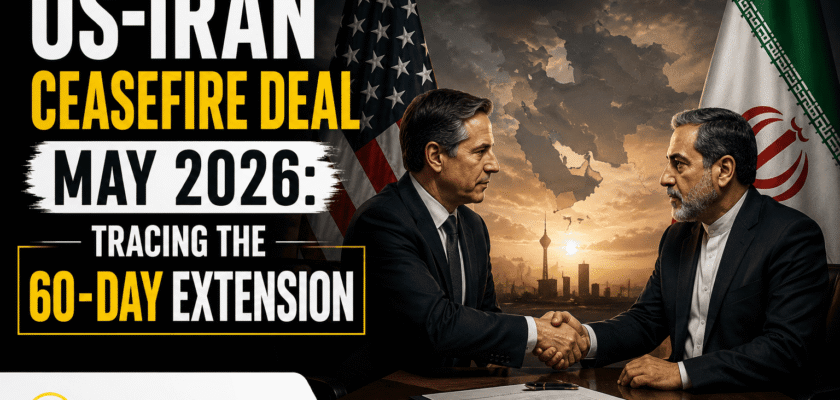
Chilling the West Asia Crisis: U.S. and Iran Agree to 60-Day Ceasefire Extension Pending Approval.
The underlying roadmap directing global geopolitical relations is undergoing a critical, high-stakes diplomatic intervention. For the past three months, an intense military conflict across West Asia severely rattled international oil markets and disrupted vital commercial shipping lanes. This devastating war, which commenced with sudden airstrikes in late February, claimed thousands of lives and caused massive global economic pain. The primary strategic friction center focused on the vital Strait of Hormuz, which was effectively blockaded, freezing nearly one-fifth of the world’s daily energy supplies.
Fortunately, dedicated back-channel mediation efforts are actively constructing an emergency exit from full-scale escalation.
We have officially entered a defining moment for international security with the drafting of a comprehensive US-Iran ceasefire deal May 2026 framework.
Guided by neutral international intermediaries, Washington and Tehran have tentatively agreed on a new memorandum of understanding (MoU).
This delicate diplomatic breakthrough proposes to extend the fragile April truce for an additional sixty days.
The emergency plan provides a critical window for negotiators to tackle deep-seated disputes. However, this framework faces immense friction due to recent military skirmishes and demands total sign-off from top executive offices. Consequently, market analysts are closely tracking this global oil supply chain peace talks layout to see if it can secure permanent West Asia border stability metrics.
1. The Sixty-Day Window: Deconstructing the Nuclear and Asset Trade-Offs
The primary operational catalyst behind this tentative truce extension centers on establishing structured, multi-phase parameters to address weapons proliferation. Previous temporary pauses failed because they focused purely on halting active rocket fire without implementing verifiable material constraints on the ground.
In sharp contrast, the newly drafted 60-day MoU builds explicit material compromises directly into the core negotiation timeline.
                     [ Legacy Short-Term Pauses ]
     (Simple Shooting Halts ──► No Nuclear Controls ──► Immediate Outbreak of Fresh Strikes)
                                      │
                                      ▼
                  [ The May 2026 Structural Extension ]
     (60-Day Mandate ──► Uranium Disposal Audits ──► Conditional Asset Sanctions Relief)
This sophisticated diplomatic roadmap outlines clear, reciprocal benchmarks for both nations during the truce window:
- The Nuclear Non-Proliferation Pledge: Under the draft terms, Tehran formally commits to refrain from pursuing nuclear weapons capability.
- Disposing of Enriched Stocks: The agreement details strict guidelines for reducing Iran’s inventory of 60% highly enriched uranium, either via chemical dilution or transfer to a neutral third-party country.
- Conditional Financial Incentives: Consequently, the United States signals a willingness to engage in structured discussions regarding the release of frozen foreign assets and conditional oil sanctions relief.
2. Reopening the Choke Point: The Logistics of Clearing the Strait of Hormuz
The real-world expansion of this diplomatic framework relies entirely on restoring unrestricted, safe maritime navigation across international trade lanes.
A. Neutralizing Marine Explosives Under Strict Timelines
The closure of the shipping channel triggered an immediate global supply crisis, starving international agricultural sectors of vital fertilizer compounds.
To reverse this economic damage, the draft MoU imposes strict operational duties on coastal regional forces.
The agreement requires specialized maritime engineering teams to completely clear and dismantle all underwater mines within thirty days.
This fast-tracked cleanup operation represents the first physical step required to restore commercial shipping trust in regional waters.
B. Dismantling Blockades and Enforcing Zero-Toll Protections
Furthermore, this physical clearance strategy couples with strict freedom of navigation clauses to block future trade disruptions:
  [ Ceasefire MoU Signed ] ───► [ US Progressively Lifts Port Blockades ]
                                                  │
                                                  ▼
                                   [ International Trade Lanes Clear ]
                             "Guarantees Unrestricted Shipping in Both Directions"
                                                  │
                                                  ▼
                                   [ Hostile Toll Proposals Denied ]
                             "US Warns Regional Allies Against Waterway Taxes"
The smart maritime framework ensures the complete lifting of naval blockades on commercial ports as peace benchmarks are hit.
The text explicitly guarantees unrestricted commercial transit in both directions, completely banning any unilateral shipping interference.
Concurrently, U.S. Treasury officials have moved aggressively to block secondary revenue collection proposals, threatening immediate sanctions against any regional partners attempting to levy navigation tolls.
This uncompromised protection layer insulates cargo fleets from economic extortion, proving that global trade stability requires absolute open waterways.
3. Strategic Matrix: Fragmented Border Clashes vs. 2026 Unified Ceasefire Frameworks
| Geopolitical Stabilization Axis | Fragmented West Asia Border Clashes | 2026 Unified Ceasefire Frameworks |
| Waterway Operational Status | Blocked; active mine deployments halt shipping | Open; comprehensive zero-toll shipping paths |
| Nuclear Material Tracking | Loose; unmonitored uranium enrichment cycles | Strict; mandatory third-party disposal checks |
| Sanctions Administration | Total; comprehensive economic and shipping blocks | Adaptive; conditional oil sales waivers allowed |
| Regional Conflict Scope | Expansive; cross-border clashes spread quickly | Stabilized; coordinated pauses across multiple borders |
| Risk Characterization | High risk of global energy market inflation loops | Withdrawn Risk; tech-backed peace monitoring |
4. Executive Sign-Off: The High-Stakes Final Verification Matrix
The final and most critical hurdle determining the ultimate success of this diplomatic architecture centers on securing formal validation from top executive authorities. Because field violations consistently threaten to break early peace talks, planners require ironclad political commitments before implementing terms.
  [ Negotiators Initial Draft ] ───► [ Situation Room Reviews Terms ]
                                                   │
                                                   ▼
                                    [ Strategic Actions Verified ]
                              "Demands Total Uranium Removal and Open Straits"
                                                   │
                                                   ▼
                                    [ Absolute Political Sign-Off ]
                              "Locks Long-Term Continental Border Security"
U.S. Executive leadership has scheduled an emergency White House Situation Room assembly on Friday, May 29, 2026, to deliver a final determination on the drafted text.
The administration maintains a strict, uncompromised position: no final signatures will be issued until verification protocols for total nuclear containment and open water access are locked in.
Simultaneously, regional defense negotiators remain deeply cautious, stating that real-world compliance actions—rather than verbal promises—will be the sole measure of success.
Thus, proactive executive scrutiny transforms a fragile draft into a highly durable, structured tool for regional containment. This balanced focus keeps global economic corridors protected, proving that enduring international peace is won by pairing strict diplomatic execution with uncompromised operational transparency.


