
Strait of Hormuz oil tanker attack updates 2026: what happened?
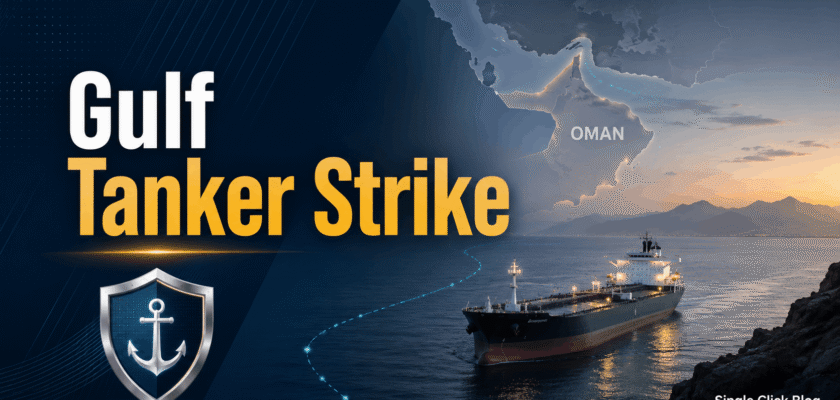
Strait of Hormuz oil tanker attack updates 2026 became a major global headline after a tanker was hit near Oman.
The reported strike came at a sensitive time for Gulf shipping.
British maritime officials reported that a vessel was hit by an unknown projectile.
AP reported that a liquefied natural gas tanker caught fire near Limah, Oman.
Reuters also reported damage to a Saudi-flagged crude tanker near the same route.
However, the exact cause of the second blast was still not fully confirmed.
That is why this story needs careful wording.
Why the Gulf route matters for energy markets
The Strait of Hormuz is not a normal sea lane.
It is one of the world’s most important energy chokepoints.
IEA says about 20 million barrels per day move through the strait.
That is around one-quarter of world seaborne oil trade.
Also, much of Qatar’s LNG export flow uses this narrow route.
Therefore, even one tanker incident can shake global fuel markets.
For India, the risk is also practical.
Higher shipping costs can affect crude, LNG, insurance, and freight planning.
How the U.S. attribution changed the risk map
U.S. officials and sources linked the tanker attacks to Iran or Iran-aligned forces.
Yet public reporting also shows the investigation is still active.
Iran did not make a clear official claim in the early reports.
So, the safer reading is this: the strike raised attribution risk.
That risk is not only military.
It is also commercial, legal, and diplomatic.
Shipping firms now need better route checks and faster alerts.
Insurers may also price Gulf transit risk more sharply.
What shipping companies may do next
First, fleets may slow down movement through risky waters.
Second, operators may ask for naval support or security coordination.
Third, cargo owners may build longer delivery windows into contracts.
Also, buyers may diversify fuel sourcing where possible.
However, rerouting Gulf oil and LNG is not easy.
The route is short, deep, and central to global energy trade.
Therefore, security planning matters more than panic planning.
What this means for oil, LNG, and consumers
Oil prices often react fast to Gulf tension.
But the effect depends on damage, route closure, and official response.
If tankers keep moving, the price shock may stay limited.
However, if traffic slows for days, freight and insurance costs can rise.
LNG buyers may watch Qatar-linked cargoes more closely.
Indian refiners may also track delivery risk and freight premiums.
So, consumers should watch fuel-market updates, not rumours.
Safety lessons from the latest Gulf escalation
This event shows why maritime security is now a supply-chain issue.
Companies need live vessel tracking.
They also need backup ports and emergency contact chains.
Moreover, governments need clear public updates during such incidents.
Clear updates reduce panic.
They also stop fake claims from spreading online.
That is important for traders, travellers, and fuel buyers.
Conclusion: Strait of Hormuz oil tanker attack updates 2026
Strait of Hormuz oil tanker attack updates 2026 show how fast Gulf tensions can move into global markets.
The Oman-area tanker strike did not just affect one ship.
It reopened bigger questions about oil lanes, LNG security, and diplomatic trust.
For now, the best response is calm monitoring.
Follow official maritime notices.
Track Reuters, AP, and government updates.
Also, avoid viral claims until investigations confirm the full picture.


