
LPG Supply Chain Stabilization: Why India Is Building a Stronger Fuel Buffer
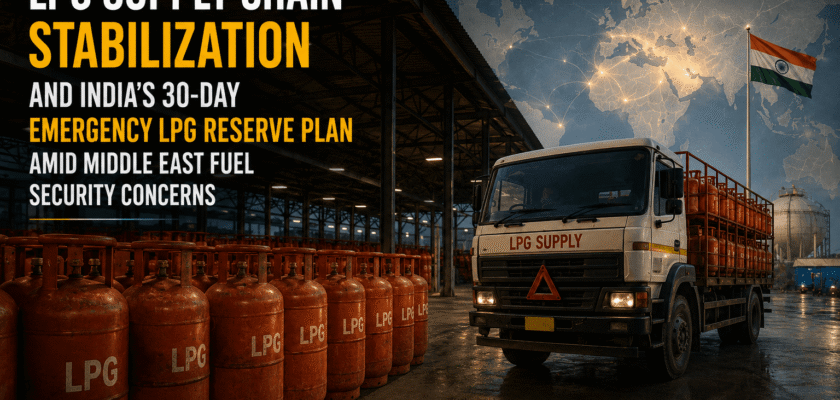
LPG supply chain stabilization has become a major energy security priority for India in 2026. The government has asked state-run fuel retailers to increase LPG storage capacity so the country can cover at least 30 days of demand during supply stress.
This move comes at a time when West Asia tensions and shipping disruption fears have made fuel security more important. India depends heavily on imported energy, so any issue in global supply routes can affect domestic prices, delivery timing, and public confidence.
Therefore, the 30-day LPG reserve plan is not only a storage decision. It is a national security and household stability decision.
Why LPG Supply Chain Stabilization Matters for Indian Families
LPG supply chain stabilization matters because LPG is not just another fuel. It is used every day in homes, small shops, restaurants, hotels, hostels, and many small businesses.
If LPG supply gets delayed, the impact reaches kitchens very quickly. Families may face cylinder booking delays. Restaurants may see higher costs. Small food businesses may struggle to serve customers.
That is why the government wants a stronger buffer. A 30-day reserve can reduce panic and give oil companies more time to manage global disruptions.
What Is the 30-Day LPG Reserve Plan?
The 30-day LPG reserve plan means state-run oil marketing companies must prepare storage capacity to meet about one month of LPG demand.
This does not mean India is facing an immediate nationwide LPG shortage. Instead, it means the government wants better preparedness for future shocks.
According to reports, India has directed state-run fuel retailers to raise LPG storage capacity to cover 30 days of demand. The government is also working on increasing crude oil storage capacity.
In simple words, the plan is like keeping emergency food at home before a storm. You may not need it every day, but it protects you when supply lines become weak.
Middle East Crisis Fuel Security: Why the Timing Is Important
Middle East crisis fuel security is important for India because a large share of energy imports comes through sensitive global routes. Any conflict, shipping delay, or route disruption can create pressure on fuel supply.
Recent reports linked the 30-day LPG reserve push to supply disruption concerns in West Asia. Times of India reported that the direction to oil companies came after supply disruption worries connected with the region.
Moreover, India has already seen public concern around fuel availability in some areas. The government had to assure people that national fuel stocks were adequate and also urged citizens not to hoard fuel.
So, the reserve plan is also a confidence-building measure.
Government Energy Directives 2026: What This Move Shows
Government energy directives 2026 show a clear shift from just-in-time supply to strategic preparedness. Earlier, the focus was mainly on daily distribution. Now, the focus is also on emergency reserves, storage capacity, and supply chain resilience.
This matters because global fuel markets can change quickly. A war, shipping blockage, refinery issue, or sudden price spike can disturb supply planning.
Therefore, India’s 30-day LPG reserve plan sends a strong message: energy security needs advance planning, not last-minute reaction.
Why State-Run Fuel Retailers Are Central to This Plan
State-run fuel retailers are central because they manage a large part of India’s fuel distribution system. Companies like Indian Oil, Bharat Petroleum, and Hindustan Petroleum play a major role in LPG distribution, petrol pumps, and fuel supply chains.
When the government asks these companies to build a 30-day LPG buffer, it is using the existing public-sector fuel network to create national resilience.
This is practical because these companies already have:
- Large storage infrastructure
- LPG distribution networks
- Bottling plants
- Transport systems
- Retail and distributor links
- Consumer data and booking channels
- Government coordination capacity
As a result, they can build emergency planning faster than a new system.
How 30-Day LPG Reserves Can Help Consumers
A 30-day reserve can help consumers in several ways. First, it can reduce the risk of sudden cylinder shortage during global disruption. Second, it can help oil companies manage demand spikes. Third, it can reduce panic buying.
Consumers may not see the reserve directly, but they can feel its impact through smoother delivery and better availability.
For example, if a shipment gets delayed, stored LPG can support demand while companies arrange alternate supply. This gives the system breathing space.
Why Panic Buying Makes Fuel Problems Worse
Panic buying can create artificial shortage even when national supply is adequate. If too many people rush to book or buy fuel at once, local distributors may face short-term pressure.
This is why the government often asks people not to hoard. Hoarding can disturb normal supply and create fear in other consumers.
A 30-day LPG reserve can reduce panic because people know the system has a backup. However, public communication must stay clear and timely.
LPG Supply Chain Stabilization and Import Dependence
LPG supply chain stabilization becomes harder when a country depends on imports. Imported fuel has to move through shipping routes, ports, storage terminals, bottling plants, trucks, distributors, and finally homes.
If one part of this chain slows down, delivery can suffer.
This is why India is trying to build a stronger storage layer. More storage gives the system time to react when import movement becomes uncertain.
In addition, India has been working on broader energy security steps, including crude oil storage expansion. This shows a wider plan to reduce supply shock risk.
How This Plan Connects With Crude Oil Security
LPG and crude oil are different products, but both are part of energy security. If global energy markets face disruption, countries need emergency planning for multiple fuels.
The International Energy Agency says its member countries must hold oil stocks equal to at least 90 days of net oil imports and stay ready for severe supply disruptions. India is not an IEA member with the same stockholding obligation, but the global standard shows why emergency reserves matter.
India’s LPG reserve plan follows the same basic idea: prepare before a crisis becomes a public shortage.
What This Means for Restaurants and Small Businesses
Restaurants, cloud kitchens, tea stalls, hotels, bakeries, caterers, and small food vendors depend heavily on LPG. A supply delay can hurt their income quickly.
For these businesses, LPG availability matters as much as electricity or water.
A 30-day reserve can help protect these small businesses during external shocks. If supply remains stable, they can avoid sudden shutdowns, menu cuts, and customer loss.
Therefore, LPG supply chain stabilization also supports local jobs and small business continuity.
What This Means for Energy Prices
A reserve does not always stop price hikes. Global prices can still rise if international supply becomes costly. However, reserves can reduce the risk of panic-driven local disruption.
If India has more LPG storage, oil companies can manage short-term supply gaps better. This may reduce emergency pressure and improve planning.
Still, consumers should understand that storage is one part of energy security. Price depends on global rates, currency movement, taxes, logistics, and policy decisions.
Challenges in Building 30-Day LPG Reserves
Building 30-day LPG reserves is not easy. It needs land, tanks, terminals, safety systems, port capacity, transport planning, and investment.
Major challenges include:
- High storage infrastructure cost
- Safety and fire-control requirements
- Land availability near demand centres
- Port handling capacity
- Pipeline and transport coordination
- Bottling plant capacity
- Regular stock rotation
- Demand forecasting
- State-level coordination
- Environmental and safety approvals
However, these costs may be worth it if they protect the country from bigger supply shocks.
Why Clear Communication Is Important
Energy security is not only about physical supply. It is also about public trust.
If people hear rumours about fuel shortage, panic can spread quickly. Therefore, the government and oil companies must communicate clearly.
They should explain:
- Current stock position
- Delivery status
- Booking rules
- Anti-hoarding advice
- Emergency reserve planning
- Consumer helpline options
- Steps taken to protect supply
Clear information can stop fear before it becomes chaos.
What Consumers Should Do
Consumers should act responsibly during fuel uncertainty. There is no need to panic or hoard cylinders.
A practical approach includes:
- Book LPG only when needed
- Avoid duplicate or panic bookings
- Follow official oil company updates
- Do not trust social media rumours
- Keep cylinder safety rules in mind
- Report delivery issues through official channels
- Use fuel carefully in homes and businesses
Responsible consumer behaviour helps the full supply chain work better.
Final Verdict
LPG supply chain stabilization is now a key part of India’s energy security planning. The 30-day LPG reserve directive shows that the government wants stronger protection against global supply shocks, especially during West Asia tensions.
This plan can help households, restaurants, small businesses, and fuel distributors by creating a stronger buffer. It may not remove every price risk, but it can reduce panic, improve preparedness, and protect daily fuel availability.
In simple words, India is moving from “manage the shortage” to “prepare before shortage.” That shift can make the country’s fuel system stronger in 2026 and beyond.


