
Android AI Overhaul 2026: Why Your Phone Is Changing
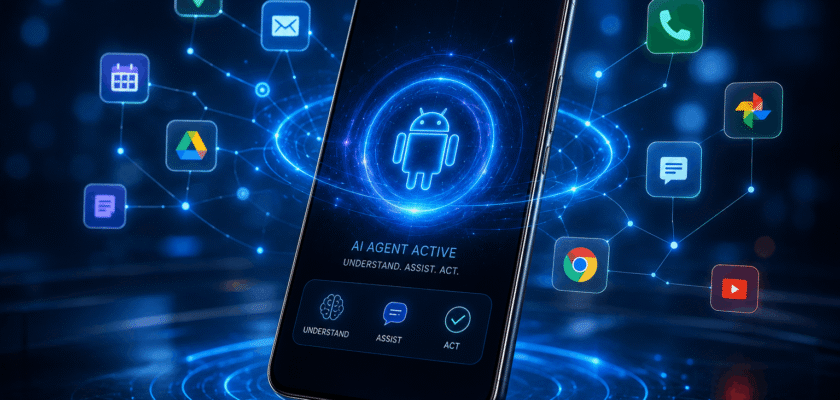
Android AI overhaul 2026 is changing the way people use smartphones. Earlier, a phone mostly opened apps, showed notifications, clicked photos, and connected users to the internet. Now, the phone is slowly becoming a personal AI agent that can understand context, suggest actions, and complete small tasks faster.
This shift matters because mobile phones are the most personal devices we use every day. They know our calendar, location, messages, photos, payments, apps, and habits. Therefore, when AI moves deeper into the phone, the full mobile experience changes.
In simple words, the next smartphone will not only wait for your tap. It will understand what you want to do and help you finish it.
Why Android AI Overhaul 2026 Matters
Android AI overhaul 2026 matters because AI is moving from a separate app into the operating system itself. This means users may not need to open a chatbot every time. Instead, AI can appear inside keyboard, search, camera, widgets, notifications, calls, messages, and app actions.
For example, your phone may help you write a message, summarize a page, create a widget, fix a typo, find a file, or suggest the next step after reading a screen.
Moreover, this change can make Android more useful for normal users, not only tech experts.
What Is an AI Agent on a Smartphone?
An AI agent is a digital assistant that can understand a task and take steps to complete it. It is different from a normal voice assistant because it can handle multi-step actions.
For example, a basic assistant may answer, “What is the weather?” But an AI agent may check weather, compare your calendar, suggest a better travel time, and help you book a cab.
On smartphones, AI agents can become powerful because they sit close to your apps and daily data.
However, good AI agents must also respect privacy, permission, and user control.
Android AI Overhaul 2026 and On-Device Intelligence
Android AI overhaul 2026 is strongly linked with on-device intelligence. On-device AI means some AI tasks run directly on the phone instead of always going to the cloud.
This can help in three major ways:
- Faster response
- Better privacy
- Lower internet dependency
For example, voice typing, photo editing, smart suggestions, and simple text work can happen directly on the device if the hardware supports it.
Also, on-device AI can reduce delay because the phone does not need to send every request to a faraway server.
Why On-Device AI Needs Powerful Hardware
On-device AI needs powerful chips, memory, and neural processing units. This is why premium smartphones are getting stronger AI hardware.
A normal phone chip handles apps and graphics. But an AI-ready chip also needs to process language, images, voice, and sensor data quickly.
That is why companies like Qualcomm are focusing on edge AI and personal AI experiences. Snapdragon platforms now highlight AI processing across phones, wearables, XR, PCs, and other connected devices.
As a result, the phone hardware race is becoming an AI race.
Gemini Intelligence and Android’s New Direction
Google’s 2026 Android direction focuses heavily on Gemini-powered intelligence. At Google I/O 2026, Android developers were shown how Android is shifting from only an operating system to an intelligence system.
This means Android may become smarter at the system level. Developers can build apps that connect better with AI features and create more intelligent user experiences.
For users, this may bring smarter autofill, better voice-to-text, custom widgets, AI summaries, and faster task completion.
Therefore, Android AI overhaul 2026 is not just a design update. It is a deep platform shift.
Smartphone Generative Intelligence: What Users May See
Smartphone generative intelligence means your phone can create, edit, summarize, suggest, and organize content using AI.
Users may see features like:
- Smarter voice typing
- AI-created widgets
- Better message replies
- Screen-aware suggestions
- Image editing
- Call summaries
- Email drafting
- App action shortcuts
- Search with context
- Personal task planning
For example, you may say, “Create a home screen widget for my gym plan,” and the phone may build a useful widget automatically.
This is where AI starts feeling like part of the phone, not a separate tool.
Next-Gen Mobile System Capabilities
Next-gen mobile system capabilities will make phones more active and useful. The phone may connect apps, understand screen content, and suggest action without forcing users to jump between many apps.
Imagine these simple examples:
- You receive a flight message, and your phone suggests calendar entry
- You see a recipe, and your phone creates a shopping list
- You get a meeting invite, and your phone checks travel time
- You read a long article, and your phone gives a short summary
- You miss a call, and your phone suggests a polite reply
These actions can save time and reduce daily digital stress.
Android AI Overhaul 2026 and App Developers
Android AI overhaul 2026 also changes life for app developers. Developers now need to think about how their apps will work with AI agents and system intelligence.
Earlier, developers mainly built screens, buttons, menus, and notifications. Now, they may need to build app actions that AI can understand.
For example, a food app may allow an AI agent to reorder your usual meal. A travel app may allow AI to compare trips. A finance app may allow AI to summarize monthly spending.
Therefore, apps that work well with AI may become more useful than apps that only show static screens.
Why AI Smartphones Can Reduce App Overload
Many users have too many apps. They open one app for food, another for travel, another for payments, another for notes, and another for messages.
AI smartphones can reduce this overload by acting as a bridge between apps.
Instead of opening five apps manually, a user may give one instruction. The AI agent can then use the right app or suggest the right step.
For example, “Plan my evening” could check calendar, traffic, weather, and restaurant options. However, the final confirmation should still stay with the user.
This makes the phone feel more like a smart helper.
Privacy Is the Biggest Challenge
Privacy is the biggest challenge in Android AI overhaul 2026. A smarter phone needs more context to help better. But more context also creates more privacy risk.
If AI can read screen content, messages, location, and app activity, users must know what the AI can access.
Therefore, Android and app makers must give clear permission controls. Users should be able to decide:
- Which apps AI can use
- Which data AI can read
- What stays on device
- What goes to cloud
- When AI can act
- When AI must ask first
- How data gets deleted
Without trust, users may not accept AI agents deeply inside their phones.
Why User Control Must Stay Central
AI agents should help users, not take control away from them. This is very important.
A phone may suggest a reply, but the user should send it. It may create a booking plan, but the user should confirm it. It may prepare a shopping list, but the user should review it.
This user-first model reduces mistakes and builds trust.
Moreover, clear confirmation helps avoid accidental payments, wrong bookings, wrong messages, or privacy issues.
Will All Phones Get These AI Features?
Not all phones may get every advanced AI feature. Some features need powerful processors, enough RAM, secure AI models, and updated software.
Reports around Gemini Intelligence have already suggested that some advanced AI features may need high-end Android devices. Therefore, budget phones may get lighter AI features, while premium phones may get deeper on-device intelligence.
This can create a new gap in the smartphone market.
In 2026, people may not ask only about camera and battery. They may also ask, “How strong is the phone’s AI?”
Android AI Overhaul 2026 and Wearables
Android AI overhaul 2026 is not limited to phones. The bigger future includes watches, earbuds, glasses, tablets, laptops, cars, and smart home devices.
Qualcomm’s personal AI vision talks about an “Ecosystem of You,” where intelligent agents can work across different devices. That means your AI assistant may understand your day through your watch, phone, earbuds, and maybe smart glasses.
For example, your watch may track your health, your phone may manage tasks, and your earbuds may support voice commands. Together, they can create a more personal AI experience.
Why Smart Glasses Could Become Important
Smart glasses may become important because they can see and hear the world around the user. This can make AI more context-aware.
For example, smart glasses may help with navigation, live translation, meeting notes, shopping, accessibility, and hands-free assistance.
However, they also create privacy concerns. People around the user may not know what the glasses are recording or processing.
So, the future of AI wearables will need strong privacy rules and social acceptance.
How AI Phones Can Help Indian Users
AI smartphones can be very useful for Indian users. India has many languages, different accents, varied literacy levels, and huge mobile-first internet usage.
AI can help with:
- Better voice typing in local languages
- Translation
- Simple search
- Education support
- Small business replies
- Travel planning
- Government service help
- Digital payment guidance
- Health reminders
- Content creation
For creators, students, shop owners, and office workers, AI phones can save time and make digital work easier.
Risks of AI Smartphones
AI smartphones also bring risks. Users should understand both benefits and limits.
Common risks include:
- Wrong suggestions
- Privacy leaks
- Cloud data misuse
- Over-dependence on AI
- Fake content creation
- Battery and heating issues
- Feature gap between cheap and premium phones
- App permission confusion
- AI spam and scams
- Less human decision-making
Therefore, users should stay smart and not trust every AI answer blindly.
What Users Should Check Before Buying an AI Phone
Before buying an AI-focused smartphone in 2026, users should check more than camera megapixels.
Important points include:
- Processor and NPU strength
- RAM and storage
- Android update promise
- AI feature support
- On-device AI capability
- Privacy controls
- Battery life
- Heating performance
- App compatibility
- Local language support
Also, users should check whether the AI features are free, paid, or limited to selected regions.
Final Verdict
Android AI overhaul 2026 is turning smartphones into smarter, more active, and more personal digital assistants. With Gemini-powered tools, on-device intelligence, and next-gen mobile system capabilities, Android phones are moving toward an AI-agent future.
This change can make phones faster, more helpful, and easier to use. It can also help users reduce app overload and complete daily tasks with fewer steps.
However, privacy, user control, hardware limits, and trust will decide how successful this shift becomes.
In simple words, the future smartphone will not only open apps. It will understand tasks, connect services, and help users act faster. Android AI overhaul 2026 is the beginning of that new mobile era.


