
Secular Asceticism: Why Silence Is Becoming a Modern Work Practice
Secular asceticism is becoming important because modern workers are surrounded by noise, screens, meetings, notifications, deadlines, and constant digital pressure. Earlier, silence was mostly seen as a spiritual or religious practice. Now, it is also becoming a practical recovery tool for busy workplaces.
In simple words, secular asceticism means using discipline, silence, and restraint without connecting it to one specific religion. It helps workers step away from over-stimulation and return with a calmer mind.
Therefore, absolute silence spaces are becoming part of workplace wellness, cognitive recovery, and mental endurance planning in 2026.
Why Secular Asceticism Matters in 2026
Secular asceticism matters because the modern workday is mentally heavy. Employees move from video calls to chats, from AI tools to spreadsheets, and from social media to office pressure. The brain rarely gets a clean pause.
Many offices are now introducing calm, recovery, and low-stimulation areas because sensory comfort and mental health are becoming central to office design.
This shows a clear shift. Silence is no longer empty space. It is becoming mental infrastructure.
What Is Secular Asceticism?
Secular asceticism means choosing simple self-control in daily life without making it religious. It can include silence, no-phone periods, simple rooms, slow breathing, mindful sitting, and intentional breaks from digital noise.
It does not mean rejecting modern life. It means creating small rules that protect attention.
Examples include:
- Sitting quietly for 10 minutes
- Keeping phones outside a silence room
- Avoiding social media between tasks
- Taking no-screen breaks
- Practicing slow breathing
- Working in quiet focus blocks
- Ending meetings with recovery time
- Avoiding unnecessary digital stimulation
This practice helps the mind recover from constant input.
Secular Asceticism and Absolute Silence Spaces
Secular asceticism works best when the environment supports it. That is why absolute silence spaces are gaining attention.
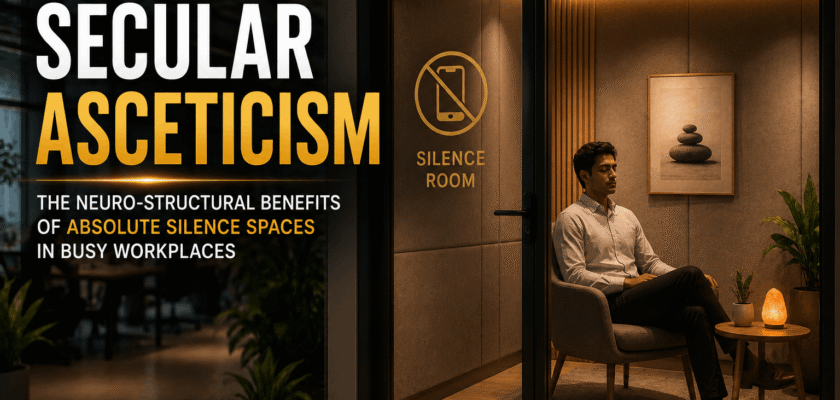
An absolute silence space is a quiet room or zone where talking, phone calls, meetings, notifications, music, and screen use are restricted. The goal is not decoration. The goal is mental stillness.
These spaces may include:
- Soft lighting
- Acoustic walls
- Minimal furniture
- No screens
- No phone calls
- No meetings
- Comfortable seating
- Neutral colours
- Clean air
- Clear silence rules
Such rooms give workers permission to pause without feeling guilty.
Why Busy Workplaces Need Cognitive Recovery Architecture
Cognitive recovery architecture means designing spaces that help the brain recover from mental load. It connects workplace design with focus, stress control, and emotional reset.
A normal office is built for work. A cognitive recovery space is built for recovery after work pressure.
It can help after:
- Long meetings
- Difficult calls
- Creative fatigue
- Decision overload
- Conflict discussions
- Screen-heavy tasks
- Social exhaustion
- Deadline stress
- AI workflow overload
- Constant notifications
This is why silence spaces are becoming useful in modern offices.
Neuro-Structural Benefits of Silence Spaces
The neuro-structural benefits of silence spaces come from reducing sensory load. When sound, visual clutter, and digital stimulation reduce, the brain gets fewer signals to process.
This can support:
- Better focus
- Lower stress
- Calmer breathing
- Improved emotional control
- Better decision-making
- Reduced mental fatigue
- More creative thinking
- Better self-awareness
- Lower irritability
- Stronger work recovery
In simple words, a quiet room helps the nervous system slow down.
Secular Asceticism and Digital Detox at Work
Secular asceticism also supports digital detox. A digital detox does not always mean staying offline for a full day. In workplaces, it can mean short and intentional breaks from devices.
For example, a worker may keep the phone outside for 15 minutes and sit silently. Another worker may take a no-screen break after three hours of laptop work.
This small reset can reduce the feeling of being always online.
Modern work needs technology, but the brain also needs breaks from technology.
Why Open Offices Need Absolute Silence Spaces
Open offices can support teamwork, but they also create noise. People hear calls, keyboards, chairs, footsteps, small conversations, and alerts. These sounds may look normal, but they can slowly reduce concentration.
Quiet zones, pods, and focus rooms are now becoming important as offices try to justify the commute and support better acoustic quality. Recent office design reporting has highlighted quiet work areas, acoustic comfort, and wellness spaces as key parts of post-pandemic workplace redesign.
So, absolute silence spaces can balance the energy of open offices.
Why Silence Supports Mental Endurance
Mental endurance does not mean working nonstop. It means staying clear, calm, and effective over a long workday.
Even athletes need rest between training sessions. Similarly, knowledge workers need recovery between thinking sessions.
Silence supports mental endurance by creating a pause between effort and the next task.
A simple silence routine can look like:
- 5 minutes before deep work
- 10 minutes after a stressful meeting
- 3 minutes before a presentation
- 15 minutes after lunch
- 5 minutes before leaving office
Small pauses can protect long-term performance.
Spiritual Roots Without Religious Pressure
Silence has deep spiritual roots. Many traditions use silence for prayer, self-reflection, discipline, humility, and inner peace.
However, workplace silence rooms should not force one belief system. They should stay inclusive.
A good absolute silence space can support:
- Prayer
- Meditation
- Reflection
- Breathwork
- Quiet sitting
- Emotional reset
- Gratitude practice
- No-screen rest
This makes the space useful for people from different religions and for people with no religious identity.
How Silence Improves Emotional Control
Silence creates space between feeling and reaction. This is important in stressful workplaces.
For example, after a sharp email, a person may want to reply angrily. But if they sit quietly for five minutes, the response may become calmer.
This pause can prevent conflict.
Silence helps workers notice their emotions before acting on them. That is why it can improve leadership, teamwork, and communication.
Why Wellness Rooms Should Not Become Storage Rooms
Many companies create wellness rooms but fail to use them properly. Some rooms become storage spaces, phone booths, or informal meeting areas.
That defeats the purpose.
ROOM’s 2026 workplace design article noted that wellbeing rooms often go underused and may be treated as storage or extra meeting rooms.
So, companies must protect the identity of silence rooms. A silence room should stay silent.
How to Design an Absolute Silence Space
A good absolute silence space should be simple, not fancy.
Important design points include:
- Sound control
- Soft light
- Minimal furniture
- Comfortable chair or floor seating
- No bright screens
- No strong fragrance
- Clean air
- Neutral colours
- Clear rules
- Easy access
The room should feel calm from the moment a person enters.
If the design is too busy, it can increase stimulation instead of reducing it.
Rules for Workplace Silence Rooms
Rules make the space useful. Without rules, people may misuse the room.
Simple rules can include:
- No calls
- No meetings
- No loud music
- No video recording
- No social media scrolling
- Keep phone silent
- Use for 10 to 20 minutes
- Respect others
- Keep the space clean
- Leave quietly
These rules support secular asceticism in a practical way.
Why Managers Must Respect Silence Breaks
Managers play a major role. If leaders treat silence breaks as laziness, employees will not use the room.
A healthy workplace should treat recovery as part of performance.
Managers should encourage:
- Short recovery breaks
- Focus blocks
- No-meeting windows
- Respect for quiet rooms
- Healthy digital boundaries
- Calm communication
- Realistic workload planning
Silence rooms work only when culture supports them.
Secular Asceticism for Remote Workers
Remote workers also need secular asceticism. Working from home can blur the line between office and personal life. Many remote workers stay online longer than they realise.
A home version can include:
- A quiet chair near a window
- Phone-free morning time
- No-screen lunch
- Silent breathing breaks
- Fixed work shutdown time
- No laptop in bed
- Evening digital detox
- Short prayer or reflection
- Calm bedtime routine
- Simple work desk setup
A person does not need a corporate silence room to begin.
The Role of Biophilic Design
Biophilic design means using nature-inspired elements in indoor spaces. Plants, natural light, wood textures, calm colours, and nature views can support wellbeing.
A systematic review on nature elements in offices found that biophilic design has been studied for its effect on workers’ stress response and workplace wellbeing.
This does not mean a silence room must become a garden. However, small natural elements can make it feel more restorative.
Why Acoustic Comfort Is Essential
Silence rooms need acoustic comfort. If outside noise enters the room, the brain cannot fully relax.
Good acoustic design may include:
- Sound-absorbing panels
- Soft flooring
- Thick doors
- Acoustic ceiling
- Heavy curtains
- White noise control, if needed
- No echo surfaces
- Separation from busy corridors
- Quiet ventilation
- Clear no-call rule
A quiet space should protect the ear and the mind.
How Employees Can Use Silence Spaces Correctly
Employees can use silence spaces for short, practical recovery.
A simple routine:
- Enter quietly
- Keep phone silent
- Sit comfortably
- Breathe slowly
- Relax shoulders
- Close eyes if comfortable
- Notice thoughts without judging
- Stay for 5 to 15 minutes
- Leave calmly
- Return to work slowly
This simple method can reset attention.
Mistakes Workers Should Avoid
Workers should avoid turning silence time into another digital break.
Common mistakes include:
- Scrolling reels in the room
- Taking calls quietly
- Replying to emails
- Holding private meetings
- Sleeping for long periods
- Playing loud meditation audio
- Talking with colleagues
- Eating inside the room
- Treating it as escape from work
- Using it without respecting others
The purpose is recovery, not distraction.
Why Absolute Silence Spaces Can Improve Creativity
Creativity needs empty mental space. If the brain is always consuming content, it has less room to connect ideas.
Silence allows thoughts to settle.
Writers, designers, founders, developers, marketers, and strategists may all benefit from quiet time. A few minutes of silence can help new ideas appear more clearly.
This is why silence is not anti-productivity. It can support deeper productivity.
Secular Asceticism and AI Overload
AI tools can increase productivity, but they can also increase mental speed. Workers may jump between prompts, drafts, dashboards, summaries, and decisions all day.
This can create cognitive overload.
Secular asceticism helps by adding a counter-rhythm. It gives workers time to step away from constant output and return with better judgment.
In the AI era, silence may become more valuable, not less.
Why Companies Should Measure Usage Carefully
Companies should not build silence rooms only for branding. They should measure whether employees actually use them.
Useful measures include:
- Room usage frequency
- Employee feedback
- Stress survey results
- Noise complaints
- Focus satisfaction
- Meeting overload feedback
- Sick day patterns
- Burnout signals
- Space misuse reports
- Manager support level
This helps companies improve the space over time.
When Silence Rooms Are Not Enough
Silence rooms cannot fix toxic work culture alone. If workload is unfair, leadership is harsh, or employees face constant pressure, a quiet room will not solve the root problem.
Companies must also fix:
- Overwork
- Poor management
- Unrealistic deadlines
- Meeting overload
- Lack of autonomy
- Bad communication
- No career support
- Unfair expectations
- Always-on culture
- Low psychological safety
Silence works best inside a healthy culture.
Simple Personal Secular Asceticism Routine
Anyone can start with a simple daily practice.
Try this:
- Morning: 5 minutes quiet breathing
- Workday: 10 minutes no-screen break
- Afternoon: one silent walk
- Evening: 30 minutes phone-free time
- Night: 5 minutes reflection or prayer
This routine is simple and flexible.
The goal is not perfection. The goal is daily mental space.
Future of Absolute Silence Spaces
Absolute silence spaces may become common in offices, universities, airports, hospitals, coworking spaces, and even malls.
Future spaces may include:
- Acoustic pods
- Prayer-neutral rooms
- Digital detox zones
- Silent reading corners
- Breathing light systems
- Nature-inspired interiors
- Low-stimulation recovery rooms
- Quiet commuting lounges
- Sensory reset spaces
- Mental health support rooms
However, the best spaces will stay simple. Too much technology can ruin silence.
Final Verdict
Secular asceticism is becoming a modern recovery practice because busy workers need silence, discipline, and digital restraint. In 2026, absolute silence spaces are not only spiritual corners. They are cognitive recovery architecture for noisy workplaces.
These spaces can improve focus, reduce stress, support emotional control, and help workers build mental endurance. They can also respect spiritual reflection without forcing religion.
However, silence rooms work only when companies protect them with clear rules and healthy culture.
In simple words, silence is not empty. It is a space where the mind repairs itself.


