
Layoffs vs. AI: Why Oracle and Tech Giants are Cutting Jobs While Hiring for ‘Physical AI’ Roles
The year 2026 is presenting a perplexing paradox in the tech industry: major companies like Oracle, IBM, and Google are continuing with significant layoffs in traditional IT and administrative roles, even as they announce aggressive hiring for a new category of positions – “Physical AI.” This isn’t just about software; it’s about the tangible application of AI in the real world, leading to a massive pivot in the global workforce.
This shift signals a fundamental re-evaluation of human capital as Agentic AI systems take over cognitive tasks, while new, specialized roles emerge to build and manage the next generation of intelligent machines.
1. The ‘Agentic AI’ Effect on Traditional Roles
The rise of Agentic AI, capable of autonomous planning and execution of complex digital tasks (as discussed in our previous blog), is directly impacting traditional white-collar jobs.
- Automation of Repetitive Tasks: Roles in data entry, basic customer support, routine coding, and administrative coordination are being streamlined or fully automated by AI agents.
- Efficiency Gains: Companies are realizing significant cost savings by deploying AI to manage digital workflows, reducing the need for large human teams in these areas. This directly fuels layoff decisions in departments that are ripe for automation.
2. The New Frontier: ‘Physical AI’ and Robotics
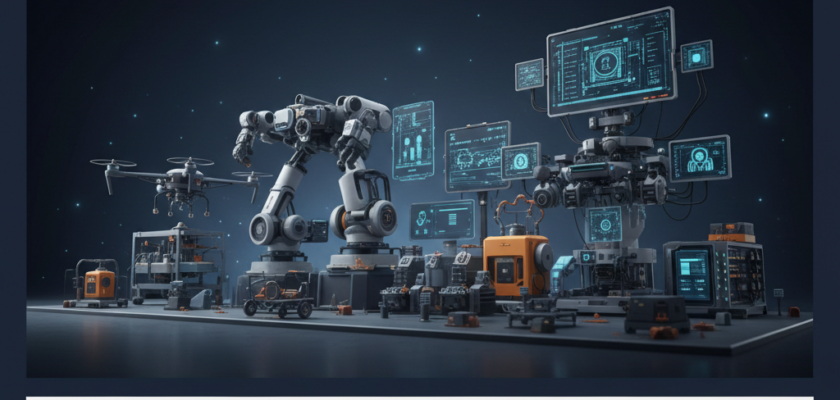
While digital roles are shrinking, the demand for talent in Physical AI is exploding. This refers to AI embedded in hardware that interacts with the physical world.
- What is Physical AI? Think advanced robotics in manufacturing, autonomous drones for logistics, smart sensors for infrastructure monitoring, and AI-driven agricultural machinery. These systems require a unique blend of hardware, software, and real-world operational expertise.
- Oracle’s Push: Oracle, for instance, recently announced a $5 billion investment in AI infrastructure in India, a significant portion of which is earmarked for facilities focused on developing and deploying “Physical AI” solutions for supply chain, healthcare, and smart cities. This requires physical infrastructure, not just cloud servers.
3. The Skill Gap: Why Layoffs and Hiring Coexist
The reason for this seemingly contradictory trend is a profound skill mismatch.
- Outdated Skills: Many roles being eliminated are based on skills that AI can now perform more efficiently and at scale.
- Emerging Skill Demand: The new “Physical AI” roles require expertise in robotics engineering, mechatronics, sensor fusion, ethical AI deployment in physical spaces, human-robot interaction design, and hardware-software integration. These are skills that the existing workforce often lacks.
- Upskilling Imperative: Companies are therefore forced to lay off employees in old roles while aggressively recruiting (or upskilling internally) for these specialized, forward-looking positions.
4. India’s Role in the ‘Physical AI’ Revolution
India is positioned to become a global hub for Physical AI development and deployment.
- Talent Pool: India’s large engineering talent pool, combined with government initiatives like “Make in India” and “Skill India,” is creating an ecosystem for robotics and automation startups.
- Cost-Effectiveness: Developing and testing Physical AI solutions in India can be more cost-effective, attracting major global players to set up R&D centers and manufacturing units.
Layoffs vs. Physical AI: Key Trends (2026)
| Aspect | Traditional IT/Admin Roles | ‘Physical AI’ Roles |
| Current Trend | Layoffs/Downsizing | Aggressive Hiring/Growth |
| Driving Force | Agentic AI automation, Cost-cutting | Real-world application, Innovation, Efficiency |
| Key Skills | Data processing, Routine coding, Administration | Robotics, Mechatronics, Sensor Tech, AI Ethics, Hardware-Software Integration |
| Examples | Entry-level support, QA, Back-office | Robotics engineers, Drone operators, Autonomous vehicle specialists, Smart factory technicians |
| Companies | Oracle, IBM, Google, Microsoft | Oracle Labs, Boston Dynamics, Tesla Bot, various industrial automation firms |
Conclusion
The Layoffs vs. AI narrative of 2026 isn’t about AI destroying all jobs; it’s about AI fundamentally transforming the nature of work. Companies are shedding roles that can be automated by intelligent software agents while creating entirely new categories of jobs focused on building, deploying, and maintaining the intelligent machines that will reshape our physical world. For job seekers, the message is clear: reskill, retool, and embrace the convergence of the digital and physical realms.
Are you ready to transition from a digital worker to an orchestrator of physical AI? Share your thoughts on this major tech shift!


