


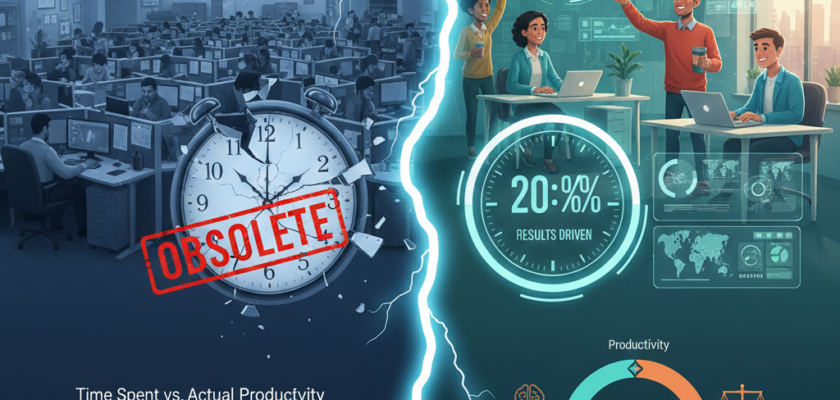
The Death of the 9-to-5: Why Global Companies are Switching to Outcome-Based Work
The iconic 9-to-5 workday, a relic of the Industrial Age, is rapidly becoming a dinosaur in the modern corporate landscape. In 2026, a fundamental shift is underway: global companies are increasingly abandoning the antiquated measure of “hours worked” in favor of outcome-based work models. This isn’t just a perk; it’s a strategic move driven by a demand for greater efficiency, increased employee satisfaction, and the inherent flexibility offered by digital tools and a globally connected workforce.
The focus is no longer on when you work, but on what you achieve.
1. The Productivity Myth: Presence vs. Performance
The 9-to-5 model mistakenly equates presence with productivity. Employees might be “at their desks” for 8 hours, but only a fraction of that time is spent on deep, focused, value-generating work.
- The Problem: Long hours often lead to burnout, decreased engagement, and a focus on looking busy rather than being truly effective.
- Outcome-Based Solution: By defining clear goals and measurable results, companies empower employees to achieve those outcomes in the way that best suits them, fostering genuine productivity.
2. Employee Empowerment & Flexibility: Attracting Top Talent
The modern workforce, especially younger generations, values flexibility and autonomy above almost all else.
- Retention: Companies offering outcome-based work see higher employee retention rates because workers can better integrate their professional and personal lives.
- Global Talent Pool: This model opens up the talent pool beyond geographical limitations, allowing companies to hire the best person for the job, regardless of their time zone or location. This is crucial for global companies in 2026.
- Boosted Morale: Trusting employees to manage their time fosters a sense of ownership and boosts morale.
3. Focus on Value, Not Time: Clearer Business Impact
Outcome-based models force companies to articulate what truly matters: the results.
- Strategic Alignment: Teams and individuals are aligned around specific deliverables and KPIs (Key Performance Indicators), making it easier to measure impact and contribute directly to business objectives.
- Innovation: When employees are judged on innovation and problem-solving, rather than clocking in hours, they are more likely to find creative solutions and drive actual business growth.
4. Leveraging Technology: The Digital Backbone
The rise of advanced project management software, collaboration tools, and AI-powered analytics makes outcome-based work feasible and measurable.
- Tracking Progress: Tools like Asana, Monday.com, and Notion allow teams to track tasks, progress, and outcomes transparently, making time-tracking obsolete.
- Communication: Slack, Microsoft Teams, and Zoom facilitate seamless communication, irrespective of fixed work hours.
- Data-Driven Decisions: Companies can analyze data on project completion, goal attainment, and team performance, moving away from subjective “face time” evaluations.
5. Adapting to a Dynamic World: Agility & Resilience
The past few years have taught companies the importance of agility.
- Crisis Resilience: Companies with outcome-based models were quicker to adapt to global disruptions (like pandemics) because their systems were already built for flexibility and remote collaboration.
- Market Responsiveness: Teams focused on outcomes can pivot more quickly to changing market demands, as they are not constrained by rigid schedules.
Challenges & How to Overcome Them:
- Clear Goal Setting: Requires robust goal-setting frameworks (e.g., OKRs – Objectives and Key Results) to ensure everyone knows what outcomes are expected.
- Trust & Communication: Managers need to shift from “supervising” to “coaching” and building high-trust environments. Regular check-ins on progress, not hours, are key.
- Burnout Risk: Some employees might overwork initially. Companies need to promote work-life balance and teach effective self-management.
9-to-5 vs. Outcome-Based Work (2026)
| Feature | Traditional 9-to-5 | Outcome-Based Work |
| Focus | Hours spent, physical presence | Results achieved, value created |
| Measurement | Time tracking, attendance | KPIs, deliverables, goal attainment |
| Flexibility | Rigid, fixed schedule | High flexibility (where, when) |
| Productivity | Can lead to “busyness” | Driven by clear objectives, deep work |
| Employee Control | Low autonomy | High autonomy, empowerment |
| Talent Pool | Geographically limited | Global, diverse |
| Company Culture | Command & control | Trust, accountability, coaching |
Conclusion
The death of the 9-to-5 is not merely an evolutionary step; it’s a revolution in how we define work, value contributions, and empower talent. In 2026, global companies leading this charge are proving that by shifting focus from time spent to results achieved, they can unlock unprecedented levels of productivity, innovation, and employee satisfaction. The future of work is here, and it’s a future where your impact, not your hours, defines your success.
Does your company embrace outcome-based work? What do you think is the biggest benefit or challenge of this model? Share your thoughts below!


