
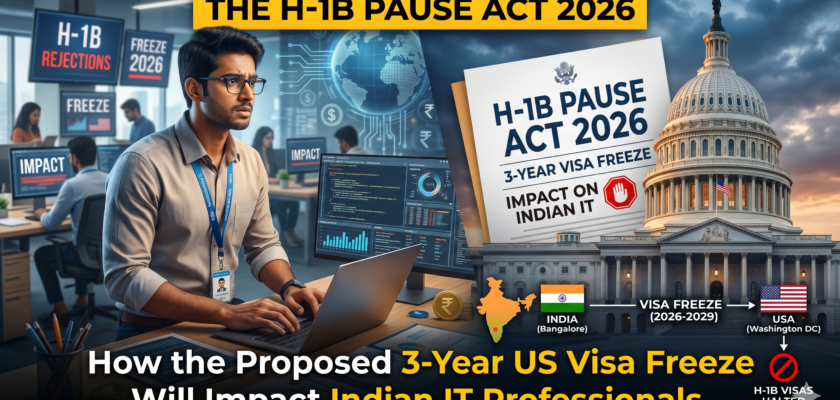
The H-1B Pause Act 2026: How the Proposed 3-Year US Visa Freeze Will Impact Indian IT Professionals.
As of April 25, 2026, the Indian IT sector and thousands of aspiring tech professionals are in a state of high alert. On April 22, US Congressman Eli Crane introduced a sweeping legislative proposal titled the “End H-1B Visa Abuse Act of 2026.” The bill, which has quickly gained the moniker H-1B Pause Act 2026, represents the most aggressive attempt to overhaul the skilled migration system in decades.
With Indians currently holding roughly 70% of all H-1B visas, the shockwaves of this proposal are being felt from the boardrooms of Bengaluru to the tech hubs of Silicon Valley. If passed, the bill would fundamentally dismantle the “Reliable Bridge” that has connected Indian talent to the US economy for over thirty years.
1. The Core Pillars of the H-1B Pause Act 2026
The H-1B Pause Act 2026 is not a simple tweak; it is a near-total reset of the immigration framework. The proposal includes several “Hard-Line” changes:
- The 3-Year Freeze: A complete suspension of the issuance of new H-1B visas for a period of three years.
- The $200,000 Salary Floor: Setting a mandatory minimum annual salary of $200,000 for any H-1B worker. This effectively eliminates access for early- and mid-career professionals.
- Ending the Lottery: Replacing the current random selection with a “Wage-Based” system, prioritizing only the highest-paid individuals.
- Caps & Exemptions: Reducing the annual visa cap from 65,000 to just 25,000 and removing existing exemptions for master’s degree holders.
- No Dependents: Prohibiting H-1B holders from bringing family members (H-4 dependents) to the United States.
2. Impact on Indian Students and IT Professionals
The H-1B Pause Act 2026 targets the very foundation of the Indian talent pathway.
A. The Death of the OPT Bridge
The bill proposes an immediate end to the Optional Practical Training (OPT) program. For Indian students, OPT has been the critical bridge from a US degree to a US job. Without it, students are effectively being asked to invest in an expensive US education with zero legal path to gain work experience afterward.
B. The “Staffing Agency” Ban
A major part of the bill prohibits third-party staffing firms—often referred to as the “Body Shops”—from hiring H-1B workers. This would devastate the business models of many Indian IT service majors who rely on on-site staffing for US projects.
3. Strategic Matrix: Current System vs. H-1B Pause Act 2026
| Feature | Current H-1B System (2025) | H-1B Pause Act 2026 (Proposed) |
| New Visa Issuance | ~85,000 Annually | 0 (Complete Freeze for 3 Years) |
| Selection Method | Random Lottery | Wage-Based (Priority to $200k+) |
| Salary Requirement | Level-based (Market rate) | $200,000 Minimum Floor |
| Dependents (H-4) | Allowed (with work permits) | Strictly Prohibited |
| Post-Study Work | OPT Allowed (1-3 years) | OPT Abolished |
| Pathway to GC | Adjustment of Status allowed | Status Adjustment Prohibited |
4. Is the Bill Likely to Pass?
While the H-1B Pause Act 2026 has caused significant alarm, veteran immigration attorneys in Washington stress that its passage is far from certain.
- The Filibuster Hurdle: Any immigration bill requires a 60-vote majority in the Senate, a threshold that hard-line proposals have historically failed to meet.
- Corporate Resistance: Major US tech giants like Google, Meta, and Apple are expected to lobby heavily against the bill, citing the Operational Liability of losing global talent.
- Political Signaling: Many analysts view the bill as “Political Signaling” ahead of the next election cycle rather than a piece of legislation intended to become law in its current form.
Conclusion
The H-1B Pause Act 2026 represents a “Total Mess” for the global mobility of Indian talent. By attempting to replace the ₹16,700 Crore human current with a rigid, high-salary fortress, the bill risks pushing the world’s most capable engineers toward alternative destinations like Canada, the UK, or Australia.
For Indian IT professionals, the message is clear: the era of “Guaranteed US Access” is under threat. Whether this bill passes or not, it highlights the need to build Decentralized Skill Assets that are valuable in any market, regardless of visa caps. The old “Abacus Maze” of US immigration is getting more complex—stay informed and always have a Plan B.


