Precision Endocrinology: Why Urban Stress Needs Better Measurement
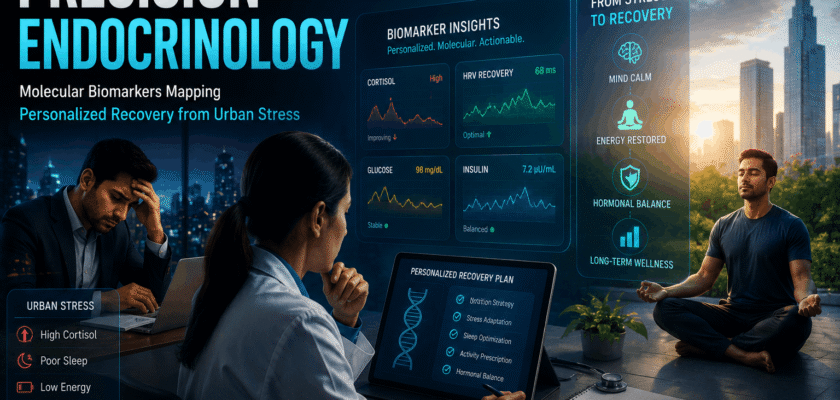
Precision endocrinology is becoming important because urban stress does not affect everyone in the same way. Two people may work in the same city, sleep the same number of hours, and feel the same pressure, but their bodies can respond very differently.
One person may show high cortisol. Another may show poor HRV. A third may show rising insulin resistance, poor sleep quality, or inflammation. This is why modern health tracking is moving beyond “I feel stressed” toward measurable recovery signals.
Therefore, precision endocrinology uses biomarkers, wearable data, sleep patterns, and metabolic markers to understand how the body is really handling stress.
Why Precision Endocrinology Matters in 2026
Precision endocrinology matters because stress is no longer only a mental feeling. Long-term stress can affect hormones, appetite, glucose control, blood pressure, sleep, weight, and recovery.
Researchers describe allostatic load as the cumulative biological burden of chronic stress across body systems. It can include markers linked with neuroendocrine, metabolic, cardiovascular, and immune function.
This means urban stress can slowly show up in blood reports, heart rhythm, sleep data, and energy levels.
So, the future of stress recovery is not only motivational advice. It is personal measurement plus practical lifestyle correction.
What Is Precision Endocrinology?
Precision endocrinology means using individual health data to understand hormone and metabolic patterns more accurately. Instead of giving the same advice to everyone, it looks at the person’s unique signals.
It may use:
- Cortisol
- Insulin
- Glucose
- HbA1c
- Thyroid markers
- Vitamin D
- Inflammation markers
- HRV
- Sleep timing
- Resting heart rate
- Activity patterns
- Menstrual cycle data, where relevant
This approach helps doctors and health coaches understand what kind of recovery a person needs.
Precision Endocrinology and Molecular Biomarkers
Precision endocrinology uses molecular biomarkers to see what is happening inside the body. Biomarkers are measurable signals. They can come from blood, saliva, urine, wearable devices, or continuous sensors.
For urban stress recovery, useful biomarkers may include:
- Morning cortisol
- Evening cortisol
- Fasting insulin
- Fasting glucose
- HbA1c
- Lipid profile
- C-reactive protein
- Thyroid function
- Vitamin B12
- Vitamin D
- HRV
- Resting heart rate
These signals help build a clearer picture than symptoms alone.
Why “I Feel Stressed” Is Not Enough
“I feel stressed” is important, but it is not complete. Some people feel stressed but their biological markers look stable. Others say they are fine, yet their sleep, HRV, glucose, and cortisol patterns show strain.
A 2026 wearable-and-cortisol study found that wearable signals alone had trouble distinguishing psychological stress from rest and recovery. When salivary cortisol features were added, overall classification improved from 77.8% to 94.4% in a small lab study.
This shows why endocrine context matters.
In simple words, the body may tell a deeper story than mood alone.
HRV: The Popular Recovery Signal
Heart rate variability, or HRV, is one of the most popular recovery signals. It measures tiny time differences between heartbeats. Higher HRV often suggests better autonomic flexibility, while lower HRV may show stress, fatigue, poor sleep, illness, or overload.
A 2026 review described HRV as a digital biomarker that reflects autonomic regulation and can support both clinical care and operational performance contexts.
However, HRV should not be read alone. It works best when combined with sleep, symptoms, activity, and biomarkers.
Why HRV Alone Can Mislead
HRV is useful, but it is not perfect. A low HRV day can happen because of poor sleep, alcohol, illness, overtraining, emotional stress, dehydration, or late-night meals.
A high HRV also does not always mean everything is fine.
Recent research has found that links between wearable HRV and self-reported wellbeing can be inconsistent in some settings.
Therefore, do not panic over one number. Look at trends.
A 7-day or 30-day pattern is more useful than one morning score.
Cortisol: The Stress Hormone Signal
Cortisol is often called the stress hormone. The body naturally releases cortisol in a daily rhythm. It usually rises in the morning and falls at night.
Healthy cortisol rhythm supports energy, alertness, blood pressure, immune function, and glucose control.
However, chronic stress, poor sleep, night work, overtraining, and irregular routines can disturb this pattern.
This is why cortisol is important in precision endocrinology. It gives a hormonal view of stress and recovery.
Cortisol and Urban Lifestyle
Urban lifestyle can disturb cortisol rhythm. Long commutes, traffic noise, late-night screens, deadline pressure, pollution, caffeine overuse, and poor sleep can all add stress load.
A disturbed rhythm may show as:
- Morning fatigue
- Late-night alertness
- Sugar cravings
- Poor sleep
- Belly fat gain
- Anxiety-like restlessness
- Low recovery after workouts
- Energy crashes
- Irritability
- Brain fog
These signs do not confirm a cortisol problem, but they may suggest the need for medical evaluation.
Insulin Resistance and Stress Recovery
Stress and insulin resistance often connect. When the body stays in high-alert mode, glucose regulation can suffer. Poor sleep and high stress can also increase cravings and late-night eating.
Precision endocrinology may track:
- Fasting glucose
- Fasting insulin
- HOMA-IR
- HbA1c
- Waist size
- Triglycerides
- HDL cholesterol
- Liver enzymes
- Sleep timing
- Activity levels
A 2026 study integrating wearable data with clinical biomarkers used HOMA-IR as a metabolic health risk marker and highlighted the need for multi-system subtyping in cardiovascular-kidney-metabolic health.
This supports the idea that stress recovery should include metabolic markers, not only mood tracking.
Allostatic Load: The Body’s Stress Burden
Allostatic load means the body’s wear and tear from repeated stress adaptation. It is not one single test. It is a pattern across multiple systems.
Markers may involve:
- Blood pressure
- Cortisol
- DHEA-S
- Epinephrine
- Norepinephrine
- Glucose
- Insulin
- Lipids
- Inflammatory markers
- Waist-hip ratio
Allostatic load helps explain why chronic stress can affect long-term health.
In simple words, the body can handle stress for a while. But if recovery never happens, the system starts paying the cost.
Precision Endocrinology and Personalized Recovery
Precision endocrinology supports personalized recovery because not everyone needs the same solution.
For example:
- Low HRV + poor sleep may need sleep repair
- High fasting insulin may need meal timing and strength training
- High evening cortisol may need screen and work boundary changes
- Low vitamin D may need medical correction
- High inflammation may need deeper lifestyle and medical review
- High resting heart rate may need stress and fitness evaluation
This makes recovery more targeted.
Instead of guessing, the person can act based on signals.
Wearables Can Help, But They Are Not Doctors
Wearables can track HRV, resting heart rate, sleep duration, steps, skin temperature, oxygen trends, and activity. These can help users notice patterns.
However, wearables are not medical diagnosis tools for most users.
They can support awareness, but doctors should interpret serious symptoms and lab reports.
Use wearables to ask better questions, such as:
- Why does HRV drop after late dinner?
- Why does sleep worsen after caffeine?
- Why does resting heart rate rise during stress?
- Why do workouts feel harder after poor sleep?
- Why does recovery improve after morning walks?
This makes wearable data practical.
Why Sleep Timing Is a Hormone Tool
Sleep timing is one of the most powerful hormone tools. Poor sleep can affect cortisol rhythm, hunger hormones, insulin sensitivity, testosterone, thyroid function, and recovery.
A strong sleep routine includes:
- Fixed sleep time
- Fixed wake time
- Morning sunlight
- Less screen use at night
- Early dinner
- Calm bedtime routine
- Cool dark room
- Less caffeine late in the day
- Reduced late-night work
- Consistent weekly schedule
Sleep is not only rest. It is hormone regulation time.
Food Timing and Hormone Recovery
Food timing also affects stress recovery. Late-night heavy meals can disturb sleep and glucose control. Skipping meals and then overeating at night can also increase stress on the body.
A simple hormone-friendly approach:
- Eat protein in the first meal
- Keep lunch balanced
- Avoid very late heavy dinner
- Add fibre-rich foods
- Reduce sugary drinks
- Walk after meals
- Avoid all-day snacking
- Hydrate properly
- Keep meal timing steady
- Match food with activity level
This helps metabolic rhythm.
Strength Training Supports Insulin Sensitivity
Strength training helps because muscle uses glucose. More active muscle can support better insulin sensitivity and metabolic health.
You do not need extreme workouts.
Start with:
- Squats
- Push-ups
- Resistance bands
- Light weights
- Walking
- Stair climbing
- Core exercises
- Mobility work
- Supervised gym training
- Two to three sessions weekly
A stronger body usually handles stress better.
Breathing and Nervous System Recovery
Breathing practices can support nervous system recovery. Slow breathing may help the body shift from high-alert mode toward calm mode.
Simple practice:
- Sit comfortably
- Inhale slowly
- Exhale longer than inhale
- Repeat for 3 to 5 minutes
- Keep shoulders relaxed
- Avoid forcing breath
- Practice daily
This is not a replacement for medical treatment. But it can be a useful recovery habit.
Biomarkers for Urban Stress Recovery
A practical biomarker panel for stress recovery may include basic and advanced markers. A doctor can decide what is necessary.
Possible markers include:
- CBC
- Fasting glucose
- HbA1c
- Fasting insulin
- Lipid profile
- Thyroid profile
- Vitamin D
- Vitamin B12
- CRP
- Liver function
- Kidney function
- Morning cortisol, if needed
- Ferritin, if needed
Do not test randomly. Test with medical guidance.
When to See an Endocrinologist
See an endocrinologist or doctor if stress symptoms are persistent or linked with metabolic signs.
Get help if you have:
- Unexplained weight gain
- Extreme fatigue
- Irregular periods
- High blood sugar
- Excessive thirst
- Frequent urination
- Sudden weight loss
- Severe sleep problems
- Thyroid symptoms
- Dark neck patches
- Blood pressure issues
- Persistent anxiety-like physical symptoms
Online advice should not replace medical care.
Personalized Recovery From Urban Stress
Personalized recovery means matching habits to the person’s actual stress pattern.
A person with poor sleep may need sleep correction first.
A person with high insulin may need food timing and movement.
A person with low HRV may need recovery days.
A person with high work stress may need boundaries.
A person with vitamin deficiency may need medical correction.
This is the practical power of precision endocrinology.
It turns “do everything” into “do the right thing first.”
What Not to Do
Avoid extreme self-treatment.
Do not:
- Take hormone pills without prescription
- Overuse cortisol supplements
- Follow random influencer protocols
- Panic over one HRV score
- Diagnose thyroid issues from symptoms alone
- Use fasting aggressively without guidance
- Ignore blood sugar problems
- Replace doctors with apps
- Compare your biomarkers with others blindly
- Chase perfect numbers every day
Health data should reduce confusion, not increase fear.
Simple 7-Day Recovery Reset
Here is a simple non-medical recovery reset:
Day 1
Fix sleep and wake time.
Day 2
Add morning sunlight.
Day 3
Walk 10 minutes after meals.
Day 4
Add protein to breakfast.
Day 5
Take one no-screen break.
Day 6
Do light strength training.
Day 7
Review sleep, mood, HRV, and energy trends.
This simple plan can help people notice patterns.
Future of Precision Endocrinology
The future of precision endocrinology will likely combine lab testing, wearables, continuous glucose monitors, salivary hormones, AI pattern analysis, and doctor-guided interpretation.
Future systems may help people understand:
- Stress type
- Recovery speed
- Sleep quality
- Glucose response
- Exercise readiness
- Hormone rhythm
- Nutrition fit
- Burnout risk
- Metabolic risk
- Personal intervention response
A 2026 proof-of-concept study using wearable sensor data and transformer models suggested that personalized prediction of post-intervention physiological responses is feasible, though larger validation is still needed.
This points toward more personalized recovery tools in the future.
Final Verdict
Precision endocrinology is changing how we understand recovery from urban stress. Instead of relying only on feelings or generic advice, it looks at biomarkers like cortisol, HRV, insulin, glucose, sleep, resting heart rate, and inflammation.
This approach can help people identify whether stress is affecting sleep, metabolism, hormones, or recovery. However, the goal is not to obsess over numbers. The goal is to use data wisely and take practical action.
In simple words, urban stress may feel emotional, but it often leaves biological signals. Precision endocrinology helps read those signals and build a smarter recovery plan.


