
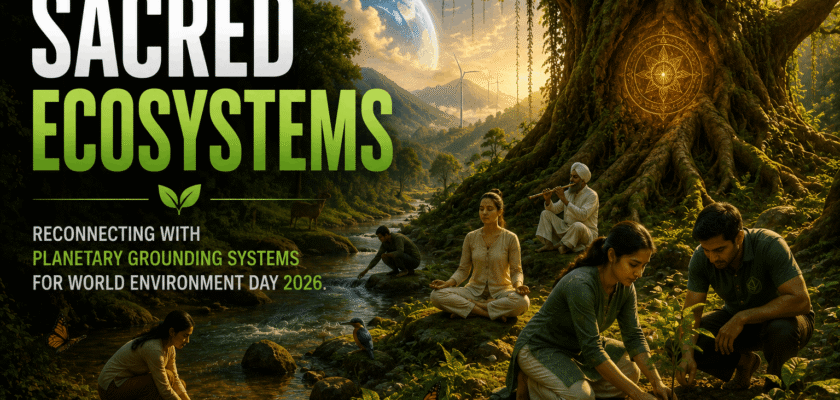
Sacred Ecosystems: Why World Environment Day 2026 Needs a Spiritual Lens
Sacred ecosystems are becoming a powerful idea for World Environment Day 2026 because people are no longer looking at nature only as land, water, trees, and climate data. Many communities now see ecosystems as living relationships that hold memory, identity, faith, culture, and emotional balance.
The official World Environment Day 2026 campaign focuses on climate change and the urgent signals the Earth is sending. This makes the spiritual angle important. Climate change is not only a scientific issue. It is also a moral issue, a lifestyle issue, and a relationship issue.
When forests burn, rivers dry, soil loses life, and heatwaves intensify, humans do not only lose resources. We lose places of prayer, silence, memory, farming, festivals, healing, and belonging. That is why sacred ecosystems matter.
What Are Sacred Ecosystems?
Sacred ecosystems are natural places that people protect, respect, or spiritually value. These places may include sacred groves, rivers, mountains, forests, lakes, deserts, wetlands, old trees, coastal zones, community gardens, and pilgrimage landscapes.
In many cultures, nature is not treated as dead matter. A river may be seen as mother. A mountain may be seen as guardian. A forest may be seen as a temple. A tree may be treated as a living elder. These beliefs can create powerful conservation behaviour.
Sacred ecosystems are important because they remind us that ecology and spirituality were never fully separate in traditional life. People protected nature because nature was part of their sacred world.
World Environment Day 2026 and Climate Action
World Environment Day 2026 is hosted by Azerbaijan and focuses on climate change. Official UNEP communication says the campaign is about the urgent signals Earth is sending and the signals we choose to send in response.
This message is very close to the idea of sacred ecosystems. A sacred relationship with Earth asks people to listen before it is too late. Heat, drought, floods, biodiversity loss, and polluted air are not just environmental indicators. They are warning bells.
Climate action becomes stronger when it moves from fear to responsibility. Sacred ecosystems help people feel responsibility because they connect protection with meaning.
Planetary Grounding Systems: Simple Meaning
Planetary grounding systems can be understood as daily practices that reconnect human life with Earth systems. This does not mean making medical claims about instant healing. It means rebuilding practical, emotional, and spiritual connection with soil, water, trees, sunlight, seasons, food, and local biodiversity.
A planetary grounding system may include walking in a park without a phone, praying near a tree, planting native species, cleaning a local water body, observing sunrise, eating seasonal food, composting, keeping a small balcony garden, or spending silent time outdoors.
These practices help people remember that they are not separate from the planet. Human bodies depend on air, water, food, temperature, soil, insects, forests, and oceans every day.
Why Modern Workers Need Nature-Based Grounding
Modern workers spend long hours in screens, artificial lighting, closed rooms, traffic, notifications, and digital pressure. This creates mental noise. Many people feel disconnected from their body, seasons, community, and natural rhythm.
Nature-based grounding gives people a simple reset. A quiet walk, a few minutes near plants, a morning sunlight habit, or a phone-free garden break can reduce digital overload and bring attention back to the present moment.
This is not a replacement for medical care or therapy. It is a lifestyle support system. Sacred ecosystems remind people to slow down, breathe, observe, and act with care.
Sacred Groves: Ancient Climate Wisdom
Sacred groves are one of the clearest examples of sacred ecosystems. Many communities protect patches of forest because they are linked with local deities, ancestors, festivals, or community rules. These groves often preserve biodiversity and old trees that may otherwise be cut.
The lesson is simple: when nature becomes sacred, protection becomes normal. People do not need constant enforcement when they feel spiritual respect for a place.
World Environment Day 2026 can use this wisdom. Modern climate policy needs technology, but it also needs cultural motivation. Sacred groves show that belief can support conservation.
Rivers as Living Spiritual Systems
Rivers are not only water channels. They are spiritual, agricultural, cultural, and economic lifelines. Many civilizations grew around rivers because rivers gave food, transport, fertile soil, rituals, and seasonal rhythm.
When rivers are polluted, the damage is physical and spiritual. People lose clean water, fish, farming quality, bathing spaces, festival purity, and emotional connection with the landscape.
Reconnecting with rivers means more than worship. It means reducing waste, supporting river cleanups, preventing plastic dumping, respecting floodplains, and treating water as a living responsibility.
Forests as Temples of Climate Stability
Forests are climate stabilizers. They store carbon, support rainfall patterns, protect soil, shelter biodiversity, cool local areas, and offer spiritual silence.
Many faith traditions use forests for retreat, prayer, meditation, pilgrimage, and discipline. Forests naturally teach patience because trees grow slowly and quietly.
If World Environment Day 2026 asks people to respond to climate signals, forest protection must be a core response. A society that destroys forests destroys its own spiritual and ecological shelter.
Mountains, Pilgrimage and Climate Risk
Mountains are sacred in many traditions. They are seen as places of purity, discipline, divine presence, and spiritual testing. But mountains are also highly vulnerable to climate change.
Glacier melt, landslides, heat stress, tourist pressure, waste, and unplanned construction can damage mountain ecosystems. Pilgrimage routes and spiritual tourism must become more responsible.
A sacred mountain should not become a polluted marketplace. Respect means carrying less waste, using safer routes, avoiding overbuilding, supporting local communities, and accepting limits.
Eco-Spirituality: Faith With Responsibility
Eco-spirituality means seeing care for Earth as part of spiritual life. It does not belong to only one religion. It can appear in Hindu, Buddhist, Christian, Islamic, Sikh, Jain, Indigenous, and secular spiritual traditions in different forms.
The shared message is simple: humans are not owners of Earth in a careless way. They are stewards, trustees, servants, caretakers, or participants in a larger web of life.
Eco-spirituality becomes useful when it moves from quotes to action: less waste, lower consumption, water respect, tree care, animal compassion, soil protection, and climate-aware living.
The Problem With Decorative Environmentalism
Decorative environmentalism happens when people post green slogans but do not change daily behaviour. World Environment Day often creates social media content, but the real test is what happens after June 5.
Sacred ecosystems demand deeper commitment. If nature is sacred, then throwing plastic in rivers is not a small mistake. Wasting food is not just personal carelessness. Destroying local trees is not only a planning issue.
A sacred view makes environmental action personal and moral.
Planetary Grounding Practice for Daily Life
A simple planetary grounding practice can begin without expensive tools. Start with five minutes outside each morning. Notice air, light, sound, temperature, plants, soil, or sky. Do not scroll during this time.
Then choose one small action: water a plant, reduce plastic, sort waste, walk instead of drive for a short trip, eat a seasonal meal, or switch off unused lights.
The goal is not perfection. The goal is daily reconnection. Small repeated actions become identity.
Sacred Ecosystems and Mental Balance
Sacred ecosystems can support mental balance because natural places give humans a break from speed, noise, and artificial urgency. A tree does not demand a reply. A river does not send notifications. A garden does not judge productivity.
Many people need spaces where they can simply exist. Sacred natural spaces can become places of silence, prayer, reflection, grief, gratitude, and recovery.
This does not mean nature replaces professional mental health care. It means nature can become part of a healthier life rhythm.
Community Rituals for World Environment Day 2026
World Environment Day 2026 can become more meaningful if communities turn it into a ritual, not just an event. A ritual repeats, teaches, and connects generations.
Communities can organize tree care days, river-cleaning prayers, school eco-walks, sacred grove mapping, seed-sharing circles, plastic-free temple events, mosque/church/gurdwara environment talks, and local biodiversity walks.
The best environmental rituals combine education, emotion, and visible action.
How Religious Places Can Lead Climate Action
Religious places can play a major role in climate action because they already bring people together. Temples, mosques, churches, gurdwaras, monasteries, and community halls can model responsible environmental behaviour.
They can reduce plastic, plant native trees, install solar panels where practical, harvest rainwater, compost organic waste, serve local seasonal food, and teach children respect for nature.
When faith spaces act, people listen. Spiritual leadership can turn climate action into community discipline.
Sacred Ecosystems for Schools and Colleges
Schools and colleges can use the sacred ecosystems idea to make environmental education practical. Instead of only giving lectures, they can adopt one local ecosystem and study it over time.
Students can map trees, document birds, test water quality, create waste audits, interview elders about traditional ecological practices, and build a campus biodiversity corner.
This teaches students that environment is not a chapter. It is a living classroom.
Sacred Ecosystems for Cities
Cities need sacred ecosystems too. Urban people may not have forests nearby, but they still need parks, lakes, wetlands, roadside trees, terrace gardens, community gardens, and shaded walking paths.
A climate-ready city should not treat green areas as decoration. It should treat them as public health and spiritual infrastructure.
Urban sacred ecosystems can include old trees, restored lakes, biodiversity parks, riverfront clean zones, quiet gardens, and memorial forests. These places help people feel rooted in the city.
The Climate Action Link
Sacred ecosystems connect directly with climate action. Forests store carbon. Wetlands reduce flood risk. Mangroves protect coasts. Soil stores life. Trees cool cities. Biodiversity supports food systems.
When people protect ecosystems, they protect climate stability. When people destroy ecosystems, they increase climate risk.
This is why the World Environment Day 2026 climate focus should include nature-based solutions and cultural respect for ecosystems.
What Individuals Can Do Today
Individuals can start with small but serious actions. Choose one local natural place and protect it. Visit it regularly. Learn its trees, birds, water flow, soil condition, and threats.
Then reduce personal harm. Avoid single-use plastic where possible. Save water. Eat mindfully. Use energy carefully. Plant native species. Support local cleanups. Teach children not to treat nature as a dustbin.
Sacred ecosystems grow when ordinary people act like caretakers.
What Communities Can Do This Month
Communities can create a 30-day post-World Environment Day plan. One day of celebration is not enough. A month-long plan can create habit and accountability.
The plan can include weekly cleanups, tree survival checks, local waste mapping, compost training, water-saving drives, school awareness, religious-place plastic reduction, and a public report card.
Climate action becomes stronger when people see visible results in their own neighbourhood.
What Governments and Institutions Should Do
Governments and institutions should protect sacred ecosystems through law, planning, and local participation. Many sacred groves, wetlands, old trees, and water bodies are vulnerable to construction pressure.
Institutions should map such places, involve local communities, protect biodiversity, control waste, and prevent encroachment. Development should not erase ecological memory.
Climate resilience needs infrastructure, but it also needs respect for living landscapes.
The Danger of Greenwashing Sacred Language
Brands and institutions should be careful not to use sacred language only for marketing. Calling nature sacred while continuing pollution, waste, or destructive extraction is greenwashing.
Sacred ecosystems require honesty. If a company celebrates World Environment Day, it should also measure waste, reduce emissions, clean supply chains, and support restoration.
Words must match action. Otherwise, spirituality becomes decoration and climate action becomes branding.
7-Day Planetary Grounding Plan
Day 1: Spend 10 minutes outside without a phone and observe one tree carefully.
Day 2: Save water consciously and write down where water is wasted at home.
Day 3: Eat one seasonal, local, simple meal and avoid food waste.
Day 4: Clean one small outdoor area or remove plastic from a safe public space.
Day 5: Learn the name of five plants, birds, or insects around you.
Day 6: Sit quietly at sunrise or sunset and reflect on one lifestyle change.
Day 7: Choose one ecosystem action you will repeat every week.
Final Verdict
Sacred ecosystems give World Environment Day 2026 a deeper meaning. The official campaign focuses on climate change and the urgent signals Earth is sending. A sacred ecosystem mindset asks us to listen to those signals with responsibility, not only fear.
Reconnecting with planetary grounding systems does not mean escaping science. It means bringing science, spirituality, culture, and daily behaviour together. Climate action needs policies and technology, but it also needs reverence, restraint, and community care.
In simple words, Earth protection becomes stronger when people stop seeing nature as a resource pile and start seeing it as a living relationship.
World Environment Day 2026 is a reminder that the planet is speaking. Sacred ecosystems teach us how to hear it, respect it, and respond before the damage becomes irreversible.


