
National Security AI Action Plan: What Changed on June 5
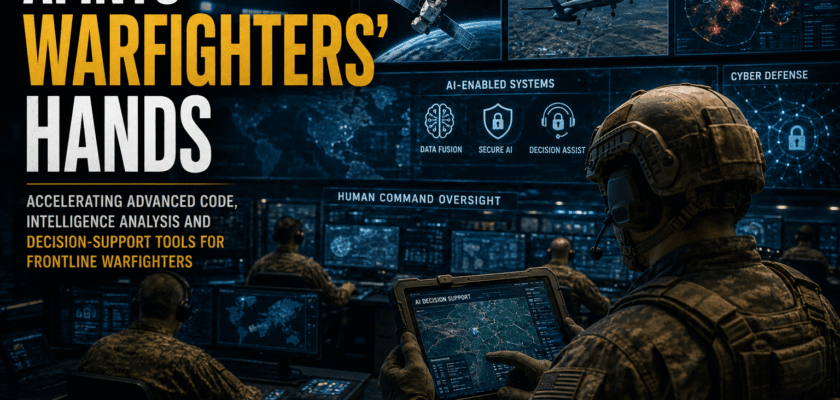
National security AI action plan became a major technology and defense story after the White House announced a new memorandum to accelerate artificial intelligence across U.S. intelligence and warfighting operations.
President Donald Trump said the United States would speed responsible AI adoption while keeping it aligned with American law, values and military command structures. The memorandum emphasized operational deployment, competition among vendors, cybersecurity and human accountability.
The central shift is clear: AI is moving from experimental defense pilots toward core national-security infrastructure.
What “Handing Advanced Code to the Frontline” Really Means
The phrase describes moving advanced AI tools closer to operational users such as analysts, commanders, cyber teams, logistics units and deployed forces.
It can include:
- Faster intelligence analysis
- Sensor-data fusion
- Cyber defense
- Mission planning
- Maintenance prediction
- Logistics optimization
- Language translation
- Threat detection
- Battlefield decision support
- Uncrewed-system coordination
It does not mean every soldier receives unrestricted access to a frontier model or autonomous lethal authority.
The Legal and Ethical Limits
The White House said AI should not be used for unlawful surveillance or to suppress free speech.
The memorandum also directed the Defense Secretary to update the existing autonomous-weapons directive within 90 days so that AI systems respect the chain of command.
This matters because military AI must operate within:
- U.S. law
- International humanitarian law
- Rules of engagement
- Human command responsibility
- Cybersecurity standards
- Data-protection rules
- Mission-specific authorization
Speed does not remove accountability.
Why the 90-Day Autonomous Weapons Review Matters
The Pentagon already has policy governing autonomy in weapons systems. The new review is designed to update that policy for faster AI adoption.
The review may examine:
- Human authorization
- Testing and evaluation
- Fail-safe mechanisms
- Target verification
- Command responsibility
- System reliability
- Cyber resilience
- Escalation risk
- Audit logs
- Override procedures
The key question is how to gain speed without creating uncontrolled lethal decision-making.
Multi-Vendor AI Instead of One Provider
The memorandum encourages the government to use multiple AI vendors rather than depending on one company.
This can reduce:
- Vendor lock-in
- Single-point failure
- Supply-chain risk
- Political dependency
- Model-specific weaknesses
- Pricing pressure
A multi-vendor approach can also allow agencies to match different models to cyber, intelligence, logistics or battlefield tasks.
The Anthropic Dispute Behind the Policy
The new policy followed a major dispute between the Pentagon and Anthropic. Anthropic resisted military use of its models for autonomous weapons and mass surveillance. The Pentagon designated the company a supply-chain risk, while Anthropic challenged the decision.
The dispute raised a difficult question:
Who decides the acceptable military use of commercial AI – the government, the company or both through contract?
The June 2026 policy tries to reduce dependence on any single provider while keeping advanced models available for national security.
AI Model Cybersecurity Testing Before Release
A separate June 2 executive order asked leading U.S. AI developers to voluntarily provide their most capable models for government cybersecurity testing before wider release.
Agencies may receive up to 30 days to examine models for vulnerabilities.
Testing can focus on:
- Cyber offense capability
- Critical-infrastructure risk
- Model theft
- Prompt injection
- Dangerous tool use
- System manipulation
- Biological or chemical misuse
- Data leakage
- Unauthorized autonomy
- Supply-chain threats
The goal is to find national-security risks before a model reaches broad deployment.
Why Cyber Defense Is a Priority
Advanced models can help defenders find vulnerabilities, analyze malware and respond to attacks. The same capabilities can also help attackers.
Government testing may support:
- Faster vulnerability discovery
- Malware analysis
- Threat-intelligence summarization
- Network anomaly detection
- Automated incident response
- Critical-infrastructure protection
- Red-team simulations
- Software-code review
AI therefore creates both defensive power and new attack surfaces.
Project Maven Shows the Direction
In March 2026, the Pentagon reportedly moved to make Palantir’s Maven AI system a core military command-and-control program.
Maven can analyze data from satellites, drones, radar and other sensors to identify potential threats.
Its transition into a long-term program shows that defense AI is no longer limited to isolated experiments. It is becoming part of the permanent military operating system.
From Pilot Projects to Programs of Record
A program of record receives formal budgeting, management and long-term support.
This can provide:
- Stable funding
- Standardized procurement
- Wider military access
- Training
- Maintenance
- Security certification
- Upgrade planning
- Operational accountability
Moving AI into programs of record makes adoption faster, but also increases the importance of testing and oversight.
The Battlefield Data Problem
Modern forces produce huge volumes of data from:
- Satellites
- Drones
- Radar
- Electronic warfare
- Cyber systems
- Ground sensors
- Logistics platforms
- Communications
Human teams cannot process every stream manually. AI can reduce the information burden, but poor data can produce poor decisions.
Edge AI and Disconnected Operations
Frontline systems may operate with weak internet or under electronic attack.
Edge AI runs models locally on devices, vehicles or secure field servers.
Benefits include:
- Lower latency
- Less dependence on cloud links
- Better privacy
- Faster local decisions
- Continued operation during network disruption
Challenges include limited computing power, model updates and physical security.
Human-Machine Teaming
The safest near-term model is human-machine teaming.
AI can:
- Recommend
- Detect
- Rank
- Summarize
- Simulate
- Alert
Humans can:
- Interpret context
- Apply legal judgment
- Approve high-risk action
- Resolve uncertainty
- Accept responsibility
The technology should improve human decisions rather than hide responsibility.
AI for Logistics and Maintenance
Not every military AI use is about targeting.
Frontline readiness can improve through:
- Predictive maintenance
- Spare-parts forecasting
- Fuel optimization
- Route planning
- Medical supply tracking
- Equipment diagnostics
- Weather analysis
- Personnel scheduling
These applications may reduce cost and improve readiness with lower ethical risk than autonomous weapons.
AI for Intelligence Analysis
Intelligence teams can use AI to process images, documents, signals and open-source information.
Potential benefits include:
- Faster object detection
- Language translation
- Pattern recognition
- Event correlation
- Priority ranking
- Report drafting
- Anomaly detection
However, analysts must verify model outputs because hallucinations or classification errors can create serious consequences.
The Risk of Automation Bias
Automation bias occurs when people trust a machine recommendation too easily.
In military settings, this can cause:
- Misidentified targets
- Ignored contradictory evidence
- Faster escalation
- False confidence
- Reduced human questioning
Training must teach users when to challenge the model.
The Risk of Adversarial Manipulation
An opponent may try to fool military AI through:
- Camouflage
- False signals
- Poisoned data
- Spoofed GPS
- Prompt injection
- Malware
- Sensor deception
- Deepfakes
A secure system must assume that adversaries will actively attack both the model and its data.
Why Chain of Command Must Stay Clear
If AI influences a military action, responsibility must remain identifiable.
Command systems need to record:
- Who requested the analysis
- Which model was used
- What data was considered
- What recommendation was produced
- Who approved the action
- Whether a human overrode the model
- What happened afterward
Auditability protects both operational learning and legal accountability.
The Speed vs Safety Trade-Off
Military leaders want faster deployment because adversaries are also advancing.
But rushed deployment can create:
- Security gaps
- Unreliable outputs
- Poorly trained users
- Weak oversight
- Vendor dependency
- Legal uncertainty
- Battlefield failure
The strongest policy is not maximum speed. It is fast deployment with measurable safeguards.
Why Model Competition Matters
Different AI models have different strengths.
One may be better at:
- Coding
- Images
- Translation
- Planning
- Cybersecurity
- Long documents
- Edge deployment
Competition can improve performance and reduce the risk that one provider controls the entire military AI stack.
The Role of Commercial AI Companies
The Pentagon increasingly depends on commercial AI innovation.
Companies provide:
- Frontier models
- Cloud infrastructure
- Data platforms
- Cyber tools
- Specialized chips
- Robotics
- Sensor software
This creates faster innovation but also raises questions about contracts, ethics, intellectual property and continuity during disputes.
Open Models vs Closed Models
Open-weight models can offer more control and customization. Closed commercial models may provide stronger frontier performance and managed security.
Open-model benefits:
• Local deployment
• Greater customization
• Lower vendor dependence
• Easier inspection
Closed-model benefits:
• Strong support
• Regular updates
• High performance
• Managed infrastructure
Defense agencies may use a mix based on mission sensitivity.
The China Competition Factor
U.S. policy is also driven by competition with China.
AI leadership affects:
- Intelligence
- Cyber operations
- Autonomous systems
- Industrial capacity
- Semiconductor demand
- Military planning
- Global standards
The Trump administration’s broader AI policy emphasizes American technological leadership and faster domestic deployment.
Implications for Defense Contractors
Contractors may need to adapt to:
- Multi-vendor requirements
- Stronger model testing
- Supply-chain reviews
- Cybersecurity audits
- Data-governance rules
- Human-oversight standards
- Faster procurement cycles
- Model portability
A contractor dependent on one AI provider may face new risk.
Implications for AI Startups
Defense AI policy can create opportunities for startups in:
- Secure edge models
- Cyber defense
- Sensor fusion
- Explainability
- Model evaluation
- Logistics
- Simulation
- Red teaming
- Drone autonomy
- Secure data infrastructure
However, startups must meet strict security and procurement requirements.
The Privacy and Civil Liberties Question
National-security AI can affect surveillance and domestic rights.
The White House explicitly said AI should not be used for unlawful surveillance or suppression of speech.
Safeguards should include:
- Legal authorization
- Purpose limitation
- Data minimization
- Independent oversight
- Access controls
- Audit trails
- Complaint mechanisms
- Clear domestic-use boundaries
National security does not remove constitutional protections.
What Success Would Look Like
A successful implementation would deliver:
- Faster analysis
- Better battlefield awareness
- Reduced logistics waste
- Stronger cyber defense
- Lower dependence on one vendor
- Reliable human oversight
- Fewer false positives
- Clear legal accountability
- Secure model deployment
- Measurable operational improvement
Success should be judged by outcomes, not the number of AI pilots.
Key Risks to Watch
The biggest risks include:
- Autonomous escalation
- Model hallucination
- Cyber compromise
- Data poisoning
- Unclear accountability
- Vendor conflict
- Mass-surveillance misuse
- Overclassification
- Weak battlefield testing
- AI arms-race pressure
These risks require continuous review rather than one-time approval.
What Readers Should Watch Next
Important next steps include:
- The Pentagon’s updated autonomous-weapons directive
- New model-testing agreements
- Resolution of the Anthropic dispute
- Expansion of Project Maven
- New defense AI contracts
- Congressional oversight
- International reactions
- Rules for human control
- Cybersecurity test results
- Deployment to operational units
The 90-day policy review will be especially important.
Final Verdict
The national security AI action plan marks a major acceleration in U.S. military and intelligence use of artificial intelligence.
The policy aims to move advanced models closer to real operations, reduce single-vendor dependence, improve cyber testing and update autonomous-weapons rules. It also states that AI should not support unlawful surveillance or suppression of free speech.
In simple words, the Trump administration is not merely handing code to frontline forces. It is building a new national-security AI operating system.
The real test will be whether the United States can gain battlefield speed while preserving human command, cybersecurity, legal responsibility and public trust.


