
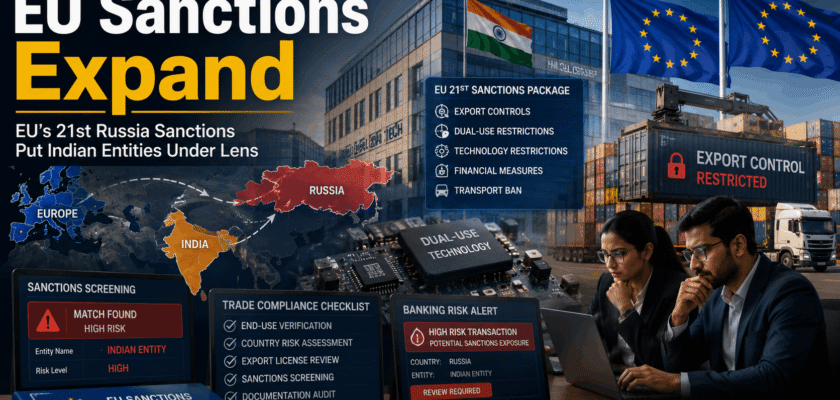
1. EU 21st Russia Sanctions Package: What Changed
The EU 21st Russia sanctions package expands pressure beyond Russian companies. It proposes restrictions on third-country firms, banks, crypto platforms, oil traders and technology suppliers that the EU believes help Russia bypass earlier sanctions.
India-based companies are among 50 entities that could face new export-control restrictions. However, the names and sectors were not publicly disclosed in the first reports.
2. Why Calling It an Outsourcing Ban Is Misleading
The measure is not a general ban on Indian outsourcing. It targets listed entities and specific trade or financial relationships.
The practical risk is narrower but serious:
✓ Restrictions apply to named entities, not all Indian firms.
✓ The focus is export controls and anti-circumvention.
✓ Commercial partners may still apply wider internal risk controls.
3. What Export-Control Restrictions Can Mean
A listed company may face limits on buying certain EU-origin goods, software, components or technology. European suppliers may also refuse transactions because of legal or reputational risk.
◆ Blocked access to sensitive EU-origin products
◆ Supplier refusal or enhanced licensing
◆ Longer customs and compliance checks
◆ Loss of European customers
4. Why Indian Entities Are Under Scrutiny
The EU is focusing on anti-circumvention. Regulators are looking for trade routes that move restricted dual-use goods, electronics, machinery, drones, financial services or energy-related products toward Russia through third countries.
5. The Package Is Still Only Proposed
The European Commission has presented the package, but EU sanctions require unanimous agreement by all 27 member states. Negotiations can change names, sectors, exemptions and legal wording before adoption.
6. The Compliance Risk for Indian Companies
Even a proposed listing can create pressure before the law is final. Banks, insurers, customers and suppliers may increase checks or pause transactions.
⚠ Delayed bank payments
⚠ Customer due-diligence requests
⚠ Supplier freezes
⚠ Higher legal and audit costs
⚠ Reputational damage
7. Which Indian Businesses Should Review Exposure
Companies should review exposure if they trade in electronics, industrial machinery, aerospace materials, drone parts, chemicals, oil products, logistics, payment services or crypto.
8. How Outsourcing and IT Firms Could Be Affected
A normal software-services company is not automatically sanctioned. Still, IT and outsourcing firms should review whether they support Russian clients, sanctioned banks, export-controlled systems or third-country intermediaries.
9. Banking and Payment Challenges
EU-linked banks may delay or reject payments involving a listed entity. Even non-EU banks often follow major sanctions rules because they use European or U.S. financial networks.
10. Contract Risks
Contracts may contain sanctions clauses that allow termination, payment suspension or enhanced audit rights. Indian entities should identify these clauses before a customer or supplier invokes them.
11. Supply-Chain Due Diligence
Companies need visibility beyond the direct buyer. A customer in another country may resell products to Russia. End-user and end-use checks therefore matter.
12. A Practical Response Plan
Indian entities should create a rapid sanctions-response team that includes legal, finance, procurement, sales, logistics and cybersecurity leaders.
✓ Map Russia and Belarus exposure.
✓ Screen customers, owners and intermediaries.
✓ Review HS codes and export-control classifications.
✓ Check EU-origin content in products and software.
✓ Prepare a board-approved response plan.
✓ Keep complete trade and payment records.
13. Common Mistakes
Businesses should not assume that an Indian registration protects them from EU restrictions. They should also avoid deleting records, using new intermediaries to hide trade, or relying only on customer assurances.
✗ Treating the proposal as already adopted
✗ Assuming only direct Russia sales matter
✗ Ignoring beneficial ownership
✗ Using unverified intermediaries
✗ Waiting for a bank to freeze payment before acting
14. Strategic Opportunities
Strong compliance can become a competitive advantage. Companies with transparent supply chains, clean banking routes and reliable end-use controls may win business from European partners seeking lower risk.
15. Final Verdict
The EU 21st Russia sanctions package creates a new level of third-country compliance pressure. Indian entities are not facing a blanket outsourcing ban, but selected companies may face export controls and severe commercial consequences if listed.
The safest strategy is early exposure mapping, stronger screening and documented end-user checks.
Compliance Risk Matrix
| Exposure | Risk Level | Immediate Action |
| Direct sale to Russian military-linked buyer | Very High | Stop and obtain specialist advice |
| EU-origin dual-use goods via third country | High | Verify end user and licensing |
| General IT services to non-sanctioned EU client | Low to Medium | Screen ownership and project use |
| No Russia exposure but complex distributors | Medium | Map downstream resales |
| Listed entity or owned/controlled affiliate | Critical | Freeze relevant activity and seek counsel |


