
Summer Solstice Mindfulness Routines for the Longest Day
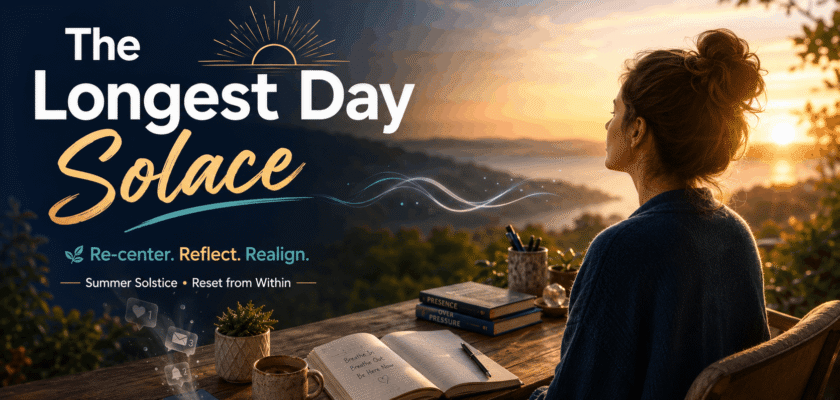
Summer Solstice mindfulness routines can turn the longest day into a calm reset. The date brings more daylight. It also gives people a natural reason to pause, reflect, and slow down.
In the Northern Hemisphere, the 2026 summer solstice falls on June 21. It marks the start of astronomical summer and the longest daylight period of the year.
For many readers, the problem is not a lack of light. The problem is too much input. Phones, feeds, alerts, and constant news can make the mind feel crowded.
The longest day solace method uses one simple idea. Use the extra light to build a small inner boundary against digital noise.
| KEY TAKEAWAYThe solstice does not fix stress by itself. Yet it can act as a clean reminder. Step outside. Breathe slowly. Write one honest line. Then return to the day with less noise. |
Why the Summer Solstice Supports Psychological Grounding
The summer solstice is a clear natural marker. It says that one season is turning into another. That kind of marker can help people reset habits.
A grounding routine works because it uses the body first. Light, walking, breathing, and quiet attention can move the mind away from fast feeds.
Reuters Institute’s 2026 Digital News Report says audiences are reacting with growing unease to political, economic, and social disruption. So, a daily attention boundary is useful.
What Algorithmic Burnout Feels Like
⚠ You open a feed for one minute and lose twenty minutes.
⚠ You read many updates but feel less clear.
⚠ You feel tired after scrolling, even without doing hard work.
⚠ You compare your life with polished online moments.
⚠ You keep checking alerts before sleep.
⚠ You know more headlines, but you feel less grounded.
The Longest Day Solace Framework
The longest day solace framework is secular. It does not require belief in any ritual or religion. It only uses time, light, breath, and reflection.
First, notice the light. Next, reduce digital noise. Then, choose one small action that protects your mind.
This framework works best when it stays simple. Complex routines often fail. A short routine can last.
The 4-Step Solstice Reset
✓ Light: Spend ten minutes near natural light in the morning or evening.
✓ Breath: Take five slow breaths before opening social media.
✓ Line: Write one sentence about what your mind needs today.
✓ Limit: Keep one offline block during the day.
| SIMPLE PRACTICE BOXWrite this line: “Today, I will protect my attention from one unnecessary loop.” Keep it visible. Then remove one app, tab, or alert for the next hour. |
Secular Human Spirit Reflection Without Pressure
Secular reflection is not about forced positivity. It is about honest attention. A person can feel tired and still choose a calmer next step.
The human spirit does not need loud language. It can begin with a quiet walk, a clean desk, a small note, or a kind call.
Therefore, the solstice can become a personal checkpoint. What is draining you? What is helping you? What can you release today?
A 21-Minute Summer Solstice Mindfulness Routine
✓ Minute 1 to 3: Turn off non-urgent notifications.
✓ Minute 4 to 6: Stand near a window or step outside.
✓ Minute 7 to 10: Breathe slowly and relax your shoulders.
✓ Minute 11 to 14: Write three lines about your current mental load.
✓ Minute 15 to 18: Choose one digital habit to pause for one day.
✓ Minute 19 to 21: End with one useful action, not another scroll.
How to Reduce Algorithmic Burnout on the Same Day
Algorithmic burnout grows when the feed makes every issue feel urgent. Yet most posts do not need an instant response.
A practical way to reduce this load is to place friction before the feed. Move apps away from the home screen. Turn off push alerts. Open news at set times only.
Also, end each media session with one real-world action. Drink water. Step outside. Call a person. Clean one small surface. This brings the mind back to the body.
Offline Operating Blueprint for the Longest Day
✓ Keep the first 30 minutes after waking screen-light, not phone-light.
✓ Use one paper notebook for reflection.
✓ Read one trusted summary instead of ten feeds.
✓ Take a short walk during natural light.
✓ Create one no-phone meal.
✓ End the night with a simple gratitude note.
✓ Charge the phone outside the bed area if possible.
Mindfulness Research: What Readers Should Know
Mindfulness is widely studied. Some reviews find benefits for stress, anxiety, and mood. However, results can differ by group, method, and study quality.
That is why this article avoids big promises. A solstice routine is not a cure. It is a small support habit.
For many people, small rituals are easier to keep than strict life changes. In addition, they can make digital boundaries feel less harsh.
Who Should Use Extra Care
⚠ People with severe anxiety or depression should seek professional help.
⚠ People with trauma history should avoid intense solo reflection if it feels unsafe.
⚠ Older adults should avoid long heat exposure during the afternoon.
⚠ Anyone on medication should not replace care with mindfulness alone.
⚠ Children and teens may need adult help to build healthy digital limits.
A Solstice Journal Template
Use this template for one page. Keep it short. Do not turn it into another task list.
Line one: “Today my mind feels…” Line two: “One feed loop I will avoid is…” Line three: “One real thing I will do is…”
This structure helps because it moves the mind from vague stress to a clear next step.
Organic Search Summary for Readers
Summer Solstice mindfulness routines help readers use the longest day as a reset point. The method combines sunlight, breath, writing, and offline time.
The routine is secular. It does not require spiritual belief. It only asks for attention, honesty, and one small boundary.
Most importantly, the goal is not to escape the world. The goal is to meet the world with a quieter mind.
Conclusion
The longest day solace is a simple way to reclaim attention on the summer solstice. It turns extra daylight into a gentle reset.
In a noisy digital culture, people need more than information. They need space to process it. A short solstice routine can create that space.
Start small. Step into light. Breathe. Write one line. Close one feed. Then let the day feel less crowded.
Frequently Asked Questions
Q. What are Summer Solstice mindfulness routines?
They are short reflection habits used on the longest day to reset attention, calm the body, and reduce digital overload.
Q. Is this a religious practice?
No. This article uses a secular method. Readers can use it with or without any spiritual belief.
Q. Can mindfulness cure anxiety?
No. Mindfulness can support wellbeing, but it is not a cure or replacement for professional care.
Q. How long should the routine take?
A simple 10 to 21 minute routine is enough for most readers.
Q. What is algorithmic burnout?
It is mental tiredness that comes from repeated exposure to feeds, alerts, news loops, and comparison-driven content.


