
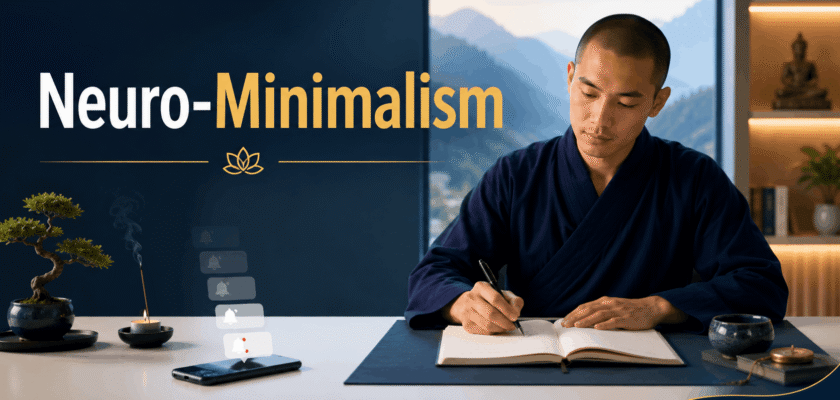
Neuro-Minimalism: A Calm Way to Protect Focus
Neuro-minimalism is a simple focus method.
It removes extra noise from daily work.
Therefore, the mind gets more space.
It does not reject modern life.
Instead, it sets better limits.
Heavy software users need this now.
Apps, alerts, chats, and dashboards keep calling.
As a result, focus breaks again and again.
So, neuro-minimalism borrows old attention habits.
It uses them in a modern way.
| KEY IDEADo fewer things at one time.Hear fewer alerts each hour.Return to one clear task. |
Why Push-Notification Fatigue Feels So Heavy
A notification is small.
However, its effect can be large.
It asks the brain to switch.
Then the mind must return again.
This return takes energy.
Over time, the cost grows.
Research shows this concern clearly.
Smartphone notifications can affect attention and control.
Also, alert overload can push users away.
Therefore, the problem is not only screen time.
The real issue is broken attention.
Ancient Anchors for Modern Screens
Ancient monastic habits were very simple.
Monks used rhythm, silence, and repetition.
They also protected mental space.
Today, we can use the same idea.
However, we do not need a monastery.
We need small attention anchors.
These anchors make the next action clear.
They also reduce random checking.
Anchor 1: The Pause
✓ Pause before opening an app.
✓ Ask why you are opening it.
✓ Then choose the next step.
Anchor 2: The Bell Rule
✓ Treat each alert as a bell.
✓ Do not obey every bell.
✓ Only urgent bells deserve action.
Anchor 3: The Single Window
✓ Keep one main task open.
✓ Close extra tabs first.
✓ Then work in short blocks.
A Simple Daily Neuro-Minimalism Plan
Start with one easy rule.
First, silence non-urgent alerts.
Next, set three check windows.
Then, keep your phone away during deep work.
After that, review the change at night.
This plan works because it is small.
Also, it does not need special tools.
The Three Check Windows
✓ Morning: check only key messages.
✓ Afternoon: clear work replies.
✓ Evening: close loops, then stop.
How Heavy Software Operators Can Use It
Software work needs long attention.
Yet tools often break that attention.
Developers, editors, analysts, and creators feel this daily.
Therefore, the work setup must protect the mind.
Use one focus channel for urgent work.
Use another channel for slow updates.
Then mute the rest during deep work.
This keeps people reachable.
However, it also protects focus.
What to Turn Off First
✓ Sale alerts from shopping apps.
✓ News alerts that repeat stories.
✓ Social likes and comment alerts.
✓ Game alerts and streak reminders.
✓ Low-priority email alerts.
✓ Group chats during focus blocks.
What to Keep On
✓ Family emergency calls.
✓ Critical work calls.
✓ Calendar reminders for real events.
✓ Bank security alerts.
✓ Health alerts that truly matter.
The 15-Minute Reset
Use this reset when focus feels broken.
First, put the phone away.
Then, breathe slowly for one minute.
Next, write one clear task.
After that, work for 12 minutes.
Finally, note how your mind feels.
This is not a cure.
However, it can rebuild control.
Common Mistakes
⚠ Turning off every alert at once.
⚠ Checking messages during every break.
⚠ Keeping five apps open for one task.
⚠ Using focus tools without a plan.
⚠ Letting urgency define the whole day.
⚠ Copying strict routines that feel fake.
A Better Phone Home Screen
Your home screen should feel calm.
Put only useful tools there.
Move noisy apps to a folder.
Also, remove red badges when possible.
This small change helps a lot.
The phone becomes a tool again.
It stops acting like a slot machine.
A Better Work Desktop
Your desktop needs the same care.
Keep one active work zone.
Then keep one reference zone.
Everything else can stay hidden.
This reduces mental clutter.
Also, it makes the next action easier.
Readability Green Fix
✓ Use the article body only.
✓ Keep paragraphs short in WordPress.
✓ Do not paste long source notes.
✓ Do not paste the image prompt into body.
✓ Use the prompt only for image creation.
✓ Put meta text in the Yoast field.
✓ Add image alt in the media library.
Organic Search Summary
Neuro-minimalism helps reduce notification fatigue.
It uses simple attention anchors.
Therefore, it suits modern software life.
The goal is not to quit technology.
The goal is to use it with care.
Less noise can support better work.
Also, fewer alerts can protect calm.
Conclusion
Neuro-minimalism is a practical focus path.
It turns old attention wisdom into daily rules.
Push notifications will not disappear soon.
Therefore, users need better boundaries.
Start small today.
Silence one noisy app.
Then protect one focus block.
That is enough for the first step.
Frequently Asked Questions
Q. What is neuro-minimalism?
Neuro-minimalism is a simple focus method. It reduces digital noise and protects attention.
Q. Does it mean quitting apps?
No. It means using apps with clear limits.
Q. Can it help push-notification fatigue?
Yes. Fewer alerts can reduce attention breaks.
Q. Is this a medical method?
No. It is a lifestyle and focus guide.
Q. What is the first step?
Turn off one non-urgent notification today.


