Empowering the Household
EAC PM report on direct cash transfer tracking 2026: why it matters
EAC PM report on direct cash transfer tracking 2026 puts one idea at the centre of welfare finance.
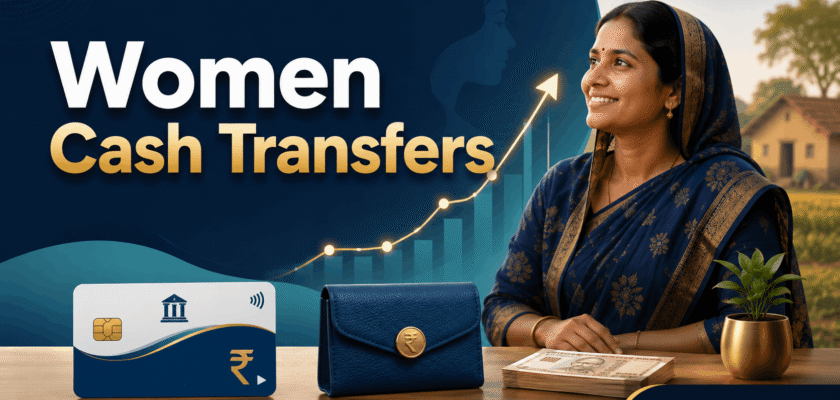
When money reaches women directly, the home budget changes faster.
It also becomes easier to track savings, spending, and digital usage.
This is why schemes like Majhi Ladki Bahin and Subhadra Yojana matter.
They are not only welfare cheques.
They are also small financial entry points for millions of women.
What the EAC-PM working paper found
The EAC-PM working paper studied women-focused unconditional cash transfers.
It looked at Maharashtra and Odisha as two major examples.
The report says these schemes can improve women’s economic security.
It also says they can support household savings and consumption.
However, the report stays careful.
Long-term outcomes still need more research.
Why Ladki Bahin became a finance story
Majhi Ladki Bahin gives monthly income support to eligible women.
The EAC-PM paper says the scheme targets women aged 21 to 65.
The income ceiling is Rs 2.5 lakh per year.
The transfer goes through Aadhaar-enabled DBT into the woman’s bank account.
So, the scheme creates a direct link between welfare and formal banking.
That link is important for rural financial inclusion.
Why Subhadra Yojana adds another layer
Subhadra Yojana follows a different payment style.
It gives Rs 10,000 per year in two instalments of Rs 5,000.
The programme is planned over five years.
It targets eligible women in Odisha, mainly from weaker households.
Therefore, the scheme supports both cash flow and bank account activity.
It also adds a digital literacy angle through wider state planning.
How cash transfers change household finance
A small fixed transfer can look simple.
Yet it changes three daily decisions.
First, women can keep more money in their own account.
Next, families can spend on food, health, travel, or school needs.
Finally, regular DBT can increase digital payment confidence.
That is why these schemes are finance stories, not only politics stories.
Why this matters for rural financial inclusion
Many rural women already have bank accounts.
But an account alone is not enough.
Regular money movement makes the account useful.
It also builds trust in formal finance.
Then women can use UPI, savings products, and local banking services more often.
Over time, this can reduce cash dependence.
The cash-plus model is the next big test
The report does not say cash alone can fix every gap.
Instead, it points toward a cash-plus model.
That means cash support should connect with digital literacy.
It should also connect with health, nutrition, skilling, and SHG networks.
This makes the transfer more useful.
It also makes public spending easier to defend.
What policymakers should watch now
Governments should review transfer amounts often.
Inflation changes household needs every year.
Also, beneficiary lists need clean audits.
But audits must not remove deserving women by mistake.
Clear grievance channels will become very important.
So will simple local-language banking support.
What banks and fintech firms can learn
Banks should treat these women as active customers.
They should not see them only as welfare recipients.
Low-balance savings tools can help.
Voice-based UPI support can help too.
Micro-insurance and emergency savings products may also fit this group.
But products must stay simple and low-risk.
Risks that need honest tracking
There are risks too.
Large schemes need strong budgets.
They also need fraud checks and clean targeting.
Some families may still control the woman’s account.
So, real empowerment needs more than a bank transfer.
It needs awareness, privacy, and local support systems.
Conclusion
EAC PM report on direct cash transfer tracking 2026 shows a clear trend.
Women-centric cash transfers can strengthen household finance.
They can lift savings, spending, and digital inclusion together.
However, the best future model is cash plus support.
That means money, banking skills, nutrition, health, and self-help networks working together.
If states get this mix right, welfare can become a durable financial inclusion engine.
Fast Comparison Table
| Scheme | Main design | Finance impact |
| Majhi Ladki Bahin | Monthly DBT for eligible women. | Supports account use and steady household cash flow. |
| Subhadra Yojana | Two annual instalments for eligible women. | Supports savings, consumption, and digital finance habits. |
| Cash-plus model | Cash linked with literacy and support. | Improves long-term welfare value. |


