
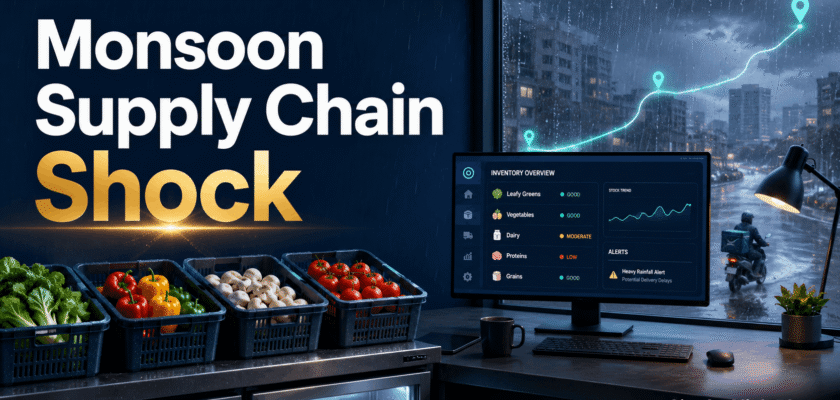
Monsoon Supply Chain Shock: How Commercial Cloud Kitchens Alter Food Sourcing Networks Amid Multi-State Flooding Interruptions
Cloud kitchen inventory logistics during rains 2026 is now a real survival skill for food brands. Heavy rain can block roads, delay vendors, and spoil raw material fast.
So, cloud kitchens need a sharper plan. They need smaller purchase cycles, backup vendors, safer storage, and a rain-ready menu.
This is not only about delivery delays. It is also about food safety, waste control, and daily margins.
| ⚡ Quick take✓ Flooding can break delivery timing before dinner rush.✓ Wet roads can delay milk, bread, vegetables, meat, and packaging.✓ Smart kitchens cut menus before stock turns into waste.✓ Backup sourcing protects revenue when one route fails. |
Cloud kitchen inventory logistics during rains 2026: why the shock matters
In July 2026, heavy rain warnings covered large parts of western India. IMD warned of heavy to very heavy rain over Gujarat, Konkan, and Madhya Maharashtra.
Surat also saw waterlogging after strong rain. Palghar and nearby routes faced flooding, power issues, and transport delays.
For a dine-in restaurant, this is painful. For a delivery-first cloud kitchen, it can be worse.
A cloud kitchen depends on tight timing. It has no dining room to absorb delays. Therefore, every ingredient, rider, and order slot matters.
What changes when roads flood?
The first hit comes from late vendors. Vegetables, paneer, bread, cream, chicken, and packaging can miss the prep window.
Next, the kitchen faces uneven demand. Some customers order more during rain. Others cancel because delivery takes longer.
Then, the food cost sheet changes. A kitchen may buy emergency stock at a higher rate. That hurts the margin.
Finally, food waste rises. Perishable stock can sit too long when riders cannot move.
Reducing restaurant raw material waste parameters
The best rain plan starts before the flood alert. Kitchens should track what spoils first and what sells even in bad weather.
✓ Keep a “monsoon stock list” with short-life and long-life items separated.
✓ Set a lower par level for fast-spoiling raw materials during red or orange alerts.
✓ Use first-expiry-first-out rules for dairy, sauces, greens, and meat.
✓ Shift slow-moving items into staff meals, prep sauces, or limited combos before they cross safe quality limits.
Build a supplier backup map
One supplier is not enough in flood season. A commercial kitchen needs at least three sourcing circles.
First, use a primary vendor for normal days. Second, keep a nearby vendor for emergency top-ups. Third, add a distributor with better cold-chain capacity.
Also, map the supplier by route, not only by price. A cheap vendor is not useful if the road stays blocked.
Rain-day sourcing plan
| Item type | Risk | Rain-day action | Margin benefit |
| Fresh greens | Spoilage | Buy smaller lots | Less waste |
| Dairy | Temperature risk | Use verified cold chain | Safer prep |
| Meat | Delay risk | Add backup vendor | Fewer cancellations |
| Packaging | Stockout | Keep dry buffer stock | Faster dispatch |
| Base sauces | Demand swings | Batch in smaller rounds | Better control |
Managing commercial culinary margins under flash floods
Margins should not depend on one full menu. During heavy rain, a shorter menu often works better.
A smart rain menu uses ingredients that share the same base. For example, one gravy base can support three dishes.
This lowers prep stress. Also, it reduces dead stock when demand changes suddenly.
Next, the kitchen should pause dishes that need delicate toppings, long prep, or fragile packaging.
| ✅ Rain menu ruleKeep dishes that are easy to pack, stable in transit, and built from common ingredients.Pause items that melt, leak, wilt, or need exact delivery timing. |
Food safety must stay first
Flood season is not the time to stretch storage rules. Humidity and power cuts can raise risk inside a kitchen.
Therefore, refrigerators need temperature logs. Dry goods need sealed bins. Prep counters need faster cleaning cycles.
If water enters the kitchen area, stop prep in that zone. Also, discard exposed ingredients if safety is doubtful.
A simple cloud kitchen control dashboard
A small operator does not need a costly system on day one. Even a clean sheet can help.
Track four numbers every day: stock left, wastage value, delayed orders, and emergency purchase cost.
After one week, the pattern becomes clear. Then, the owner can fix the menu, vendor list, and prep schedule.
Checklist for cloud kitchen inventory logistics during rains 2026
✓ Check IMD alerts before placing morning purchase orders.
✓ Use smaller and more frequent buying for perishables.
✓ Keep backup packaging for at least two rain-heavy days.
✓ Move high-risk ingredients into fast-selling combos.
✓ Call riders and vendors early before peak rain hours.
✓ Update menu availability before customers place orders.
✓ Record every spoiled item and find the reason same day.
What owners should do next
Start with the top 20 ingredients by value. These items decide most of the food cost.
Then, mark each item as safe, medium-risk, or high-risk during rain.
After that, build a two-day emergency menu. This small step can protect both sales and reputation.
Conclusion: cloud kitchen inventory logistics during rains 2026
Cloud kitchen inventory logistics during rains 2026 is not only a backend task. It is a profit shield for every delivery-first kitchen.
Floods can delay vendors, riders, and customers. However, a simple sourcing map, shorter menu, and clean stock system can reduce waste.
In short, the winning cloud kitchen is not the one with the longest menu. It is the one that stays safe, fast, and flexible when rain breaks the city rhythm.


