


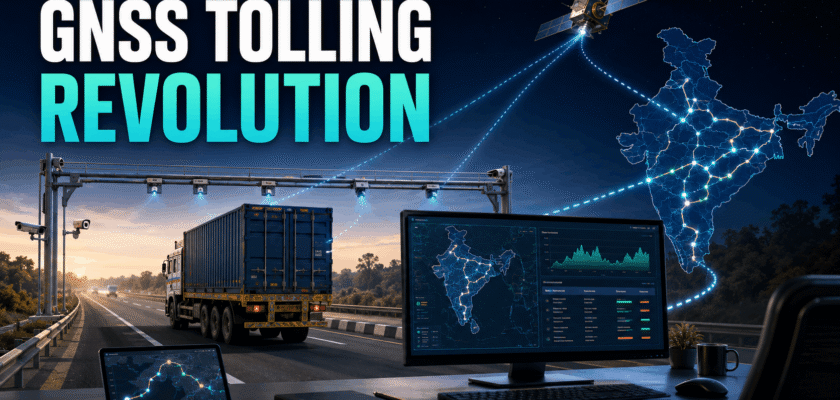
GNSS highway toll collection India 2026 is becoming a major watch point for transport firms, truck owners, fleet operators and logistics planners. The promise is simple. Vehicles should move through toll points without stopping, while the toll system records road use with cleaner digital evidence.
However, the transition is not a one-step switch. India is currently moving through a barrierless tolling path that uses FASTag, automatic number plate recognition and selected pilot corridors. GNSS-based satellite tolling remains the bigger framework that can change fleet costing once it reaches wider implementation.
| Quick take Barrierless tolling is not just a payment upgrade. It can change route planning, trip timing, fuel use, driver hours and interstate fleet margins. |
Why GNSS highway toll collection India 2026 matters
For commercial fleets, toll delays are not small irritants. A slow plaza can break delivery slots, increase idle fuel burn and reduce daily asset use. When a truck loses time at multiple toll points, the margin loss becomes real.
That is why the move toward barrierless tolling matters. The goal is to reduce stopping time and make toll deduction more automatic. If the next layer uses GNSS-based tracking at scale, tolling could move closer to actual distance usage instead of plaza-based charging.
What is changing at toll plazas?
The current public framework points toward Multi-Lane Free Flow tolling at selected locations. In simple words, vehicles can pass without the usual stop-and-go booth experience.
This setup combines FASTag deduction with camera-based vehicle identification. Automatic Number Plate Recognition, or ANPR, checks the vehicle number. FASTag handles the toll account. This is why fleet managers should not confuse every barrierless update with full satellite tolling.
The important point is this. India is building the operating layer that can later support deeper distance-based tolling. That is where GNSS can become more powerful for interstate logistics.
Fleet margin impact: Where the savings may appear
| Fleet Cost Area | What Barrierless Tolling Changes | Possible Margin Impact |
| Idle fuel burn | Less waiting at toll points during long interstate trips. | Lower fuel waste on high-frequency routes. |
| Driver time | Cleaner movement through corridors with fewer stoppages. | Better duty-hour planning and fewer schedule shocks. |
| Route costing | Digital toll records can improve route-level expense tracking. | Sharper pricing for contract logistics. |
| Trip reliability | Reduced plaza congestion can protect delivery windows. | Higher truck utilization per month. |
| Compliance | E-notices and digital records can raise payment discipline. | Cleaner audit trail for fleet accounts. |
How satellite-based tolling could restructure logistics
A true satellite-based tolling framework can make highway charging more granular. Instead of forcing every user into the same plaza logic, the system can charge based on the road distance used.
For fleets, that can create a new pricing discipline. A transporter could compare toll cost by corridor, delivery time, fuel burn, distance and customer promise. This makes every route more measurable.
It may also reduce the hidden cost of choosing a faster but expensive corridor. If tolling becomes more accurate, logistics contracts can include better road-use estimates. That matters for FMCG, e-commerce, auto parts, cold chain and port-linked trucking.
The commercial vehicle delay problem
India’s logistics market runs on narrow margins. A truck that waits at a toll point is not earning. It is burning fuel, driver time and delivery confidence.
Barrierless systems can reduce this leak. They also help route planners build stronger estimated arrival times. That is useful when a fleet crosses Delhi-Jaipur, Mumbai-Ahmedabad, Chennai-Bengaluru or other busy industrial routes.
The benefit becomes bigger when the same vehicle crosses several states. A single toll delay may look small. Ten delays across a multi-day route can damage the entire profit sheet.
What fleet owners should prepare now
Fleet owners should treat GNSS tolling as a future-ready compliance shift. The first task is simple. Keep FASTag accounts healthy, linked and funded. A barrierless corridor will punish weak digital payment hygiene faster than a manual plaza.
Second, vehicle number plates must stay readable. ANPR systems depend on clean, visible and compliant plates. Damaged plates can create mismatch issues, notices or back-office disputes.
Third, fleet software should tag toll data route-wise. This allows owners to compare toll spend with diesel cost, driver cost, detention loss and customer billing.
Risks and open questions
The transition still has open questions. Satellite tolling needs strong privacy rules, accurate trip mapping, clear dispute resolution and reliable coverage. Fleet owners also need simple correction workflows when a toll charge is wrong.
There is also a data issue. Commercial vehicles often run through shared ownership, leased contracts and subcontractor routes. If vehicle, FASTag and payment identities do not match, billing disputes can rise.
That is why India’s tolling revolution should not be judged only by technology. It should be judged by user experience, dispute handling, uptime and accounting clarity.
Practical checklist for fleet managers
✅ Check FASTag KYC and account balance before interstate trips.
✅ Audit number plates for ANPR readability.
✅ Map toll cost by route, not just by vehicle.
✅ Add toll alerts to fleet management dashboards.
✅ Train drivers on e-notice and toll dispute escalation.
✅ Separate plaza delays from customer detention delays in billing records.
What this means for transport pricing
Transporters should not wait for nationwide satellite tolling to begin financial planning. The pricing model should already include toll visibility, digital deductions and faster corridor assumptions.
The old pricing method often added tolls as a simple pass-through cost. The new method should ask a better question. Which route gives the best mix of toll cost, travel time, fuel use and delivery certainty?
That is where GNSS highway toll collection India 2026 becomes a business story. It is not only about highways. It is about how fleets calculate profit per kilometre.
Conclusion
GNSS highway toll collection India 2026 can become a turning point for commercial fleet logistics, but the real shift has already started with barrierless tolling pilots and FASTag-ANPR integration.
For fleet owners, the winning move is preparation. Clean vehicle data, strong digital payment discipline, readable plates and route-level cost dashboards can protect margins before the next tolling layer arrives.
The companies that adapt early will not see tolling as a road charge. They will see it as a logistics intelligence signal.


